Britain and Ireland · Volume 34, Salt, Smoke and the Land the Clearances Remade
Cranachan
Mainland Highlands and the whole of Scotland
Illustration
- Time
- 20 minutes
- Researched
- 5 sources cited
Cranachan is a later elaboration of an older dish, cream crowdie, oatmeal, cream and honey, traditionally eaten at Lammas, the August harvest festival, and originally a breakfast rather than a pudding. Whisky and berries were folded in over the eighteenth and nineteenth centuries as distilling matured into a settled industry and sugar became more widely available; F. Marian McNeill's 1929 Scots Kitchen documents the dish under its older name and helped standardise it nationally under its current one.
As tradition built it
Serves 4. About 20 minutes.
Ingredients
- 100g pinhead or medium oatmeal
- 500ml double cream
- 4 tbsp heather honey, plus extra
- 4 tbsp whisky
- 300g fresh raspberries
Method
- Dry-toast the oatmeal in a heavy pan over medium heat, stirring constantly, 4 to 8 minutes, until deep golden and smelling of toasted hazelnuts. Tip immediately onto a cold plate to stop it cooking further.
- Whip the cream to soft peaks, then fold in the honey and whisky.
- Lightly crush half the raspberries with a spoonful of honey, keeping the rest whole.
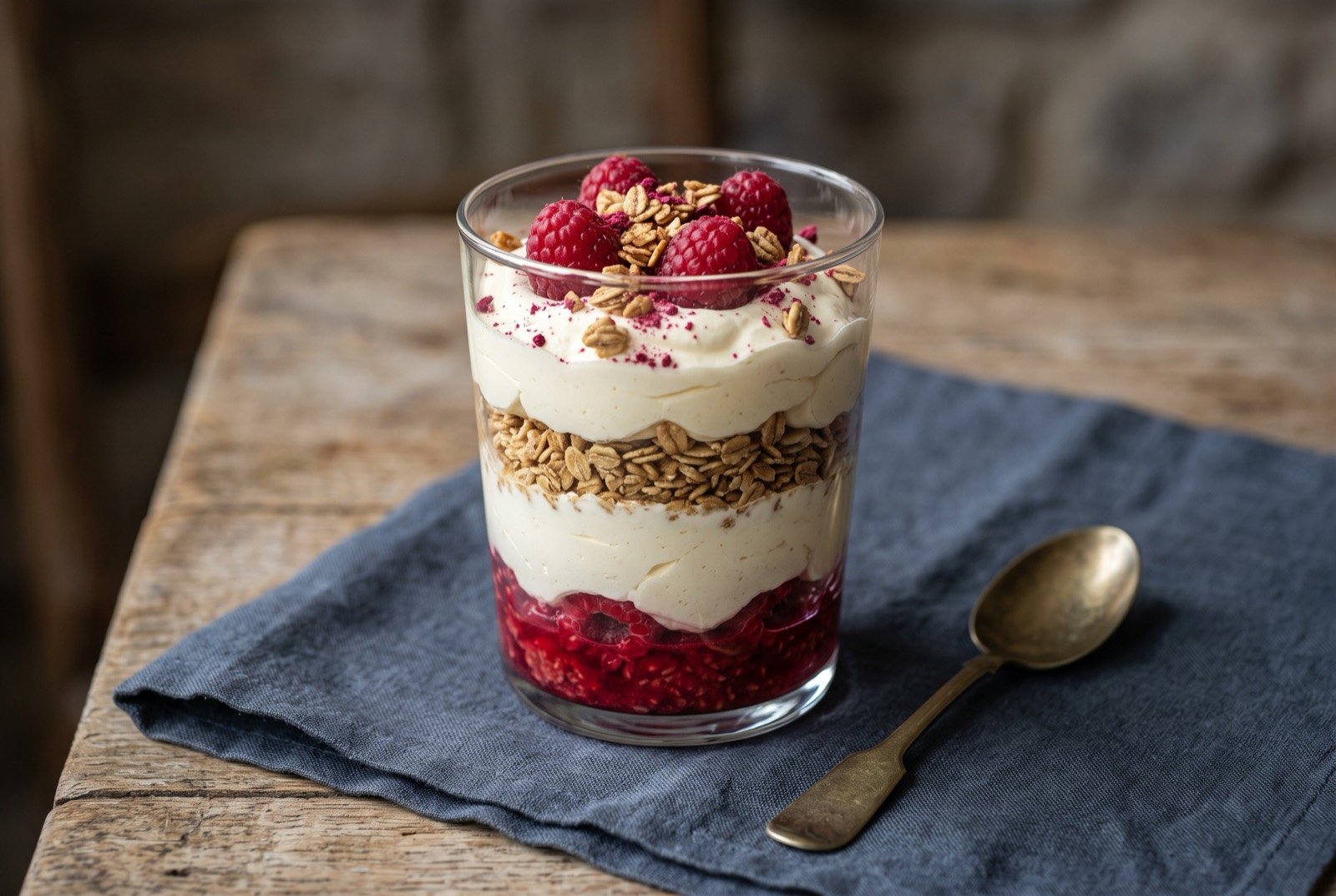
- Layer crushed raspberries, whisky cream and toasted oats in glasses, finishing with a few whole raspberries on top.
What a modern chef changes
A second, concentrated form of the same fruit, for contrast rather than repetition.
Kit note, not tied to a numbered rung.
Method
- Dehydrate a portion of the raspberries whole, then blitz them to a fine powder in a high power blender. Dust this over the finished dessert for a sharp, concentrated hit of fruit against the toasted oats' own dryness, a genuine textural contrast the fresh berries alone do not give.
- Toast the oats slightly further than the traditional method calls for, right to the edge of bitterness rather than stopping at golden, to stand up to the concentrated raspberry powder's own intensity.
- Whip the cream only to soft peaks, never further, so it still folds through the oats rather than sitting on top of them in a stiff layer.