Central Europe · Volume 17, The Herring Fleet and the Sausage Stand
Buletten
Berlin
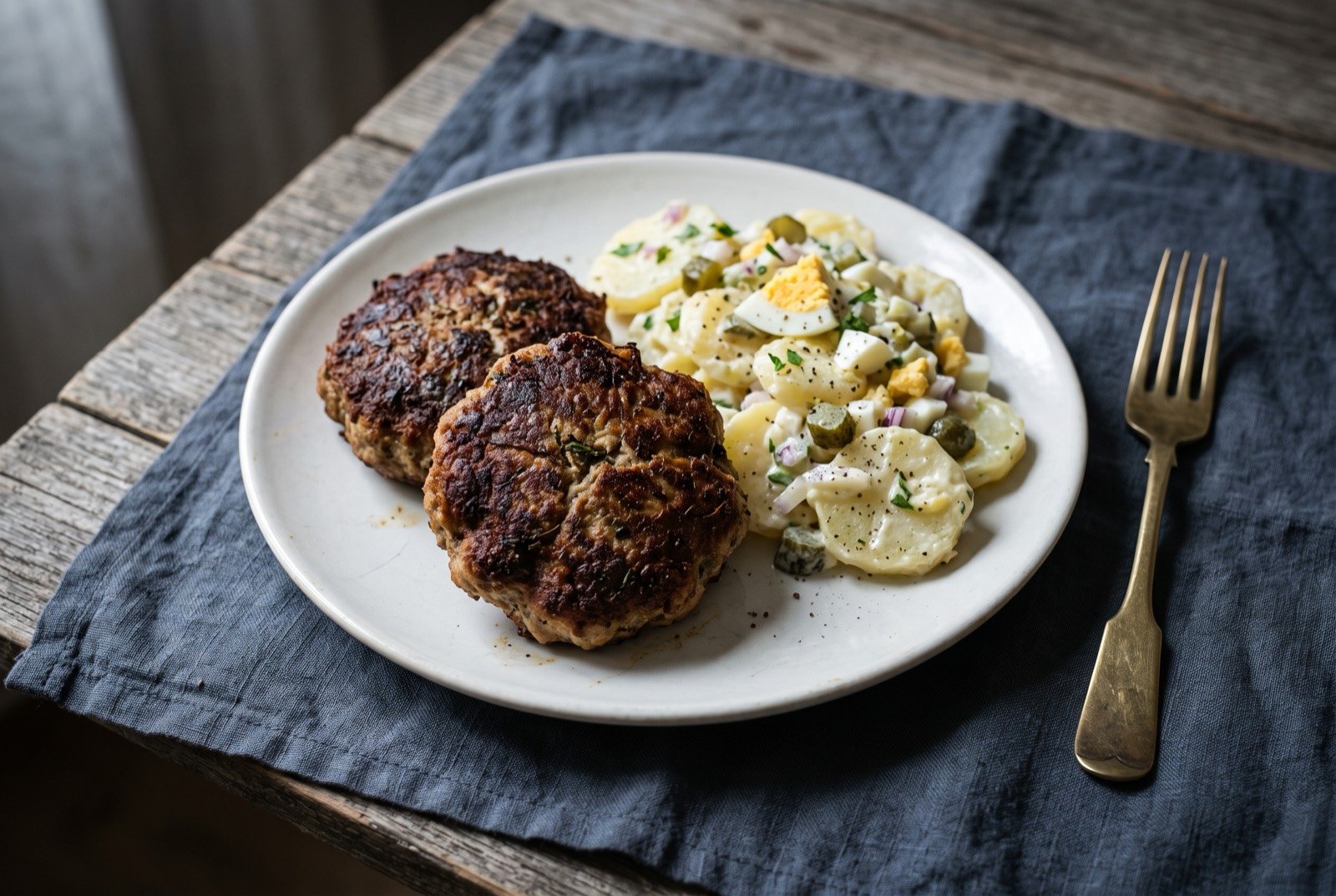
An illustration of the dish, not a photograph of it cooked.
- Time
- Not statedNo source states a time and the atlas has too few comparable dishes to estimate one.
- Reviewed
- Not yet reviewed from inside the tradition
- Cooked
- Not yet cooked and reported
Berlin's own meat patty, and the clearest possible illustration of this atlas's founding argument: a technique, the panade, arrived at independently here with no need of a French comparison, and doing it properly rather than copying a burger is what elevates it.
As tradition built it
Serves 4.
Ingredients
- 500g mixed minced pork and beef
- 2 stale bread rolls, torn and soaked in 150ml milk until soft, then squeezed out
- 1 egg
- 1 small onion, very finely diced and softened first in butter
- a small handful a small handful of chopped capers
- to taste salt and white pepper
- a light grating a very light grating of nutmeg
Method
- Work the soaked bread into the mince with your hands until it disappears completely into the meat, then work in the egg, onion, capers, salt, white pepper and a light grating of nutmeg, mixing firmly enough to bind but not so long that the fat starts to break down and the mixture turns pasty.
- Shape into four flattish patties, thicker at the centre than the edge to cook evenly.
- Fry in butter over a medium heat for around four minutes a side, until deeply coloured and cooked through.
- Serve simply, with Kartoffelsalat Berliner Art and a sharp mustard.
What a modern chef changes
A finer blitzed panade, hand-cut mince and a sear-then-indirect finish on the Egg
Method
- The panade itself is refined rather than replaced: the bread is dried and blitzed to a fine crumb in a high-power blender before soaking in warm milk, so it disperses through the meat completely evenly rather than leaving small soft pockets, a genuine improvement on the traditional torn-and-squeezed method.
- The meat is a coarser hand-cut mince rather than a fine machine grind, giving a better bite once cooked, and is rested in the fridge for an hour after mixing so the panade fully hydrates before shaping.
- The patties are seared hard on the Big Green Egg for colour, then finished at a lower indirect heat rather than cooked through entirely in a pan, giving a firmer crust and a juicier centre than an all-pan method allows.
- The capers are replaced with a small dice of the volume's own Spreewald gherkin, worked through raw at the mixing stage rather than after cooking, tying the dish back to Brandenburg's own pickling tradition rather than a generic European caper.