Central Europe · Volume 22, Herring, Beer and a Coastline Three Nations Share
Pralines
Belgium
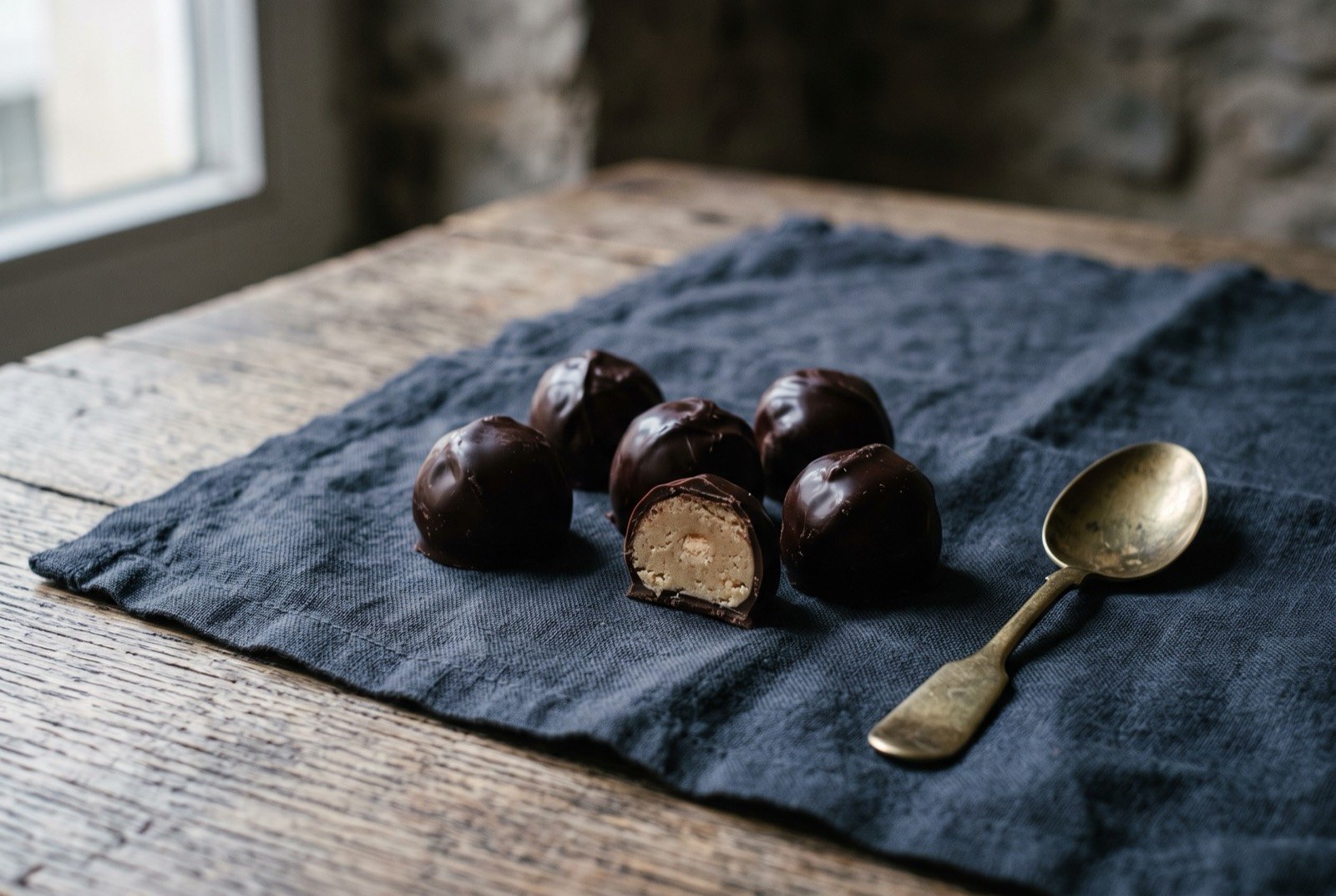
Illustration
- Time
- 1 hour 30
- Researched
- 9 sources cited
Jean Neuhaus, a Swiss-born pharmacist, opened a shop in Brussels' Galerie de la Reine in 1857, originally coating medicine in chocolate to mask its taste. In 1912 his grandson, Jean Neuhaus Jr., replaced the medicinal core with a soft filling, inventing the filled chocolate bonbon Belgium calls a praline, a genuinely dateable structural invention rather than a gradual drift. In 1915 his wife, Louise Agostini, invented the small presentation box, the ballotin, after paper cones kept tearing, and Neuhaus deliberately did not charge royalties to competitors who adopted the format, part of why it became the industry standard rather than a proprietary Neuhaus design.
As tradition built it
Makes about 25. About 1.5 hours, plus setting.
Ingredients
- 200 g hazelnuts
- 200 g caster sugar
- 50 ml water
- 400 g good dark couverture chocolate, at least 60% cocoa
- 150 ml double cream
- 30 g butter
Method
- Roast the hazelnuts in a moderate oven, 12 to 15 minutes, until deeply coloured and fragrant, then rub off the skins.
- Make a dry caramel with the sugar and water, cooking to a deep amber.
- Stir the roasted hazelnuts through the caramel, tip onto an oiled tray, and leave to set hard.
- Once cold, break up and grind in a high-power blender to a smooth praline paste.
- Warm the cream, pour over half the chopped chocolate, stir to a smooth ganache, then work in the butter and the praline paste.
- Chill until firm enough to roll, then form into small balls or piped shapes.
- Melt and temper the remaining chocolate (warm, cool to seeding temperature, bring back to working temperature, working it constantly), and dip each piece to coat.
- Set on baking paper until fully hardened.
What a modern chef changes
Tempering and roasting both taken as seriously as a Belgian maison actually takes them
Rung 5
Method
- Temper the chocolate using a sous vide bath rather than a stovetop bain-marie: seal the chopped couverture in a bag, melt at around 45 to 46°C, chill the bath with ice to bring it to a seeding temperature of around 27°C, massaging the bag to distribute crystals evenly, then return it to a working temperature of around 31 to 32°C, agitating throughout, keeping water rigorously excluded from the bag. This holds the chocolate in temper indefinitely while dipping a whole batch, a genuine advantage over a stovetop method that drifts out of temper as it cools.
- Roast the hazelnuts properly before grinding, not after, since roasting's Maillard reaction develops the nutty compounds a blender can only distribute evenly, never create.
- Judge the finished bonbon by its snap and shine, not by taste alone. A dull, streaky surface or a soft, bendy snap both mean the temper failed, whatever the filling tastes like, and the fix is always to re-temper, never to disguise the surface with a dusting of cocoa.