Central Europe · Volume 22, Herring, Beer and a Coastline Three Nations Share
Bitterballen
The Netherlands
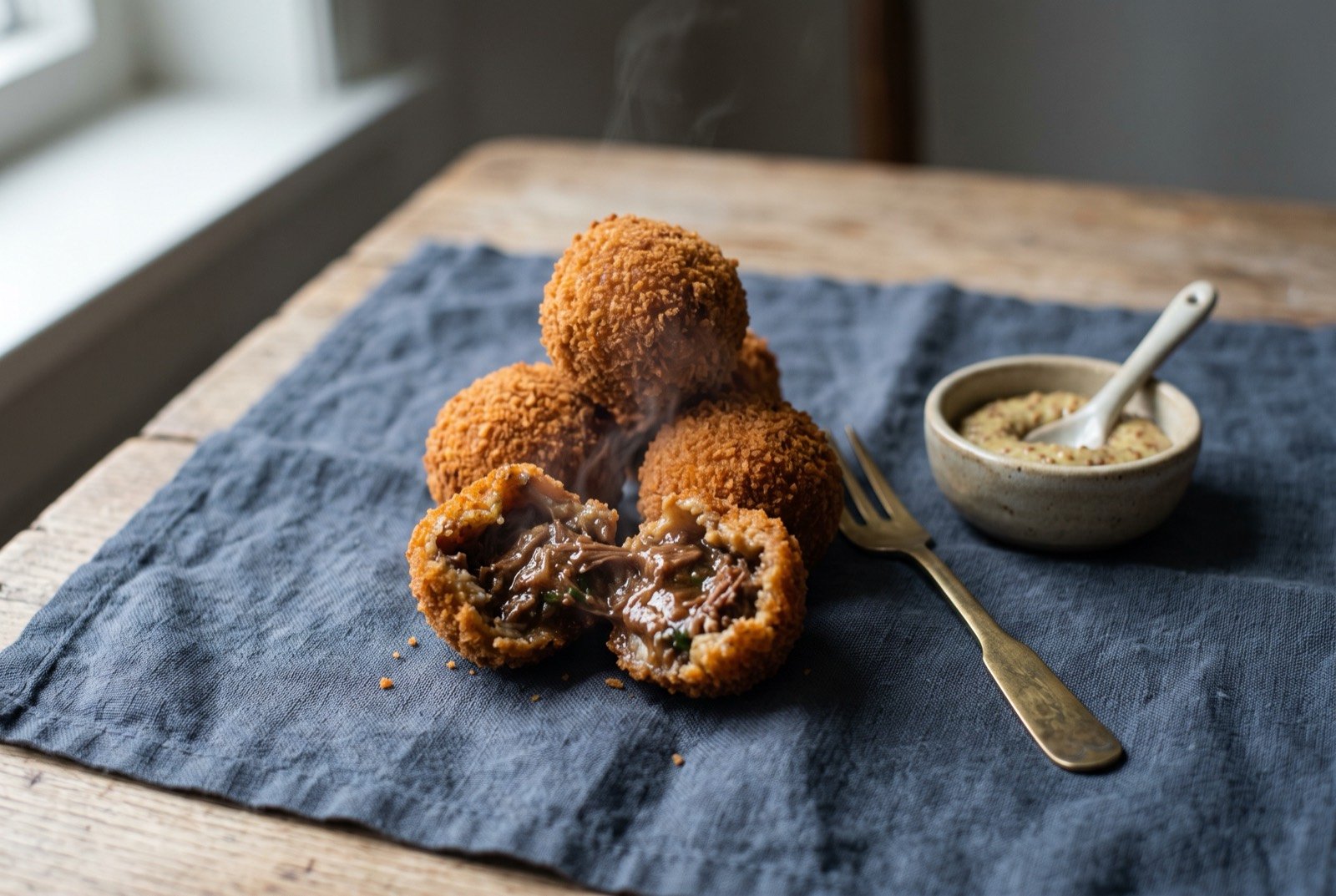
An illustration of the dish, not a photograph of it cooked.
- Time
- Hands on 3 hours · Waiting 8 hours
- Researched
- 9 sources cited
- Reviewed
- Not yet reviewed from inside the tradition
- Cooked
- Not yet cooked and reported
Most likely a smaller, rounder nineteenth-century evolution of the kroket, taking its name from "bitter," a drink traditionally served alongside during the Dutch after-work borrel. A dated reference from December 1924 shows the Hague establishment 't Hof van Holland advertising free bitterballen during "bitter hours," selling croquettes at fifteen cents and bitterballen at five. The custom, "bitterballen bij de borrel," is formally listed on the Dutch national inventory of intangible cultural heritage.
As tradition built it
Makes about 20. Ragout at least 3 hours, plus overnight chilling; frying about 20 minutes.
Ingredients
- 500 g beef shin or chuck, cubed
- 500 ml beef stock
- 1 bay leaf, a clove or two
- 60 g butter
- 60 g plain flour
- to taste salt, pepper, a little parsley
- for coating flour, beaten egg, breadcrumbs, for coating
Method
- Simmer the beef in the stock with bay and clove, covered, at least 3 hours, until falling apart into fine shreds, "draadjesvlees."
- Strip and shred the meat, reserving the stock.
- Make a roux with the butter and flour, then whisk in the reserved stock gradually to a thick, smooth sauce.
- Fold the shredded beef through the sauce, season with salt and pepper, stir through a little parsley.
- Spread flat in a dish and chill, ideally overnight, until completely firm.
- Roll into balls, dredge in flour, then beaten egg, then breadcrumbs.
- Deep fry at 180°C for 3 to 4 minutes, until deep golden, and rest a minute before eating, since the filling holds heat.
What a modern chef changes
The ragout given a longer, gentler build, and the fry judged by more than colour
Rung 4, applied by analogy to a roux-based sauce rather than an egg liaison
Method
- Braise the beef sous vide, around 80 to 85°C for 12 hours, rather than a simmer on the hob, for a more evenly, deeply broken-down "draadjesvlees" texture without the risk of scorching the stock over a long unattended simmer.
- Build the roux properly, cooking it out for a full 2 to 3 minutes before adding liquid, so the sauce loses any raw-flour taste rather than merely thickening; this is the same discipline waterzooi's liaison demands, applied to a different base.
- Chill genuinely flat and genuinely overnight, not for an hour before serving. A softly set filling explodes on frying rather than holding its shape, the single most common domestic failure with this dish.