Central Europe · Volume 22, Herring, Beer and a Coastline Three Nations Share
Gaufre de Liège
Wallonia
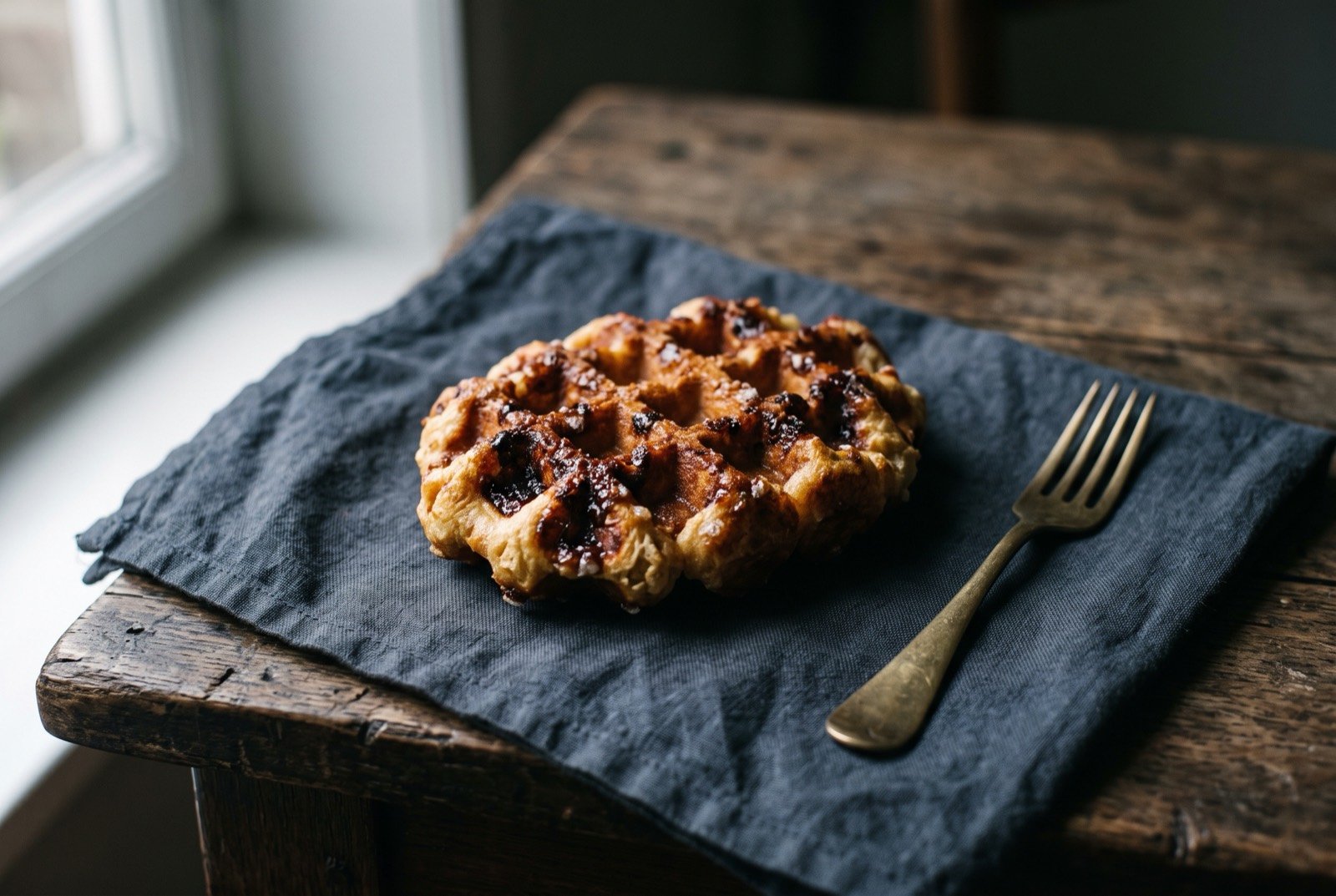
An illustration of the dish, not a photograph of it cooked.
- Time
- 2 hours
- Researched
- 9 sources cited
- Reviewed
- Not yet reviewed from inside the tradition
- Cooked
- Not yet cooked and reported
The legend of a Prince-Bishop's chef asked to invent "something savoury and sweet" is repeated across Dutch, French and English sources alike without independent confirmation. Better documented: the waffle appears in print at the end of the nineteenth century, in an 1890 recipe by Léon Roty, then president of the Association des Pâtissiers belges. Pearl sugar itself, the ingredient that now defines the dish, only enters the historical record toward the end of the eighteenth or start of the nineteenth century, meaning an older, plainer cinnamon-spiced dough predates the sugar-pearl version now treated as canonical.
As tradition built it
Makes about 8. About 2 hours including proving.
Ingredients
- 500 g strong white flour
- 10 g fresh yeast
- 200 ml warm milk
- 3 eggs
- 250 g soft butter
- 100 g caster sugar
- 150 g Belgian pearl sugar
- a pinch a pinch of salt
Method
- Bloom the yeast in the warm milk with a pinch of the sugar, 10 to 15 minutes.
- Combine with the flour, eggs, remaining sugar and salt, knead to a smooth, elastic dough, then work in the soft butter gradually until fully incorporated.
- Prove, covered, about 1 hour, until roughly doubled.
- Fold the pearl sugar through the dough by hand, gently, so the pearls stay whole rather than crushing.
- Divide into balls of roughly 100 g, and rest a further 15 minutes.
- Cook in a hot Liège-style waffle iron, 3 to 4 minutes each, until deeply golden and the sugar has caramelised against the plates.
- Eat warm, plain, straight from the iron.
What a modern chef changes
The proof given full respect, and the caramelisation controlled rather than left to chance
Rung 1, applied by analogy
Method
- Retard the dough overnight in the fridge after its first prove, rather than baking it the same day, for a deeper, more developed flavour from the slower, cooler fermentation, the same patience this chapter asks of a herring cure or a lambic.
- Judge doneness by the pearl sugar's own colour at the plate line, not by a fixed time. Waffle irons vary too much in heat for a clock to be reliable, and the caramelised sugar is the one visual cue that tells the truth.
- Serve within minutes of coming off the iron, since this dish's specific pleasure, a caramelised, faintly crisp edge softening into a warm, chewy interior, exists for a genuinely short window and is precisely what a shelf-stable export or tourist version cannot reproduce.