Aotearoa and Australia · Volume 03, The Waka, the Hāngī and the Tide
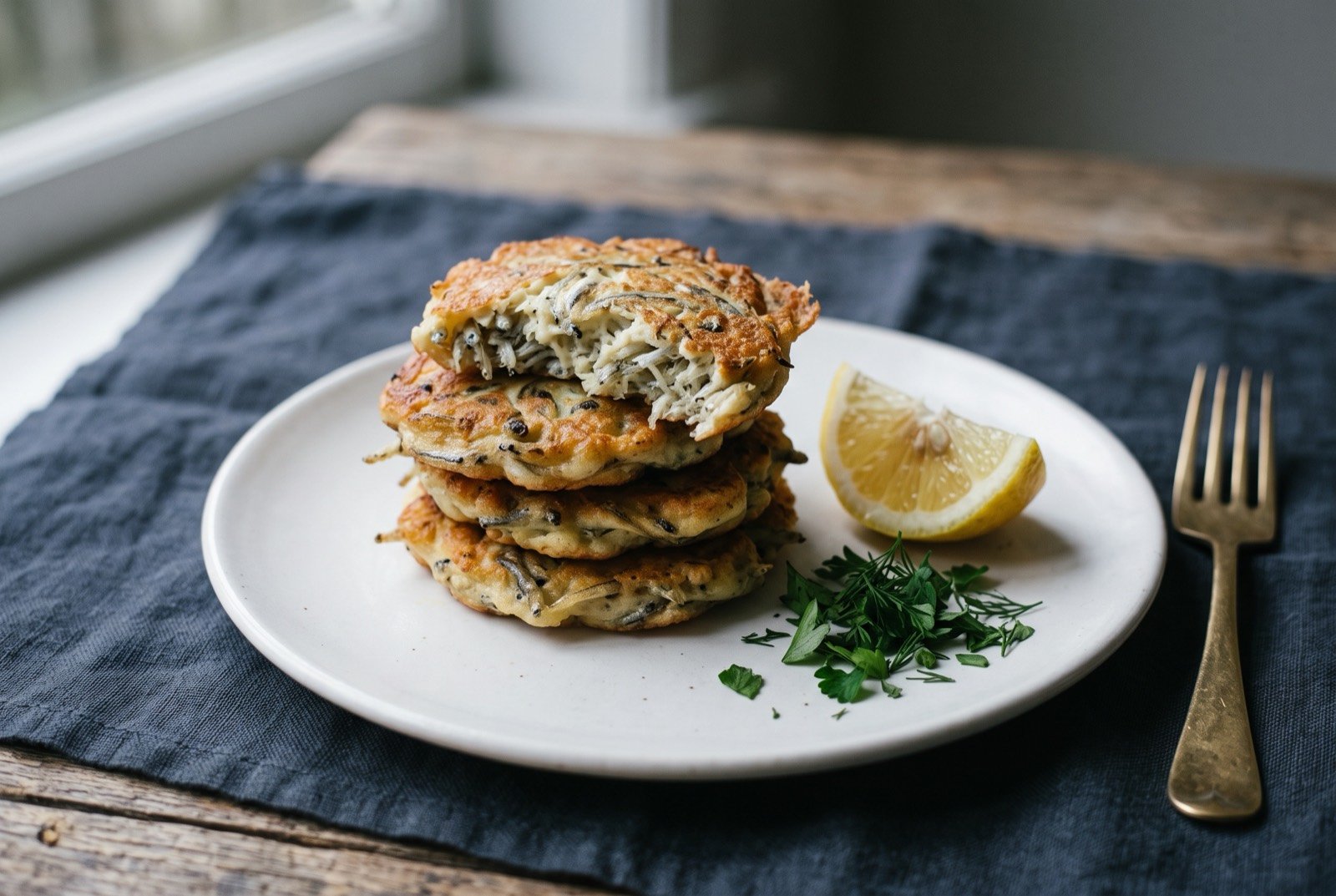
Whitebait Fritters
Māori, Aotearoa
Illustration
- Time
- 20 minutes
- Researched
- Researched from 188 sources in the brief
Whitebait is not one species but the juvenile migratory stage of five native galaxiid fish returning from the sea to fresh water, dominated in most catches by īnanga. Four of the five contributing species are now classified as declining or worse, and this chapter records the honest, current tension rather than treating the dish as simple nostalgia: Ngāi Tahu's own Te Karaka magazine argues that regulatory focus on licensing and shortened seasons is treating a symptom while missing the larger cause, waterway degradation from forestry and agricultural clearance, with Dr Te Maire Tau stating plainly that "the regulation issue is a sideshow to the destruction of whitebait habitat." In August 2026, Ngāi Tūāhuriri placed a rāhui on their own five-year-old customary whitebait season, citing abuse of the customary arrangement and a need to reset tikanga around it, a genuinely live example of an iwi regulating itself rather than waiting to be regulated.
As tradition built it
Makes about 4 fritters. 20 minutes.
Ingredients
- 125 g whitebait, well drained
- 1 egg
- 1 tbsp plain flour
- ¼ tsp baking soda
- to taste salt and pepper, to taste
- 2 tbsp parsley or coriander, chopped
- enough to shallow-fry, about 1cm deep oil, for shallow frying
- to serve lemon wedges, to serve
Method
- Whisk the egg, flour, baking soda, salt, pepper and the parsley or coriander together with a fork.
- Fold in the drained whitebait.
- Chill up to 1 hour, if time allows.
- Fry large tablespoonfuls in gently heated oil in a heavy-based pan, 1 to 2 minutes a side, until golden.
- Drain and serve with lemon.
What a modern chef changes
The egg-to-flour ratio pushed toward the fish itself, and the fry given real temperature control.
Rung 3.
Method
- Reduce the flour to the barest binder, closer to one heaped teaspoon per cup of fish with an extra beaten egg in its place, the ratio purists favour specifically "to avoid masking the delicate flavour of the whitebait," rather than the household-brand recipe's slightly higher flour content.
- Fry in a monitored, held oil temperature around 170°C using a dedicated thermometer, rather than judging heat by eye, for a fritter that sets before the fish inside overcooks.
- State the substitution honestly: true īnanga is not available in Britain (see Sourcing in Britain); UK "whitebait," juvenile herring and sprat, is a genuinely unrelated fish, close enough in format for this recipe's method but not the same animal, and this chapter does not claim otherwise.