The Nordics and the Baltic · Volume 24, The Swedish Crown, the Gulf of Bothnia and the Reindeer North
Kalakukko
Savo, Finland
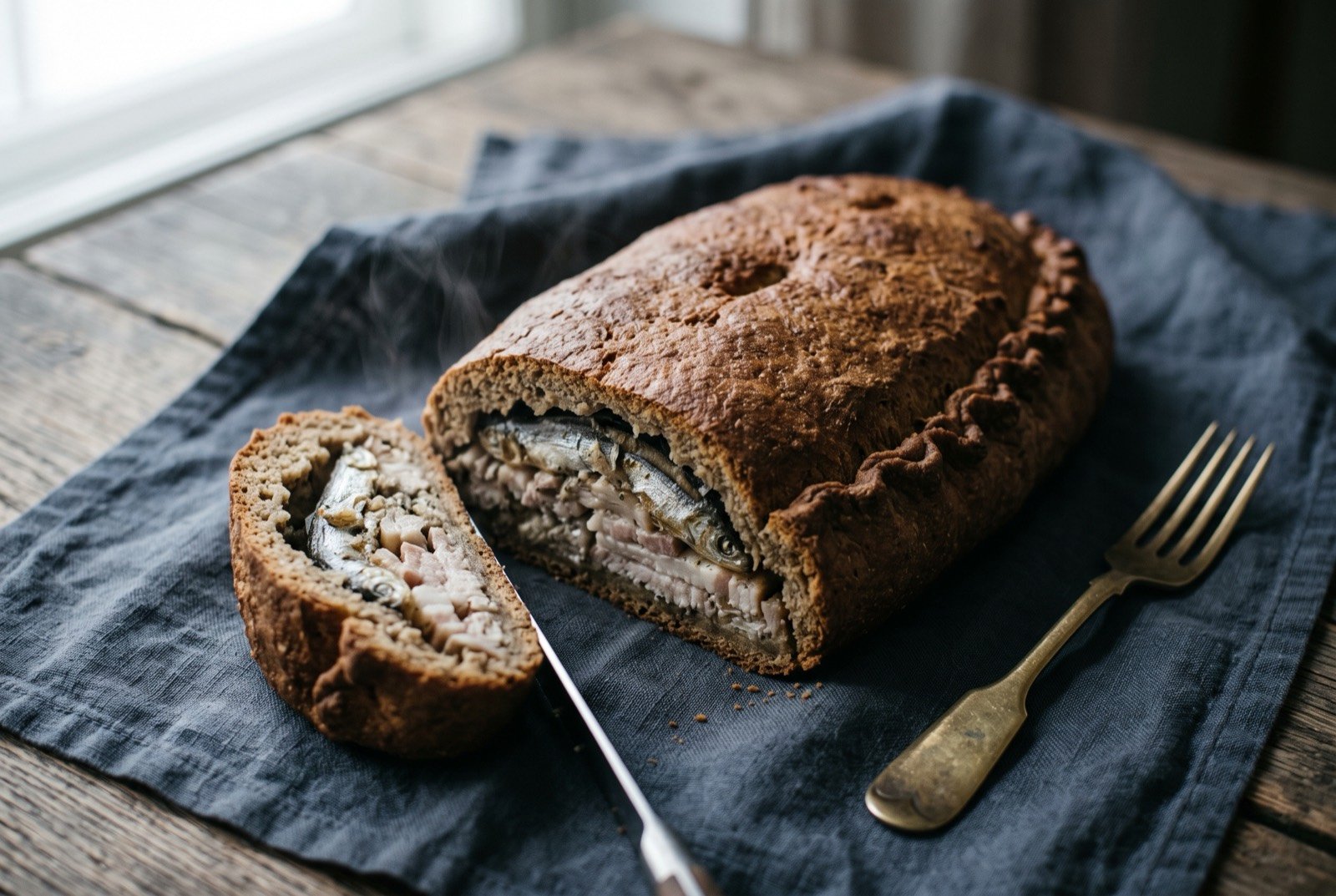
An illustration of the dish, not a photograph of it cooked.
- Time
- 20 hours
- Researched
- 13 sources cited
- Reviewed
- Not yet reviewed from inside the tradition
- Cooked
- Not yet cooked and reported
First documented in 1792, when a district physician reported the Savonian "Cala Cucu" to the royal medical college, and awarded EU Protected Designation of Origin status in 2002, which now fixes its method. A real piece of kitchen folklore travels with it: the kalakukko is said to "sing" in the oven if its crust cracks and juices hiss onto the tray.
As tradition built it
Serves 6 to 8. About 9 to 20 hours, depending on method.
Ingredients
- 500 g rye flour
- 300 ml water
- 1 tsp salt
- 600 g small whole fish (vendace or perch, or sprats as the UK substitute), cleaned
- 200 g fatty smoked bacon, cut into strips
- to taste salt and black pepper
- a generous knob butter, for finishing
Method
- Mix the rye flour, water and salt into a firm, cohesive dough, working just enough to bring it together, no kneading needed.
- Roll into a large oval, about 1 cm thick.
- Layer the small fish and bacon strips over one half of the oval, seasoning with salt and black pepper as you go.
- Fold the other half of the dough over, and crimp the edges firmly to seal completely, since the seal is what makes the dish work.
- Bake at a high heat, 250°C, for 30 minutes, until the crust is set and browned.
- Lower the oven to 200°C for a further 30 minutes.
- Wrap the whole loaf tightly in foil and return to a low oven, around 125°C, for 5 to 7 hours, until the fish bones have softened completely.
- Rest before slicing, and serve warm with butter and boiled potatoes, or cold with buttermilk.
What a modern chef changes
The crust's own sealing logic respected properly, with the tools this chapter keeps returning to.
Rung 1
Method
- Set the fish and bacon filling briefly sous vide before assembling, around 55°C for 20 minutes, so the protein is already gently set before the long bake begins, reducing the risk of an unevenly cooked centre over such a long, low finish.
- Judge the final low bake by bone texture, not by the clock: press a skewer through the crust into the centre, a properly finished kalakukko yields no resistance from the fish bones at all, and the range this chapter gives, 5 to 7 hours at 125°C, should be treated as a starting point rather than a fixed rule.
- Reduce any juice that escapes during baking in a small pan, and brush it back over the crust before serving, rather than letting it go to waste on the tray.