Aotearoa and Australia · Volume 03, The Waka, the Hāngī and the Tide
Rēwena Bread (Parāoa Rēwena)
Māori, Aotearoa
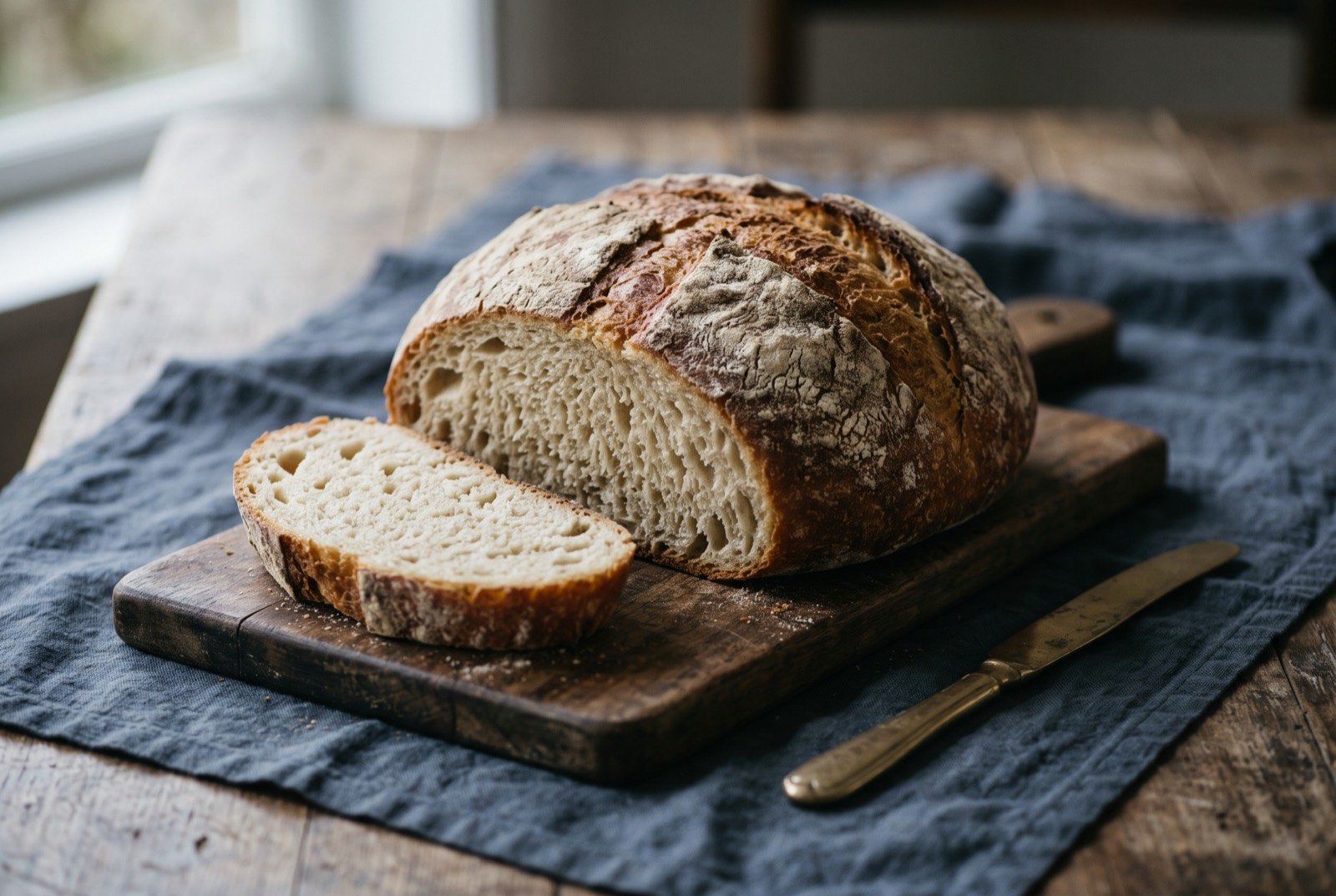
An illustration of the dish, not a photograph of it cooked.
- Time
- Not statedNo source states a time and the atlas has too few comparable dishes to estimate one.
- Reviewed
- Not yet reviewed from inside the tradition
- Cooked
- Not yet cooked and reported
Rēwena is a direct transliteration of "leaven"; parāoa transliterates "flour" and by extension means bread or dough generally. The starter, or bug, is built from boiled, mashed potato worked with flour, sugar and water and left to ferment for one to several days before it is ready to use, and, once established, is fed and kept indefinitely rather than made fresh each bake.
As tradition built it
Makes 1 large loaf. About 2 days including starter activation.
Ingredients
Bug
- 100 g potato, peeled
- 165 ml water
- 165 g strong bread flour
- 1 tsp honey
Dough
- 400 g strong bread flour
- 1 tsp salt
- 20 g honey or 2 tbsp sugar
- 2 cups active bug
- as needed extra water, as needed
Method
- Boil the potato in the water until soft, mash thoroughly into its own cooking water, then stir in the flour and honey. Leave in a warm spot around 24 hours, until visibly bubbling and close to doubled, the sign it has peaked and is ready to use.
- Combine the flour and salt, work in the honey or sugar, the active bug and enough extra water to bring the dough together.
- Knead until smooth and elastic, around 8 minutes, then prove until doubled.
- Shape into a round loaf and prove again.
- Bake at 230°C for 12 minutes, then 200°C for a further 12 minutes, then down to 180°C for up to 1 hour, until deeply golden and hollow-sounding when tapped.
What a modern chef changes
The starter held at a controlled temperature rather than left to a British kitchen's cooler, less predictable warmth.
Rung 2.
Method
- Ferment the bug in a small temperature-controlled proving drawer or a low oven with the door ajar, held around 25 to 28°C, for a starter that peaks reliably rather than at the mercy of ambient room temperature.
- Bake on a preheated pizza stone or steel rather than directly on a tray, for a stronger, more even bottom crust than most home ovens manage on their own.
- Name and maintain your own bug rather than starting fresh each time, in the spirit Tania Gilchrist describes: feed it regularly, and treat the resulting sourness as a living, changing thing to read by taste rather than a fixed recipe outcome.