Iberia · Volume 06, The Rice Coast
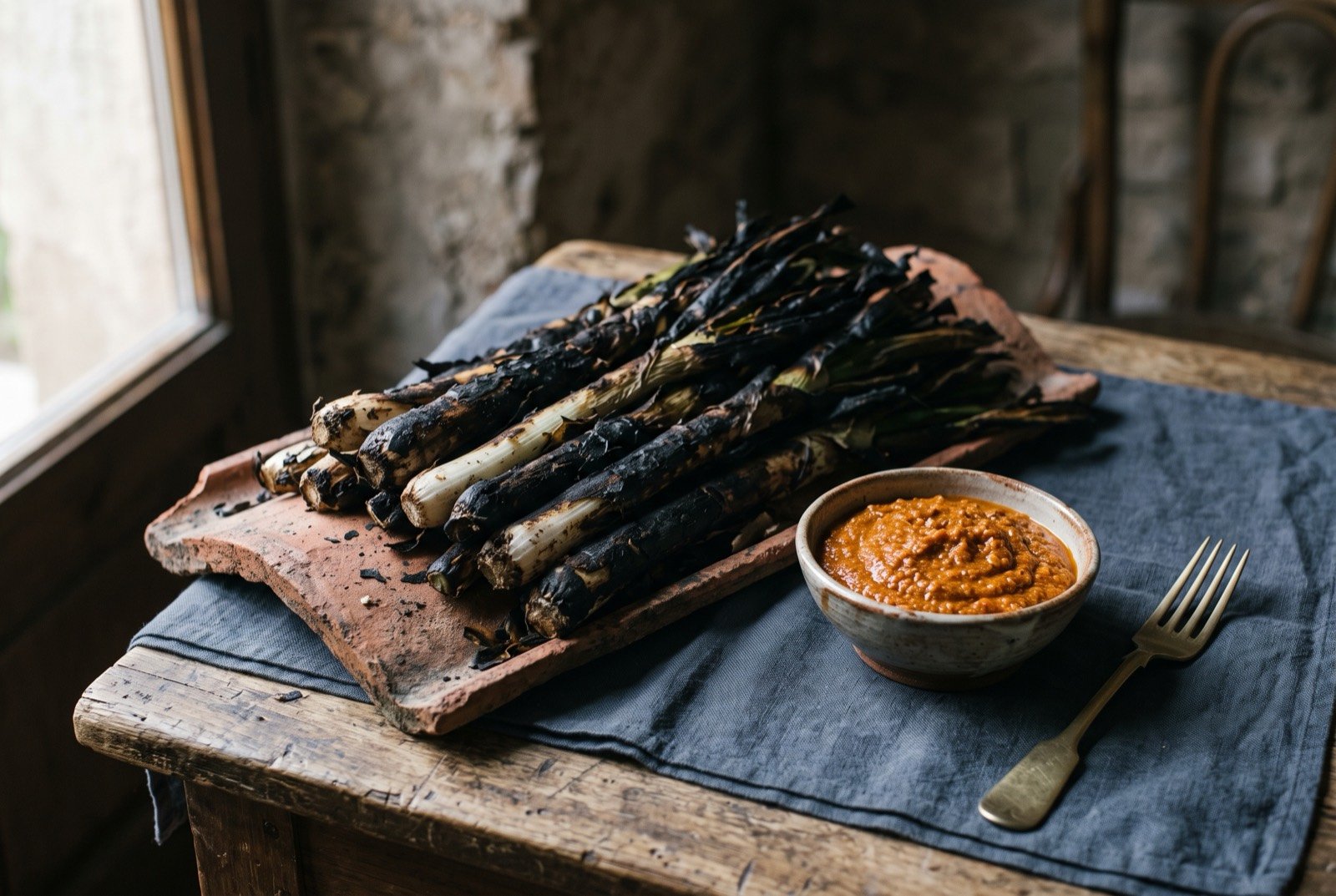
Calçotada amb Romesco
Catalonia, Valls
Illustration
- Time
- 20 minutes
- Researched
- Researched from 37 sources in the brief
The calçot, a specially cultivated, earthed-up spring onion, is credited to a named nineteenth-century farmer of Valls, "el Xat de Benaiges," who is said to have burned onions deliberately, peeled back the blackened layers, and found the sweet interior beneath. The calçotada as a collective ritual meal is a twentieth-century development, family gatherings from the early 1900s, the Penya Artística de l'Olla drawing Barcelona's artistic circles from mid-century, dedicated restaurants from the 1960s, and the modern Gran Festa de la Calçotada in Valls every year since 1982. Romesco's own most-cited origin story places it among early-twentieth-century Tarragona fishermen working the Serrallo docks, using whatever the boat carried: stale bread, oil, dried ñora peppers and tomato, a moderately sourced claim this chapter does not overstate.
As tradition built it
Calçots harvested November to April. 15 to 20 minutes over the fire.
Ingredients
- 15 to 20 per person calçots, as needed
- 30 to 50g roasted almonds
- 25 to 50g roasted hazelnuts
- 2 to 3 rehydrated ñora peppers, flesh scraped from the skin
- one 40g slice fried or toasted bread
- 300g ripe tomato
- 1 raw garlic clove
- 50 to 100ml olive oil
- 1 to 2 tbsp wine or sherry vinegar
- to taste salt
Method
- Grow the calçots from autumn, repeatedly earthing them up as they grow, and harvest November to April.
- Cook them directly over a wood fire until entirely blackened outside.
- Eat by hand, the char peeled away, the tender white shoot dipped in romesco, traditionally with a bib and no cutlery at all.
- For the romesco: pound the almonds, hazelnuts, rehydrated ñora flesh, bread, tomato, garlic, olive oil, vinegar and salt together in a mortar to a thick, rustic paste.
What a modern chef changes
Romesco built in a high-power blender, with double-toasted nuts
Rungs 4 and 5
Method
- Build the romesco in a high-power blender rather than a mortar (rung 4), giving a smoother, more stable emulsion in a fraction of the time.
- Dehydrate and re-toast the almonds and hazelnuts rather than simply roasting them once, a step that concentrates their flavour further than a single roast achieves.
- Char the calçots on a Big Green Egg at its hottest running temperature (rung 5), then rest them briefly wrapped in their own char to steam gently before serving, a step that keeps the interior moister than the traditional straight-off-the-fire serving without softening the essential contrast between blackened skin and sweet, tender flesh.