Iberia · Volume 06, The Rice Coast
Ensaïmada
Mallorca
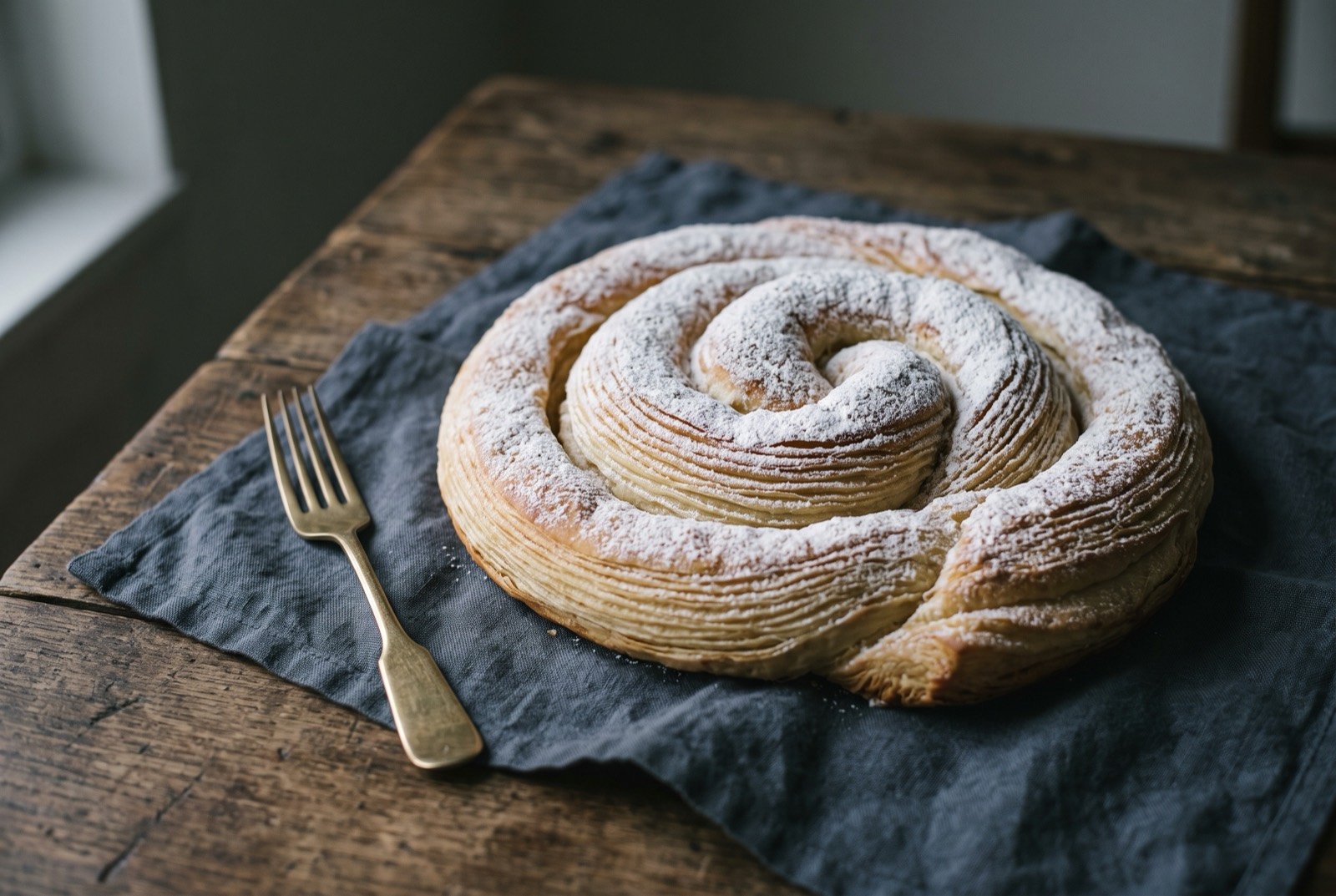
An illustration of the dish, not a photograph of it cooked.
- Time
- Hands on 10 hours · Waiting 8 hours
- Reviewed
- Not yet reviewed from inside the tradition
- Cooked
- Not yet cooked and reported
First written references to ensaïmada date to the seventeenth century. Its defining choice, saïm, rendered pork lard, in place of butter, is not an economy or an accident; it is the correct fat for the texture the pastry is built around, and a genuinely Ottoman-Turkish "simnel" etymology sometimes claimed for the name in English-language food writing could not be found in any Catalan-language source consulted for this chapter, which trace the word instead to Catalan saïm itself, from Latin sagimen or sagina; this chapter does not repeat the Ottoman claim.
As tradition built it
Proved overnight, 10 hours or more. Baked at around 200°C, 10 to 12 minutes.
Ingredients
- 500g strong flour, 2 eggs, 175g sugar, 20g fresh yeast, 100ml water, 4g salt an enriched yeasted dough
- 125g creamed pork lard (saïm), for coating
- a little icing sugar, for dusting
Method
- Knead the enriched yeasted dough until smooth, around fifteen minutes, then rest it.
- Stretch the dough by hand until almost transparently thin.
- Coat it generously with creamed pork lard, roll it into a long cylinder, and coil it into a spiral on an oiled tray with room to expand.
- Prove overnight, ten hours or more.
- Bake at around 200°C for ten to twelve minutes until golden.
- Dust heavily with icing sugar once cooled.
What a modern chef changes
Home-rendered leaf-fat lard, and a temperature-controlled overnight proof
Rung 6
Method
- Render the lard at home from proper pork leaf fat sourced from a butcher rather than a supermarket, since genuine Mallorcan saïm cannot currently be bought in the UK: cut it small and render it low and slow at 110 to 120°C until fully liquid and the cracklings sink and turn golden (rung 6's logic applied to a fat rather than a sausage), then strain it through a chinois while still warm.
- Hold the dough's overnight proof in a temperature-controlled proving box rather than left to the vagaries of a kitchen's ambient warmth, giving a more even, predictable rise.
- Dust the finished pastry with sugar passed through a fine sieve immediately before serving rather than well in advance, so it never has time to dissolve into the lard's surface sheen.