Iberia · Volume 06, The Rice Coast
Escalivada amb Pa amb Tomàquet
Catalonia
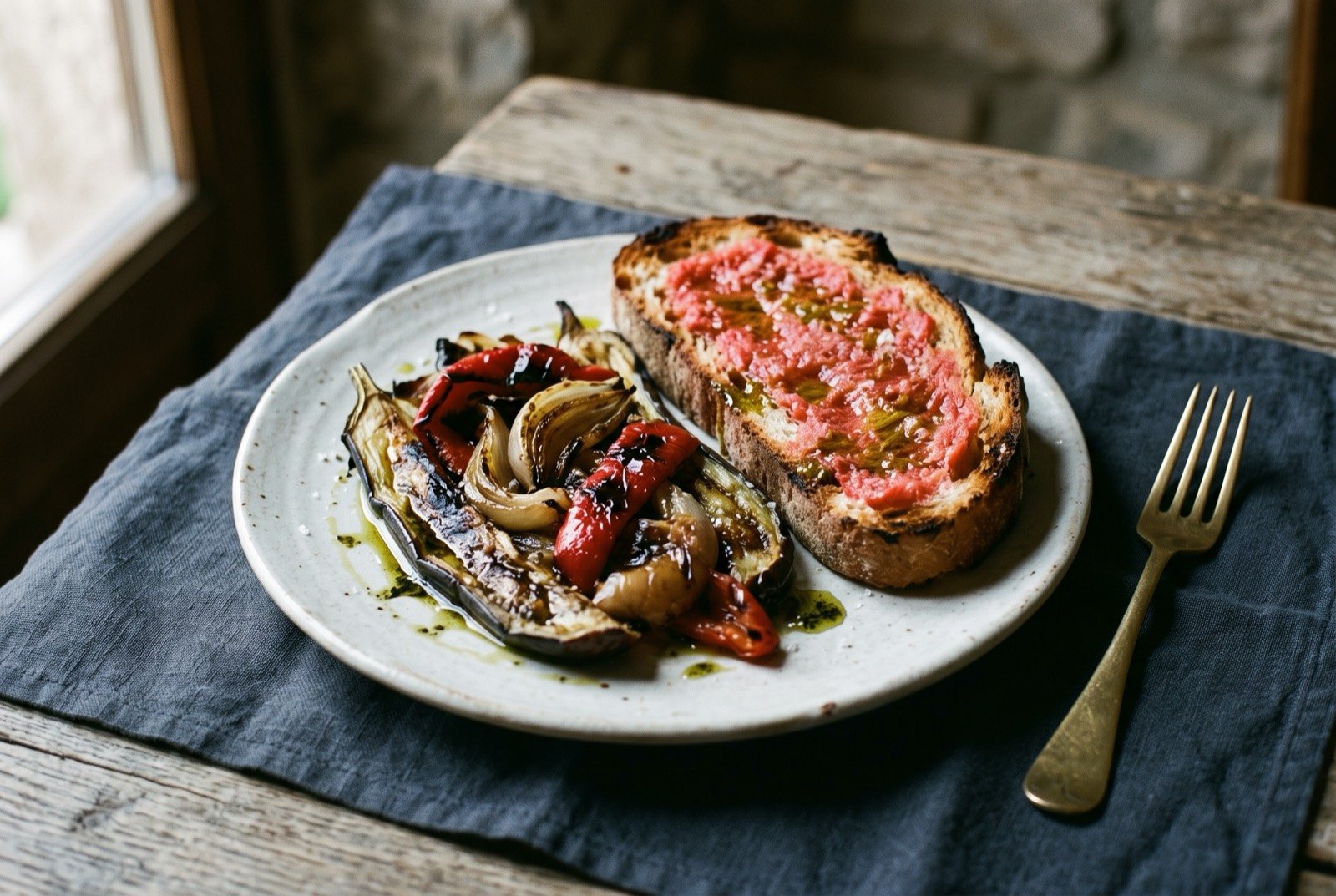
An illustration of the dish, not a photograph of it cooked.
- Time
- 1 hour
- Reviewed
- Not yet reviewed from inside the tradition
- Cooked
- Not yet cooked and reported
Escalivada is ember cooking by name, from the Catalan "caliu." Pa amb tomàquet, bread with tomato, only enters Catalan cooking once the tomato itself arrives from the eighteenth century onward; the specific gesture of rubbing a halved ripe tomato onto bread is a nineteenth-century rural (payès) habit, originally a way to soften stale bread, first documented in writing only in an 1884 letter from the writer Pompeu Gener, rediscovered and publicised a century later by the food historian Nèstor Luján. A rival theory, crediting Murcian construction workers arriving in the 1920s to build Barcelona's metro with the technique's popularisation, was explicitly rejected by Luján; this chapter attributes both claims rather than adjudicating between them.
As tradition built it
Serves 4. 45 minutes to 1 hour.
Ingredients
- 2 aubergine
- 3 red pepper
- 2 onion
- 2 tomato, sometimes
- 4 to 6 tbsp olive oil
- to taste salt
- as available bread, for pa amb tomàquet
- 1 clove garlic, cut
- 1 a very ripe tomato, cut face
Method
- Roast the aubergine, red pepper and onion, sometimes tomato too, whole directly over embers or a live flame until the skin is fully blackened and blistered and the flesh steams inside its own jacket.
- Peel while still warm, never rinse, tear rather than cut, and dress with good olive oil and salt.
- For pa amb tomàquet, toast the bread and rub it first with a cut clove of garlic, then with the cut face of a very ripe tomato until the bread has taken its juice and pulp.
- Finish with olive oil and salt.
What a modern chef changes
Ember contact on a Big Green Egg, and a dehydrated crumb for the tomato juice
Rung 5
Method
- Cook the vegetables directly on a Big Green Egg's grate at its highest sustained heat, genuine ember contact rather than a domestic oven's dry roasting (rung 5); resist the urge to wrap anything in foil, which defeats the entire purpose of direct blackening.
- Dehydrate the bread for pa amb tomàquet overnight at a low, controlled temperature before toasting, giving a drier, more porous crumb that takes up far more tomato juice than fresh bread manages.
- Pass the tomato briefly through a high-power blender with a little salt and strain through a chinois into a light, seasoned juice rather than rubbing by hand, giving an evenly saturated result across every slice rather than the patchier coverage hand-rubbing produces.