Iberia · Volume 06, The Rice Coast
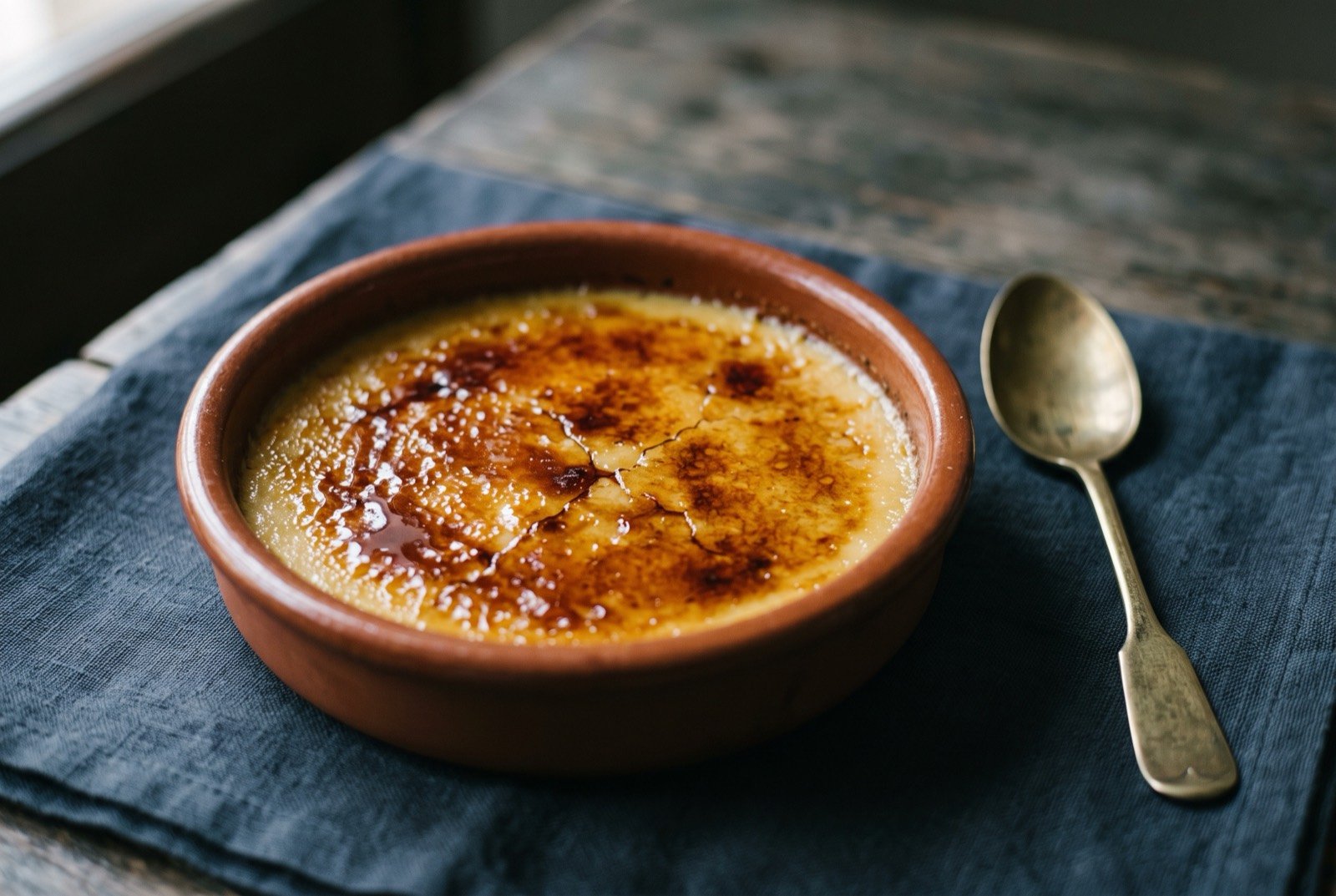
Crema Catalana
Catalonia
Illustration
- Time
- Hands on 30 minutes · Waiting 8 hours
- Researched
- Researched from 37 sources in the brief
Proto-cream dishes called "llet cuita" or "lluixell," milk, egg yolk, cinnamon and citrus peel, with no sugar at all, appear in both the Llibre de Sent Soví (1324) and the Llibre del Coch (1520). The specific name "crema catalana" is first documented only in 1745, in a recipe book by the friar Juan de Altamiras; the caramelised sugar crust is first documented later still, in 1770. France's Massialot documents a crème brûlée in 1691, three centuries after Catalan proto-custard texts but 54 years before the Catalan name itself and a full 79 years before its own crust. This chapter states plainly that Catalan-language custards are the oldest written record in this family by a wide margin, and that the specific burnt-sugar dessert recognisable today converges in both traditions across the seventeenth and eighteenth centuries, which is not a clean priority claim for either side and should not be dressed up as one.
As tradition built it
Serves 4. About 30 minutes, plus overnight.
Ingredients
- 1 litre milk
- 6 to 8 egg yolks
- 150 to 200g sugar
- 40 to 45g cornflour
- 1 cinnamon stick
- 1 to 2 strips lemon peel
Method
- Infuse the milk with cinnamon and lemon peel, bring to a bare simmer, then remove from the heat.
- Whisk the yolks, sugar and cornflour to a smooth paste, then gradually add the hot milk.
- Cook the whole gently until thickened, then chill.
- The next day, finish with a thin sugar crust burned under a hot iron or torch, traditionally on Saint Joseph's day, 19 March.
What a modern chef changes
Custard cooked sous vide at 84°C, a cold infusion, and a double-torched crust
Rung 1
Method
- Cook the custard base sous vide at a steady 84°C rather than over direct heat (rung 1's precision applied to a custard rather than a rice), removing entirely the risk of scrambling the yolks that a stovetop version always carries.
- Infuse the cinnamon and lemon peel cold in the milk for twenty-four hours in the fridge before any heat is applied, drawing out aromatics more gently than a hot infusion does.
- Build the sugar crust in two thin layers rather than one thick one: torch, chill briefly, then torch again, giving a genuinely brittle, evenly caramelised shell rather than the patchy, occasionally bitter crust a single heavy pass produces.