East Africa and the Islands · Volume 16, Two Cuisines, One Volume
Mukimo, and its cousin Irio
Serves 4
Illustration
- Time
- 31 minutes
- Researched
- 6 sources cited
As tradition built it
Serves 4 · 24 to 31 minutes
Ingredients
- 600g floury potatoes (Maris Piper), peeled, 3cm chunks
- 150g green maize kernels, fresh or frozen (sweetcorn is a compromise; use it if that is what there is)
- 200g fresh or frozen peas, or cooked njahi black beans if you can find them
- 150g pumpkin leaves, or spinach, or young nettle tops
- 30g butter or 30ml oil
- 6g salt
Method
- Put the potatoes and maize in a pan, cover with salted water, bring to the boil and cook 20 to 25 minutes.
- Add the peas for the last 8 minutes.
- Lay the greens on top for the last 3 minutes to wilt in the steam.
- Drain very well and return to the dry pan over low heat for 1 minute to steam off.
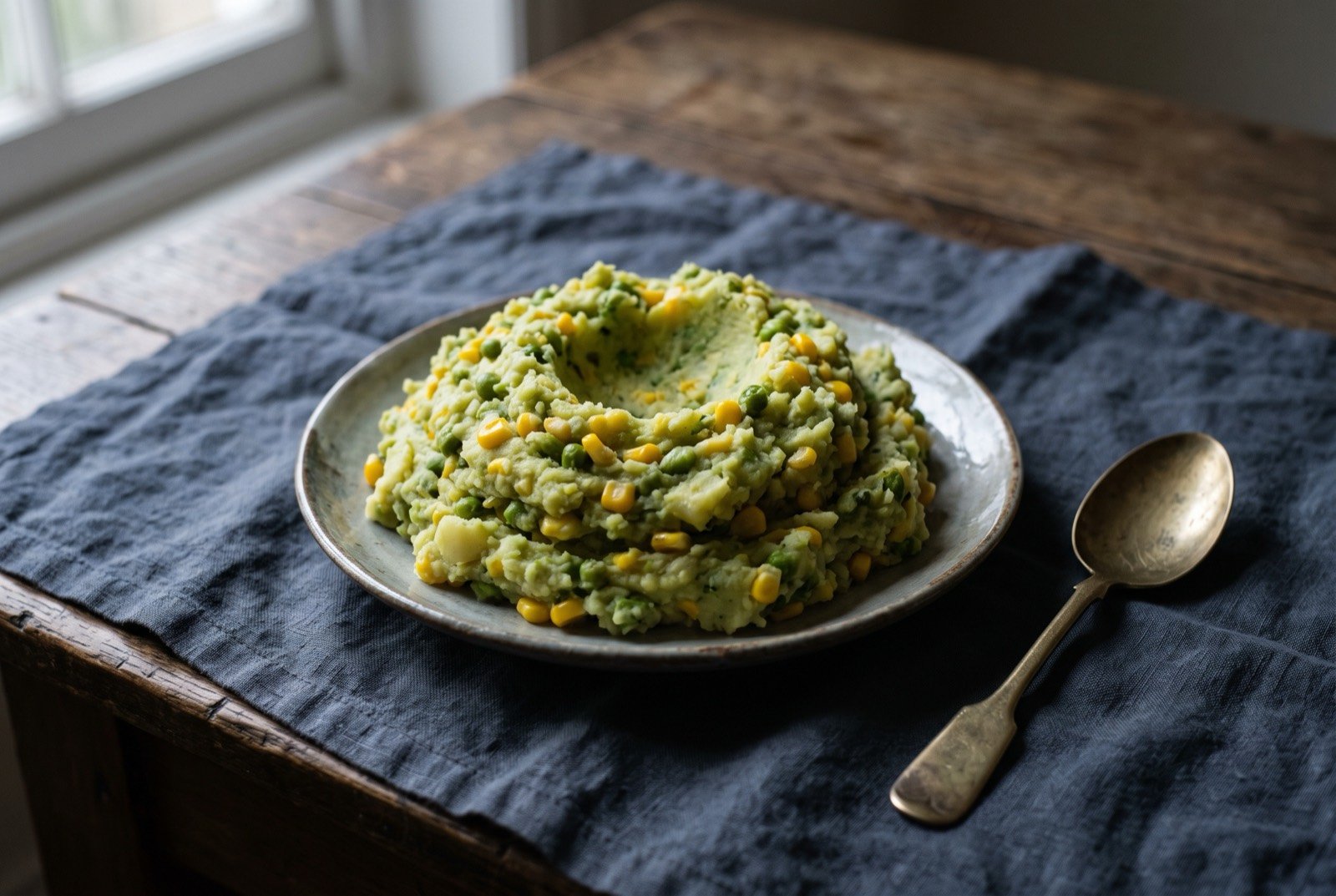
- Mash with a flat wooden paddle, pressing and turning, 3 to 5 minutes, working in the butter and salt. Doneness cues: the potato has fully collapsed, the maize and peas are still visible as flecks, the colour is a uniform pale green with no streaks, and the mass holds a shape when you press it into a mound.
Notes
Githeri, the other Kikuyu one-pot, is the same larder handled differently: maize and beans soaked overnight and boiled together for 90 minutes to 2 hours until both are tender, then sometimes fried with onion and tomato. It is the direct ancestor of mukimo and worth cooking once to see the family resemblance.
What a modern chef changes
Method
- Steam the potatoes rather than boiling them (rung 4). 30 minutes in a steamer basket at 100 degrees. Boiling leaches soluble amylose into the water and waterlogs the granules; steaming gelatinises them with only the water already in the potato, so the mash is drier, holds its shape better, and tastes more of potato.
- Extract the greens rather than mashing them in (rung 4). Blitz the wilted greens with 50ml of hot water in the high-power blender for 45 seconds, then pass through the chinois, pressing hard. Fold the resulting concentrated purée through the mash at the very end. A blade at full speed disperses the leaf into particles far finer than a paddle can, so you get the colour and the mineral bitterness of twice the leaf with none of the leaf water and none of the stringiness.
- Brown the butter (rung 2). Take 40g of butter to a full beurre noisette, dark gold with a nutty smell and toasted milk solids on the bottom, and work it in while both butter and mash are hot. Ghee has been the Kikuyu cooking fat for as long as there have been Kikuyu cattle; browning it takes the milk proteins into Maillard territory and gives the dish a savoury depth that raw butter cannot.
Notes
Three named changes.