The Gulf and Arabia · Volume 09, The Terrace, the Wadi and a Kitchen Carried Out
Hadhrami mandi
Hadhramaut
Illustration
- Time
- 3 hours
- Researched
- Researched from 91 sources in the brief
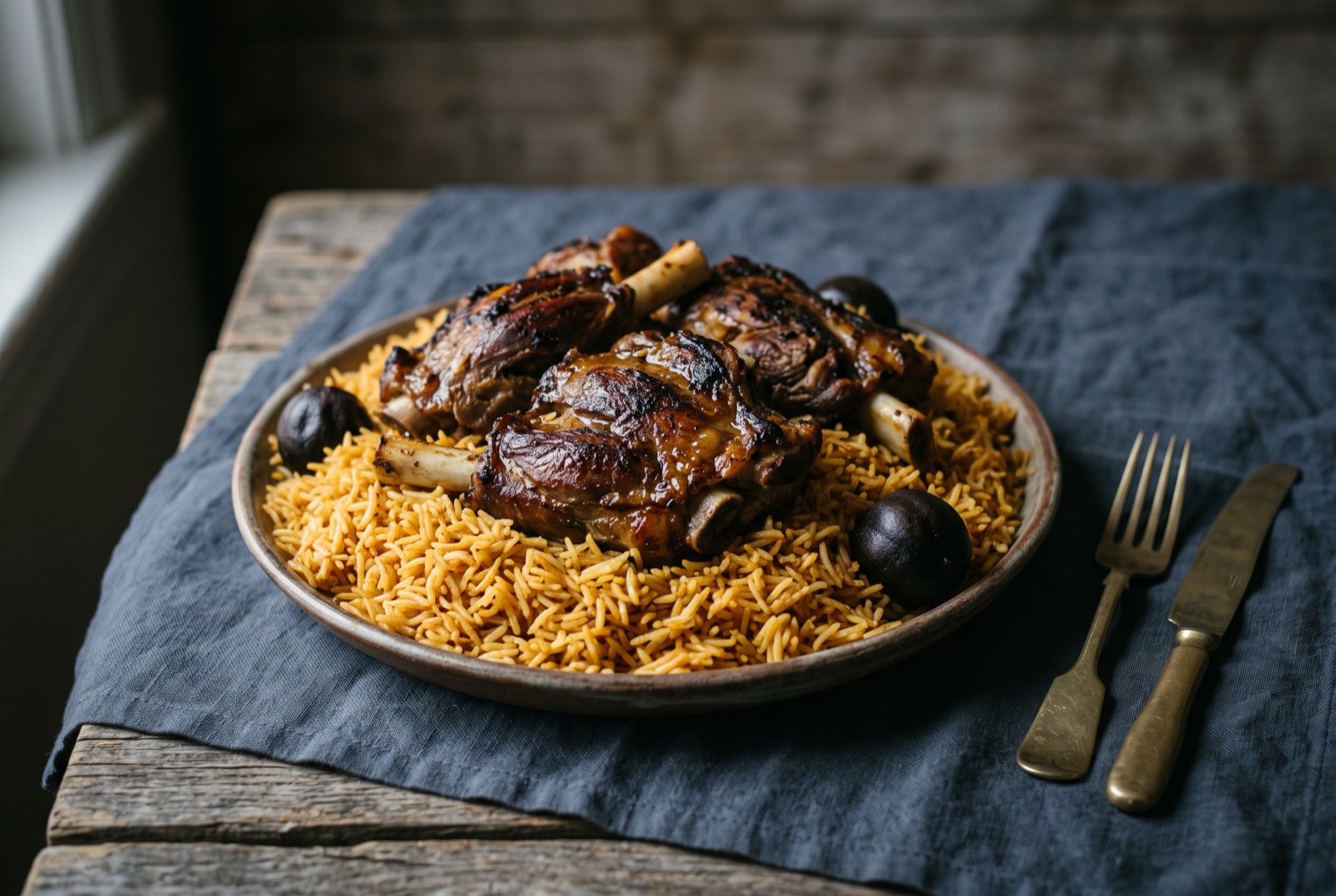
Meat, usually mutton, lamb or chicken, is cooked with basmati rice in an underground pit oven: the meat is suspended on a rack or iron skewers above dry-wood charcoal, never touching it, while rice cooks in a pot at the base, basted continuously by the meat's own dripping fat. The pit is sealed and left several hours. This chapter treats Hadhramaut's specific claim to have originated mandi carefully rather than as settled fact: the best support found is a Gulf heritage feature drawing a real technical distinction between Hadhrami mandi, which cooks rice and meat together and traditionally tolerated meat that had travelled, tied to Hadhramaut's own trading culture, and the Yemeni-Hijazi madhbi further north, which cooks rice separately and demands same-day fresh lamb. Neither dish's founding date is known, and this chapter does not invent one.
As tradition built it
Serves 6 to 8. About 3 hours.
Ingredients
- 2kg mutton, on the bone
- to taste salt
Spice rub
- 2 tbsp cloves
- 4 tbsp bay leaf
- 1 tbsp cardamom
- 1 tbsp ginger
- 1 tbsp nutmeg
- 1 tsp black pepper
For the rice
- 3 cups basmati rice, soaked 30 minutes
- 4 cups meat stock
- 3 dried lime (loomi), whole
- 1 onion, chopped
- 1 tbsp ghee
- 1 tbsp oil
Method
- Rub the mutton with salt and half the spice mix of cloves, bay leaf, cardamom, ginger, nutmeg and black pepper. Set aside.
- Sauté the onion in ghee and oil until soft, add the remaining spice mix, then the drained rice, stirring to coat.
- Add the hot stock and dried limes, bring to a simmer.
- Suspend the meat above the rice, so it never touches it, in a sealed vessel that traps rising heat and steam, letting the meat's fat and juice drip down onto the rice as it cooks.
- Cook, sealed, 2 to 3 hours, until the meat is very tender and the rice has absorbed the stock and taken on the meat's dripping fat and spice.
Notes
No Hadhrami cookbook author or food-heritage institution's recipe with quantities could be found for this chapter; the recipe above comes from Arabic recipe aggregators and should be treated as plausible and broadly representative rather than a verified traditional standard.
What a modern chef changes
The smoke and the drip, replicated honestly
Rung 2
Method
- Run a Big Green Egg indirect, a drip pan holding the parboiled rice set beneath a raised rack carrying the seasoned meat, lid closed throughout to trap smoke, understood as this atlas's own high-end adaptation rather than sourced Yemeni practice.
- Where a kamado is not available, finish with a coal-dum step instead: a piece of fully lit charcoal in a small foil cup set on the cooked rice, a few drops of oil to make it smoke, the pot then sealed tightly 10 to 15 minutes before serving.
- Rest the meat, covered, for 10 minutes off the heat before carving over the rice, so the last of its rendered fat continues to fall exactly where mandi wants it.