The Indian subcontinent · Volume 13, The Tandoor Wall, the Wagah Line and a Contested Butter Chicken
Chole bhature
Delhi, out of Partition
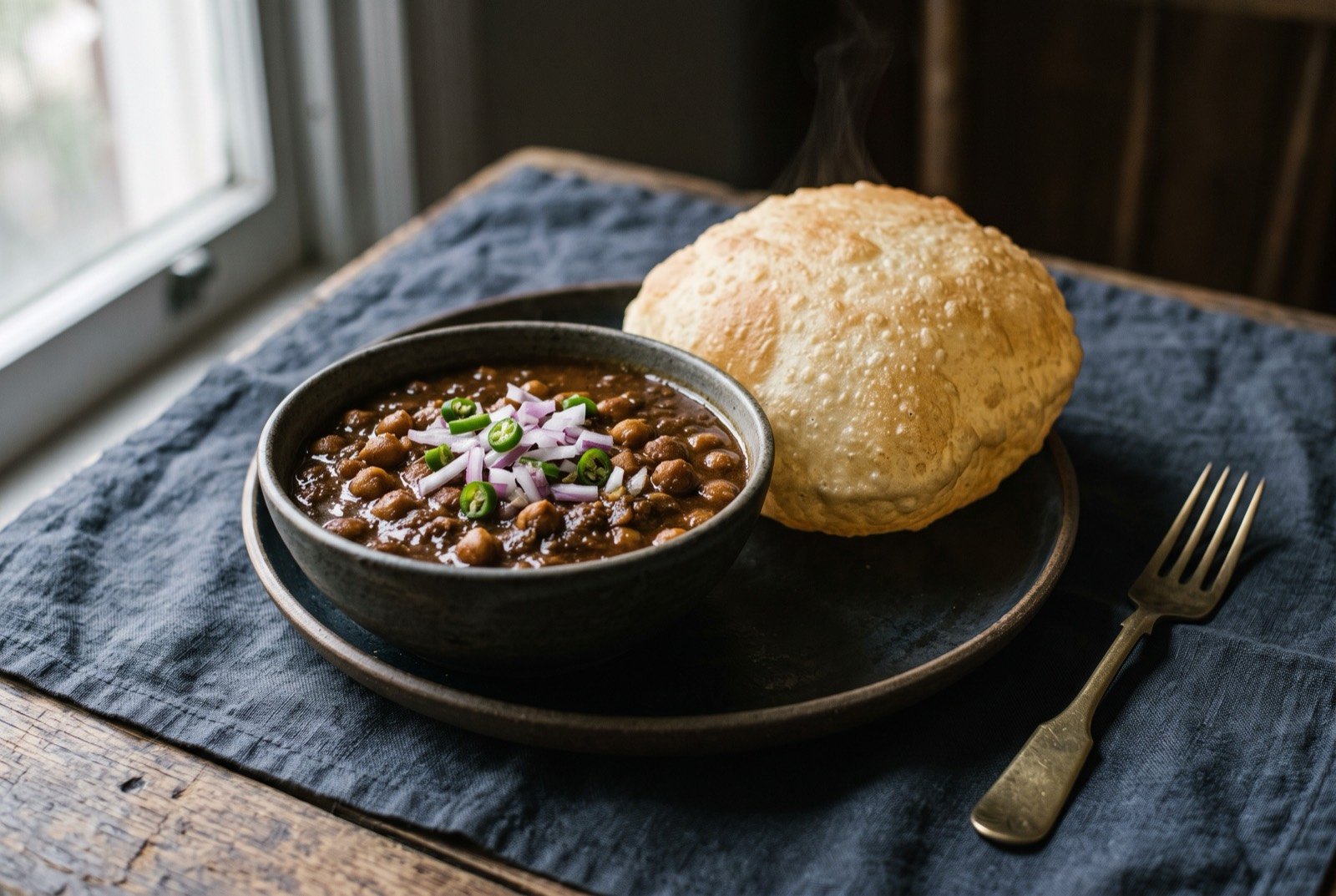
An illustration of the dish, not a photograph of it cooked.
- Time
- 9 hours
- Reviewed
- Not yet reviewed from inside the tradition
- Cooked
- Not yet cooked and reported
Chickpeas simmered until deep brown-black and tender, served with bhature, a leavened white-flour bread deep-fried until it puffs into a golden dome. BBC News's own South Asia correspondent places the dish's origin in Punjabi cuisine specifically, against competing Uttar Pradesh, Rajasthan and Himachal Pradesh claims; food writer Kunal Vijaykar separately argues it derives from pre-Partition Pindi chole, chickpeas named for Rawalpindi, now Pakistani Punjab. Two named, unreconciled Delhi lineages both trace the dish's popularisation directly to 1947: Peshori Lal Lamba, from Lahore, credited by one telling with opening Kwality Restaurant and popularising it there; Sita Ram and his son Diwan Chand, credited by a separate telling with selling the first plate of chole bhature in the city. Present both as competing claims rather than settled history.
As tradition built it
Serves 4. About 1 hour, plus soaking the chickpeas overnight.
Ingredients
- 400g chickpeas, soaked overnight
- 1 tea bag
- 2 onions, finely chopped
- 2 tomatoes, pureed
- 1 tbsp ginger-garlic paste
- 1 tbsp chole masala
- as needed, to taste oil, salt
For the bhature
- 300g plain white flour
- 2 tbsp yoghurt
- 0.5 tsp baking powder
- as needed, to taste water, salt, oil for deep frying
Method
- Pressure-cook the soaked chickpeas with the tea bag and salt until very tender, roughly 6 to 7 whistles; discard the tea bag once cooked. This darkens the chickpeas to their characteristic deep colour, a genuine dhaba and household trick, not a fringe claim.
- Soften the onion in oil, add the ginger-garlic paste, then the tomato puree and chole masala, and cook down to a thick base.
- Stir the cooked chickpeas through the base, adding a little of their own cooking liquid, and simmer 15 minutes.
- For the bhature, knead the flour, yoghurt, baking powder, salt and enough water into a soft dough; rest at least an hour. No source consulted gave precise quantities or a rest time for the dough specifically, so the ratios here follow standard leavened fried-bread practice rather than a verified traditional standard.
- Roll into rounds and deep-fry in hot oil until puffed and golden on both sides.
What a modern chef changes
The tempering treated with the same seriousness as the frying.
Rung 2
Method
- Bloom the whole spices in the chole masala's oil before the tomato joins them, rather than adding the masala directly to a wet base, drawing out fat-soluble aromatics a purely wet simmer would leave behind.
- Rest the bhature dough a full two hours rather than one, giving the gluten more time to relax, which produces a more even, reliable puff in the fryer.
- Fry at a genuinely hot, stable oil temperature and do not crowd the pan, since a dropping oil temperature is the most common reason a bhature stays flat rather than domes.