Central Europe · Volume 18, Lye, the Purity Myth and the Alp Next Door
Obatzda
Freising, near Munich
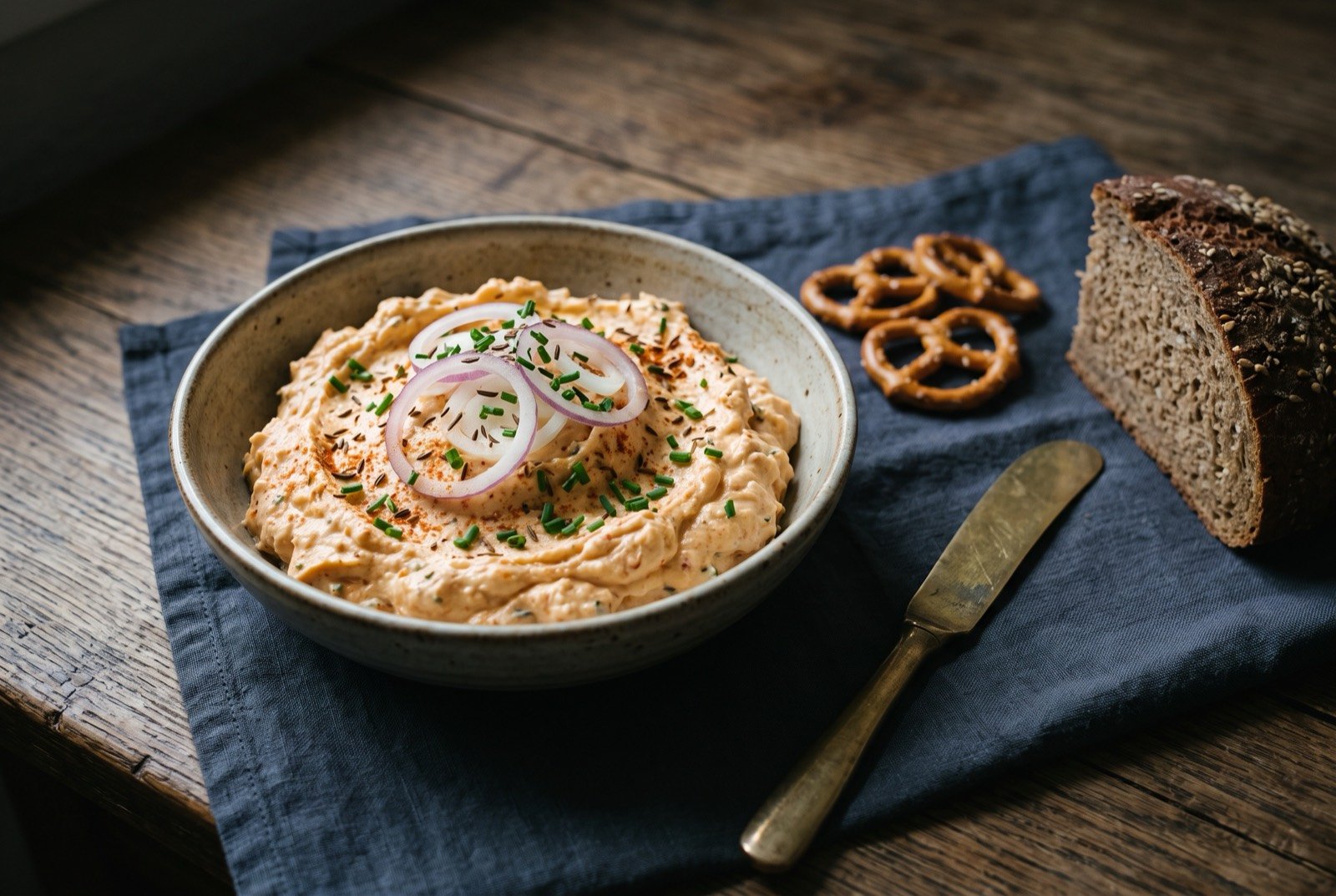
An illustration of the dish, not a photograph of it cooked.
- Time
- 15 minutes
- Researched
- 11 sources cited
- Reviewed
- Not yet reviewed from inside the tradition
- Cooked
- Not yet cooked and reported
A named, dated invention from the 1920s, not ancient peasant food, though the specific attribution below needs a stronger primary source than has been found so far.
As tradition built it
Serves 4 as Brotzeit. About 15 minutes.
Ingredients
- 250 g ripe camembert or brie, at room temperature
- 125 g unsalted butter, softened
- 100 g quark or full-fat cream cheese
- 1 small onion, very finely diced, plus extra rings to serve
- 1 tsp sweet paprika
- ½ tsp caraway seed, lightly crushed
- 50 ml wheat beer
- to taste salt and black pepper
- to finish chives, to finish
- to serve pretzels or rye bread and radish, to serve
Method
- Mash the camembert with a fork until fairly smooth, rind and all.
- Beat in the softened butter until the mixture turns pale and fluffy.
- Fold through the quark, onion, paprika and caraway.
- Loosen with the wheat beer, a splash at a time, to a soft, spreadable consistency, not a liquid one.
- Season with salt and pepper, mound onto a plate, scatter with onion rings and chives, and serve with pretzels or rye bread and radish.
What a modern chef changes
Buying for ripeness as the actual technique, and a controlled ferment to get there reliably
Rung 6
Method
- Buy the camembert four to five days ahead and ripen it deliberately at room temperature, checking daily until the centre yields to a light finger-press across its whole surface, rather than using whatever ripeness a supermarket shelf happens to offer on the day of cooking. This single decision decides the dish more than any technique that follows it.
- Whip the butter and cheese together in a stand mixer rather than by hand, incorporating more air for a genuinely fluffy result closer to the dish's own name, "angebatzt," roughly "kneaded to a lump," worked here in the opposite direction, toward lightness rather than density.
- Reduce the wheat beer by half in a small pan before adding it, concentrating its flavour so a smaller quantity does the same loosening work without over-thinning the mixture.