Central Europe · Volume 18, Lye, the Purity Myth and the Alp Next Door
Rösti
Zurich and Bern
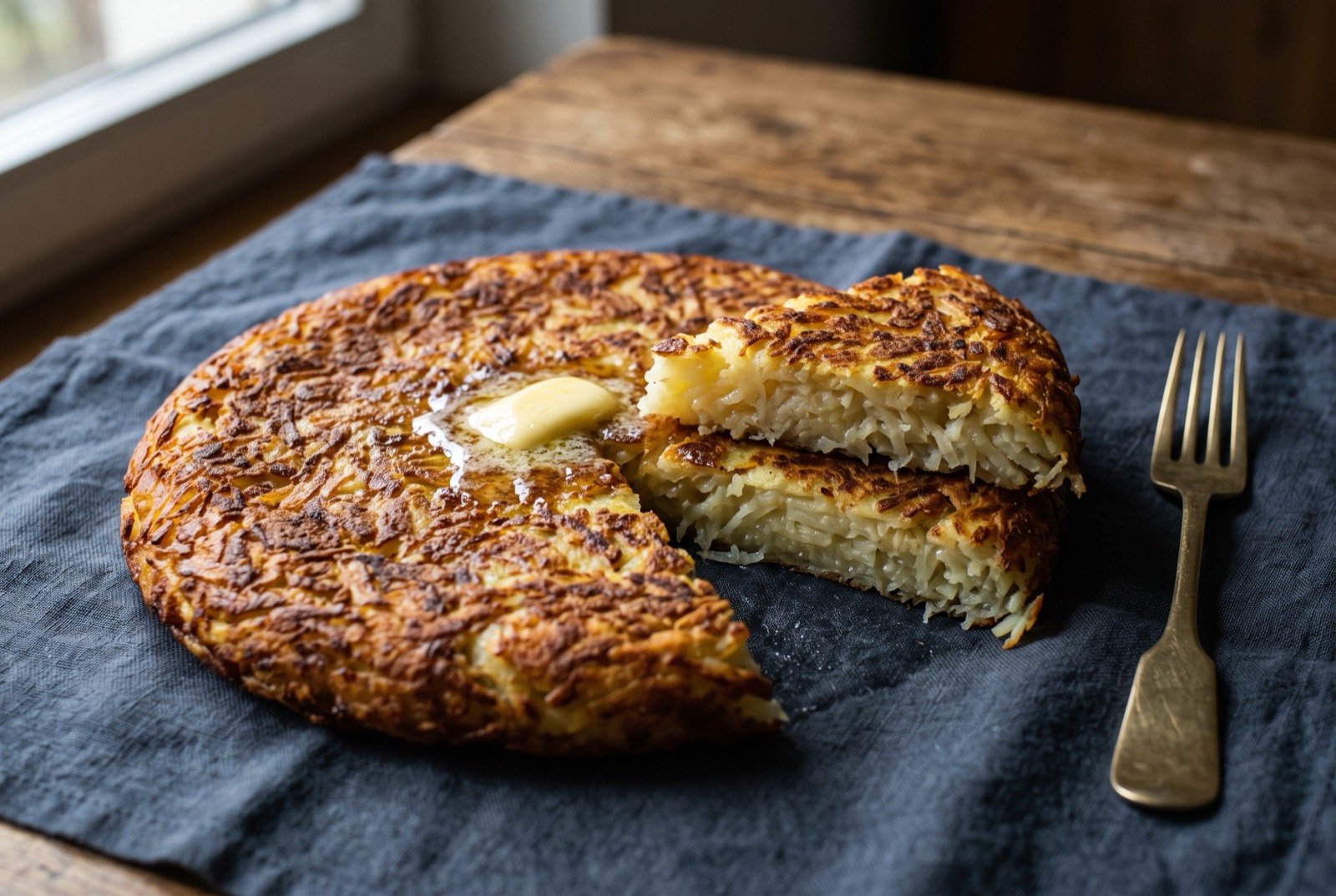
An illustration of the dish, not a photograph of it cooked.
- Time
- 40 minutes
- Researched
- 11 sources cited
- Reviewed
- Not yet reviewed from inside the tradition
- Cooked
- Not yet cooked and reported
Both claimed, neither settled. See the history above for the genuine, unresolved origin dispute.
As tradition built it
Serves 4. About 40 minutes, plus 2 days' resting for best results.
Ingredients
- 1 kg floury potatoes
- 60 g butter
- to taste salt
Method
- Boil the potatoes whole and unpeeled until just tender, then cool completely and, ideally, refrigerate 2 days or more before grating; a potato cooked and cooled well ahead grates and fries far better than a raw or same-day one.
- Peel and coarsely grate the potatoes in one consistent direction, for even-sized shreds that brown at the same rate.
- Melt half the butter in a well-seasoned or non-stick pan, add the grated potato, season with salt, and press into an even, flat cake.
- Fry over medium heat until a probe thermometer inserted into the centre reads roughly 75°C and the underside has released cleanly from the pan.
- Invert onto a plate, add the remaining butter to the pan, and slide the cake back in to brown the second side.
What a modern chef changes
A monitored core temperature and a longer, colder rest, both taken from professional practice
Rung 3
Method
- Rest the boiled, cooled potato in the fridge for a full 48 to 72 hours before grating, longer than most home recipes suggest, since the professional method this recreates treats that resting time, not the frying itself, as the main variable deciding texture.
- Fry with a probe thermometer left in the cake throughout, targeting the same 75°C core rather than judging doneness by colour alone, since a rösti can brown on the outside well before its centre is properly hot through.
- Finish with a spoonful of hot, nut-brown butter poured over just before serving, rather than folding all the butter in at the start, for a final layer of aroma the initial fry alone cannot supply.