The Mediterranean · Volume 01, Butter, Egg Pasta and the Roman Hinge
Bagna cauda
Piedmont
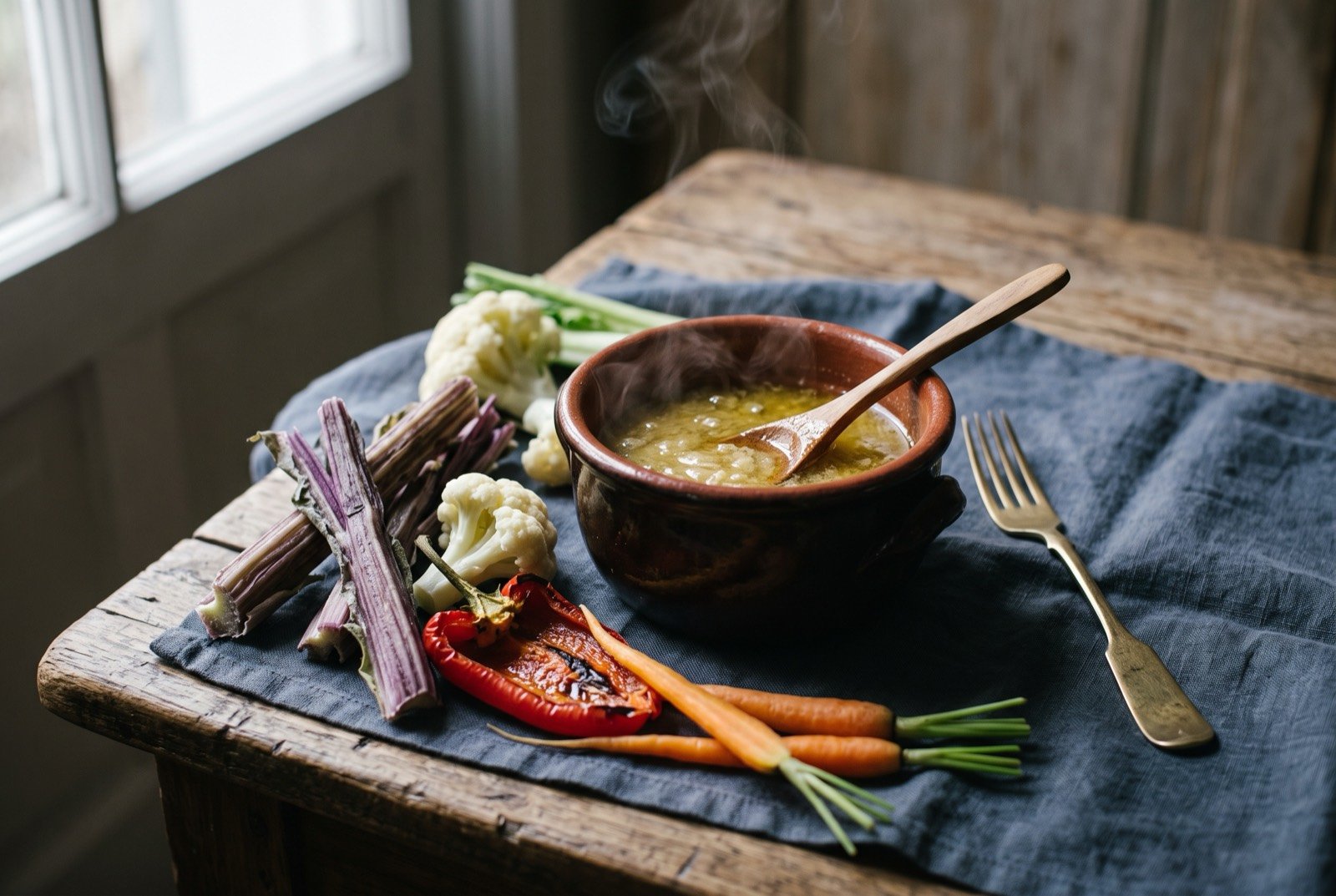
An illustration of the dish, not a photograph of it cooked.
- Time
- 40 minutes
- Researched
- 14 sources cited
- Reviewed
- Not yet reviewed from inside the tradition
- Cooked
- Not yet cooked and reported
A pot of hot garlic-and-anchovy oil at the centre of the table, raw and steamed vegetables dipped into it, more a ritual than a recipe. The Asti delegation of the Accademia Italiana della Cucina deposited a recipe in 2015, described by an expert panel as the most reliable version.
As tradition built it
Serves 4. About 40 minutes.
Ingredients
- 4 whole heads garlic
- 200 g salted red anchovies from Spain, or Ligurian salt-cured, desalted and boned
- 250 ml extra virgin olive oil
- a knob butter, optional, stirred in at the end
- as available cauliflower, cardoons, kale, roasted peppers, steamed potatoes, raw and steamed for dipping
Method
- Peel and thinly slice the garlic. Put it in a small heavy pot with the oil.
- Set over the lowest possible flame and let it dissolve slowly into a velvety cream, about 20 minutes. It must never brown. If it colours at all, the heat is too high.
- Add the desalted, boned anchovies and continue cooking gently until they dissolve into the oil, a further 10 to 15 minutes.
- Stir in the butter if using, off the heat.
- Serve hot, ideally in a small earthenware pot, with the vegetables arranged for dipping.
What a modern chef changes
Confit at a held temperature, and a second anchovy layer for depth
Rungs 2 and 3
Method
- Confit the garlic in a water bath. Slice the garlic and seal it with the oil in a vacuum bag, then hold it at 85°C for 90 minutes in an immersion circulator. This gives you the same velvety, never-browned result the lowest flame is chasing, without the risk of a moment's inattention scorching it. Rung 2.
- Add the anchovies in two stages. Melt three quarters of them into the confit oil as tradition does, then finely chop the remaining quarter and stir it in raw at the very end, off the heat. You keep the smooth base and add back a fresher, more distinct anchovy note that long cooking dissolves away.
- Warm the serving vessel properly. Bagna cauda cools and separates fast once it leaves real heat. A pre-warmed earthenware dish over a low tealight, not a hob flame, holds it at serving temperature without continuing to cook it.