The Mediterranean · Volume 01, Butter, Egg Pasta and the Roman Hinge
Ribollita
Tuscany
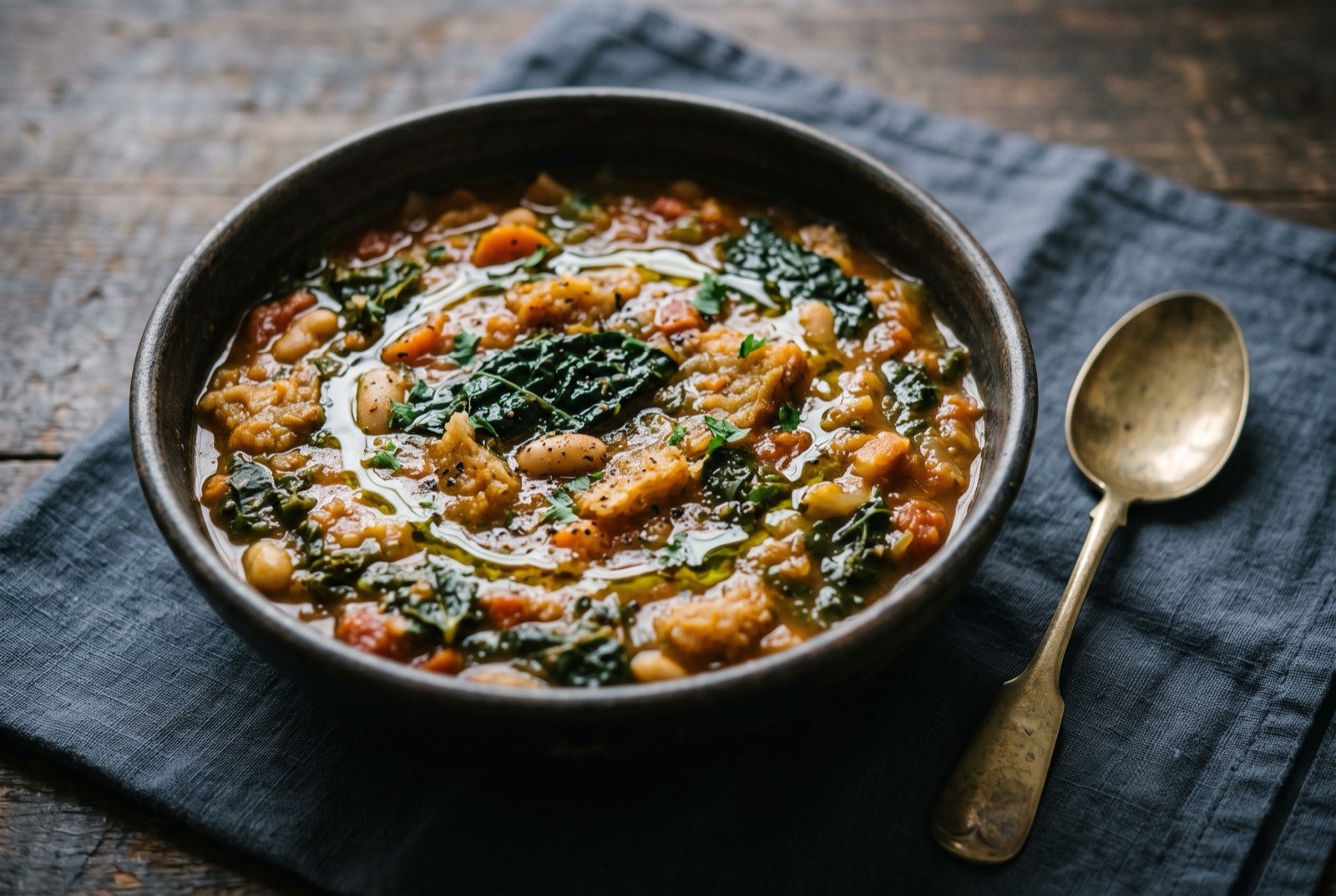
An illustration of the dish, not a photograph of it cooked.
- Time
- 2 hours 30
- Researched
- 14 sources cited
- Reviewed
- Not yet reviewed from inside the tradition
- Cooked
- Not yet cooked and reported
Documented in Artusi, 1891, under the title "zuppa di magro dei contadini," the peasants' meatless soup: chard, potatoes, white beans, oil, cabbage, cavolo nero, prosciutto rind and stale bread. An unusually concrete written staging point for a dish otherwise carried by oral tradition.
As tradition built it
Serves 6. About 2.5 hours, plus a day's rest.
Ingredients
- 400 g dried cannellini beans, soaked overnight
- 500 g cavolo nero
- 200 g Swiss chard
- 2 carrots
- 2 celery stalks
- 1 onion
- 400 g ripe tomatoes, or tinned
- a few sprigs thyme
- 300 g stale, unsalted pane sciocco
- a generous pour extra virgin olive oil
- to taste salt
Method
- Cook the soaked beans in fresh water until tender, about 1.5 hours. Purée about a third of them back into the cooking liquid to thicken it.
- In a separate large pot, soften the carrot, celery and onion in oil.
- Add the tomatoes, thyme and the beans with their liquid.
- Add the cavolo nero and chard, roughly torn, and simmer 30 minutes.
- Tear the stale bread into pieces and stir it through in layers.
- Season, and rest the whole pot a full day.
- To serve, reheat and bring back to a simmer, working it with a whisk from the bottom up so the starch stays in suspension rather than settling.
Notes
Tradition holds it should be reheated at least two or three times before it is properly "ribollita," the reboiling constitutive of the dish's identity, not incidental to it.
What a modern chef changes
The bread understood as a structural ingredient with a real specification
Rung 6
Method
- Use bread that is genuinely stale and genuinely unsalted, not fresh bread left out overnight. If you cannot source real pane sciocco, bake a plain sourdough loaf with no added salt specifically to go stale for this purpose. Salted bread changes the texture, it does not break down the same way, and the whole seasoning balance of the dish, which is built assuming the bread arrives as pure structure. Rung 6.
- Layer the bread in rather than stirring it through once. Build the pot in true layers, vegetables, bean liquid, torn bread, repeated, so the bread absorbs unevenly and some pieces stay with more bite than others, which is closer to how a genuinely leftover-built version varies than a single homogenous stir achieves.
- Whisk deliberately at each reheat, working from the bottom, to keep the released starch in suspension rather than let it settle and thin the liquid above it.