The Mediterranean · Volume 01, Butter, Egg Pasta and the Roman Hinge
Pesto alla Genovese
Liguria
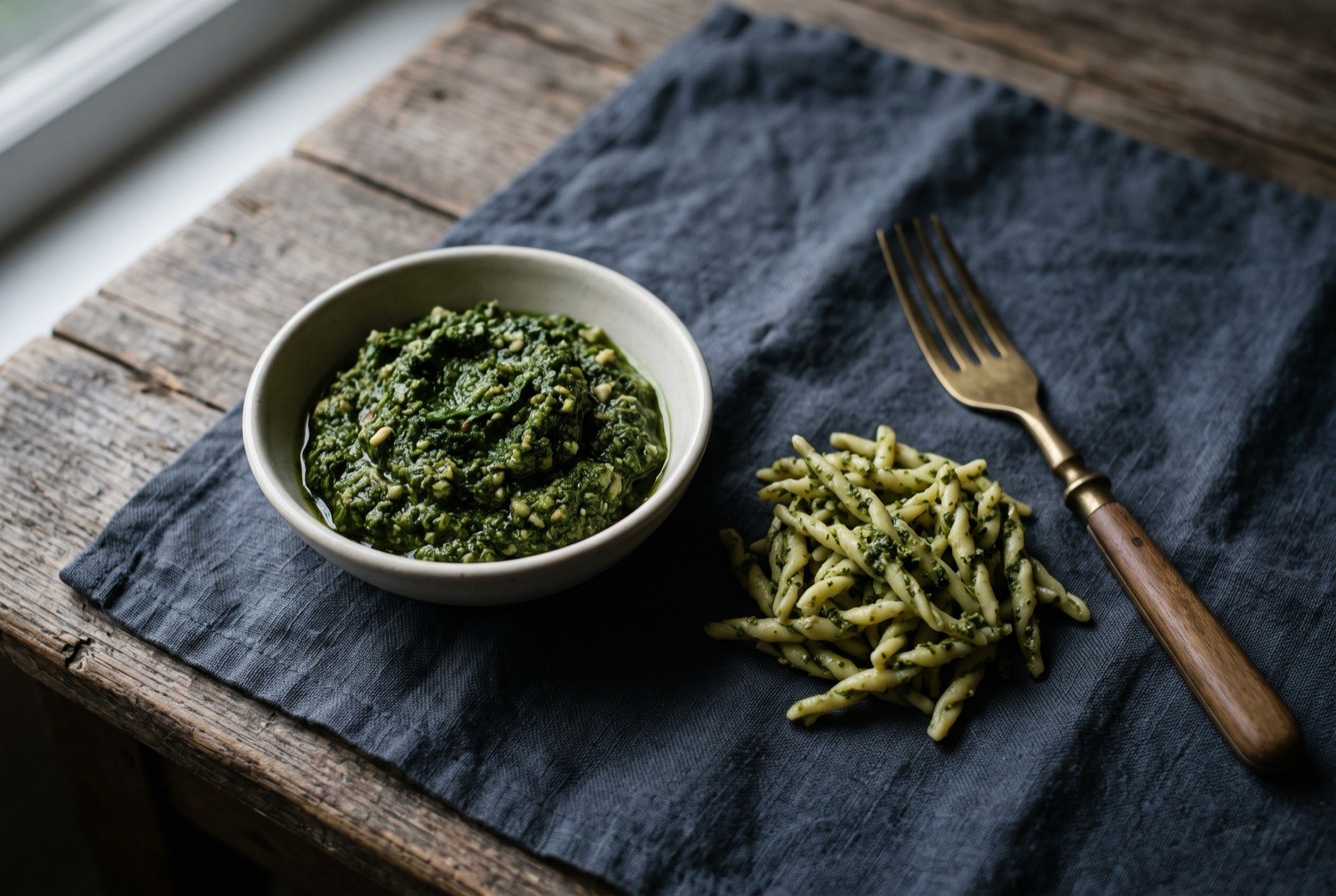
An illustration of the dish, not a photograph of it cooked.
- Time
- 20 minutes
- Researched
- 14 sources cited
- Reviewed
- Not yet reviewed from inside the tradition
- Cooked
- Not yet cooked and reported
The Consorzio del Pesto Genovese's own deposited recipe is the reference here, not a converged consumer average.
As tradition built it
For 600 g pasta. About 20 minutes.
Ingredients
- 50 g DOP Genovese basil, small leaf
- half a glass extra virgin olive oil, Ligurian preferred
- 6 tbsp grated Parmigiano Reggiano DOP
- 2 tbsp grated pecorino DOP, Fiore Sardo
- 2 garlic cloves
- 1 tbsp pine nuts
- a few grains coarse salt
Method
- Wash and thoroughly dry the basil leaves.
- Put the garlic, pine nuts and a little coarse salt in a marble mortar, and begin working with a wooden pestle in a gentle rotary motion, not a pounding one.
- Add the basil leaves gradually, continuing to grind rather than chop, so the leaf is bruised and torn, not sliced. The essential oils sit in the veins and are damaged by hard chopping.
- Once you have a bright green, fairly smooth cream, work in the two cheeses, the Parmigiano and pecorino.
- Add the oil in a thin stream, working it in to emulsify to a smooth, homogenous sauce.
- Dress freshly cooked pasta, loosened with a spoonful of the pasta cooking water.
What a modern chef changes
A blender treated as a heat problem, not a speed problem
Rung 3
Method
- Chill everything first. The jug, the blade assembly and the basil itself, in the fridge for 30 minutes before you start.
- Pulse, do not run. Short bursts of two to three seconds, scraping down between each, rather than a continuous blend. The blade heats fastest under sustained load, and heat is what oxidises the leaf and dulls the colour, not the blade's sharpness.
- Work over an ice bath. Sit the blender jug, if it detaches, or the bowl you decant into, in a larger bowl of ice water while you finish incorporating the oil.
- Add the oil last, still in a thin stream, exactly as the mortar method does. The mechanism, emulsifying to encapsulate and protect the released essential oils, is unchanged by the tool.