The Mediterranean · Volume 01, Butter, Egg Pasta and the Roman Hinge
Amatriciana
Lazio, at the historic meeting point of Lazio, Abruzzo, the Marche and Umbria
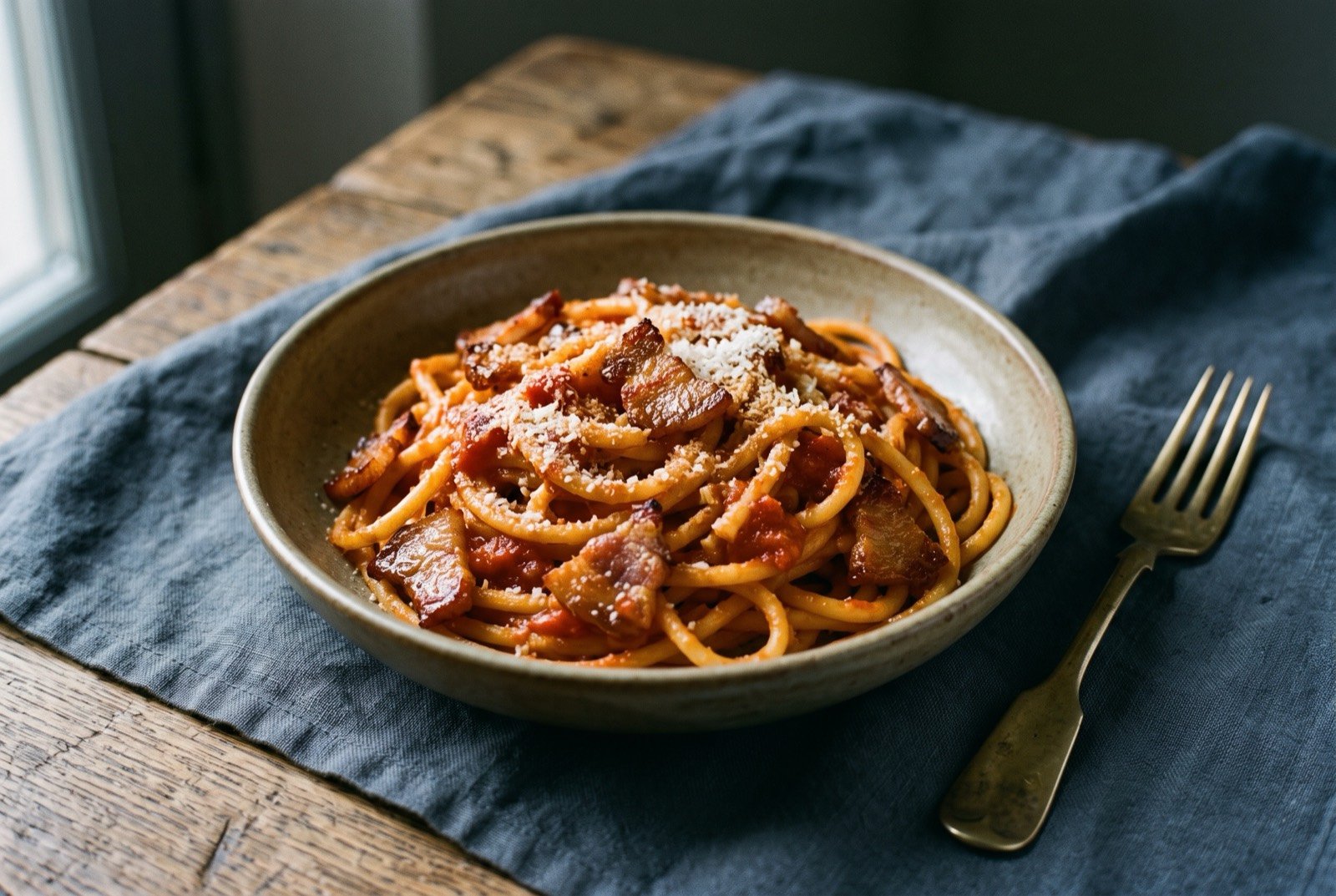
Illustration
- Time
- 30 minutes
- Researched
- 14 sources cited
Amatriciana Tradizionale was registered as an EU Traditional Speciality Guaranteed under Implementing Regulation (EU) 2020/395, published in the Official Journal of the EU on 13 March 2020. This is as close to a primary legal specification as any dish in this book gets.
As tradition built it
Serves 4. About 30 minutes.
Ingredients
- 400 g spaghetti or bucatini
- 150 g guanciale amatriciano, aged minimum 30 days, cut into triangular strips with a rounded base
- 600 g tomato, passata and/or peeled pieces
- a little extra virgin olive oil
- a splash white wine
- to taste salt, chilli or black pepper
Method
- Cut the guanciale into strips and sauté gently in a little olive oil until the foam subsides and the fat begins to render.
- Add a splash of white wine once the guanciale is golden, let it evaporate.
- Set the guanciale aside.
- Add the tomato, salt and pepper or chilli to the same pan.
- Boil vigorously 10 to 20 minutes, to a creamy consistency, not reduced further.
- Return the guanciale, cook a further 5 to 10 minutes.
- Toss with the pasta.
Notes
The disciplinare's percentage ranges, for reference: guanciale 18 to 30% of the finished sauce, tomato 69 to 81%, oil 0.5 to 1%. Explicitly and by name excluded: garlic, onion and pancetta. The disciplinare states this exclusion is precisely what distinguishes Amatriciana Tradizionale from similar sauces.
A discrepancy worth naming rather than resolving quietly: several Italian consumer sources describe Pecorino Romano as a core sauce ingredient, but the official disciplinare text lists guanciale, tomato, olive oil, salt, wine and pepper as the sauce components, with no percentage allocation for pecorino. It most likely belongs to the cheese dressing the finished pasta at table rather than the registered sauce itself, but this chapter has not been able to check that against the full regulation text directly, and says so rather than stating it either way as settled.
What a modern chef changes
The disciplinare's percentages held as a real discipline, and the guanciale rendered at both ends of Rung 2
Rungs 2 and 4
Method
- Weigh the guanciale against the finished sauce, not against the pasta. Aim for the disciplinare's own range, 18 to 30 per cent of the sauce by weight, rather than eyeballing a handful. This is the single clearest way to stop the dish drifting into a thin tomato sauce with a token amount of pork.
- Render the guanciale from cold, exactly as in the carbonara elevation above, so the fat liquefies fully before the meat browns. Rung 2.
- Boil the tomato hard for the full stated window, not longer. The disciplinare's 10 to 20 minutes at a vigorous boil is deliberately short; reducing further past that point pushes the sauce toward the same over-thickened failure the ragù elevation warns against. Rung 4.
- Keep the pecorino at the table, not in the pot, given the genuine, unresolved discrepancy above. Grate it fresh over the finished plate rather than melting it into the sauce, which keeps the dish honest about what the sourcing behind this chapter can and cannot confirm.
Notes
Part Four