The Mediterranean · Volume 03, The Aegean and the Contested Table
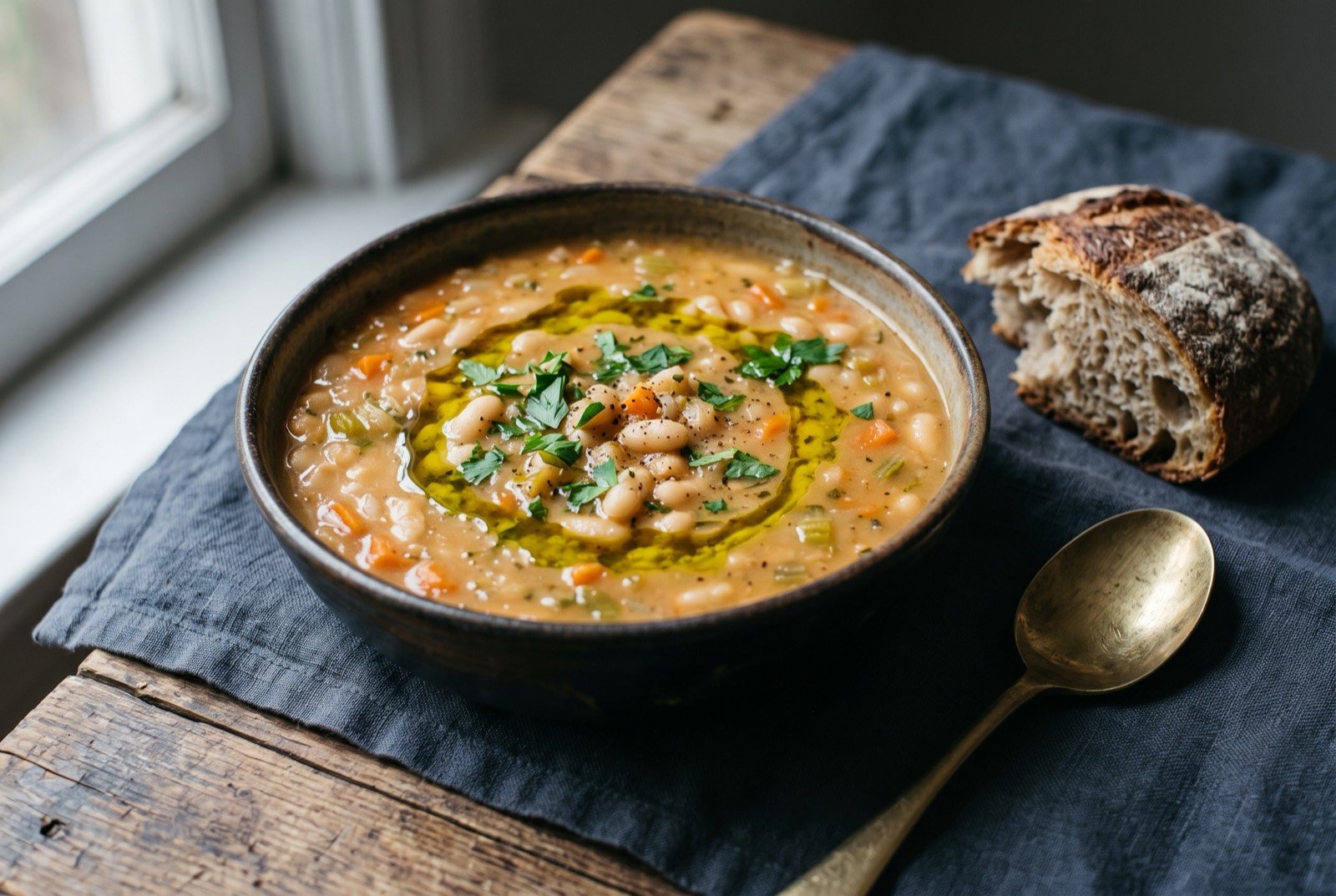
Fasolada
Greece
Illustration
- Time
- 1 hour 30
- Researched
- 11 sources cited
Greek sources themselves say the "national dish" status was promoted or established during the Metaxas dictatorship, 1936 to 1941, and at least one source explicitly questions how literally to take that claim, asking whether it was ever a documented policy act at all. Other Greek commentary pushes back on the framing altogether, arguing horta with olive oil deserves the title more, since that combination is credited with helping Greeks survive the Second World War famine. This chapter treats the national-dish framing as a widely repeated claim of uncertain solidity, not settled fact.
As tradition built it
Serves 6. About 1.5 hours.
Ingredients
- 500 g dried white beans, soaked overnight
- 2 carrots, sliced
- 1 onion, chopped
- 2 celery stalks, chopped
- 400 g tomato, crushed
- to taste olive oil, salt, bay
Method
- Drain the soaked beans, cover with fresh water, bring to a simmer.
- Add the carrot, onion and celery.
- Simmer gently for a long time, until the beans are tender and the liquid has thickened to a light stew. No canonical time or bean-to-liquid ratio was found in the sourcing behind this chapter, a real gap this chapter does not fill with an invented number.
- Add the tomato and bay partway through, and salt only once the beans are nearly tender.
- Finish with a generous pour of raw olive oil.
Notes
Slow cooking is repeatedly cited as the secret of good fasolada, and it is a Lenten, Clean Monday staple, consistent with the fasting-calendar point above.
What a modern chef changes
The long simmer treated as the actual technique, not a wait to be shortened
Rung 3
Method
- Do not pressure-cook this to save time. The slow, gentle simmer is repeatedly named as the dish's defining technique, not an inconvenience; a fast-cooked version genuinely misses the point, per the sourcing behind this chapter.
- Finish with strained yoghurt on the side rather than in the pot, after Rung 3, a modern but honest addition that lets the eater choose the dish's richness rather than fixing it for them.
- Add the olive oil raw and generous at the very end, never cooked in from the start, for the bright, grassy top note the dish depends on.