The Mediterranean · Volume 03, The Aegean and the Contested Table
Dolmades
Greece
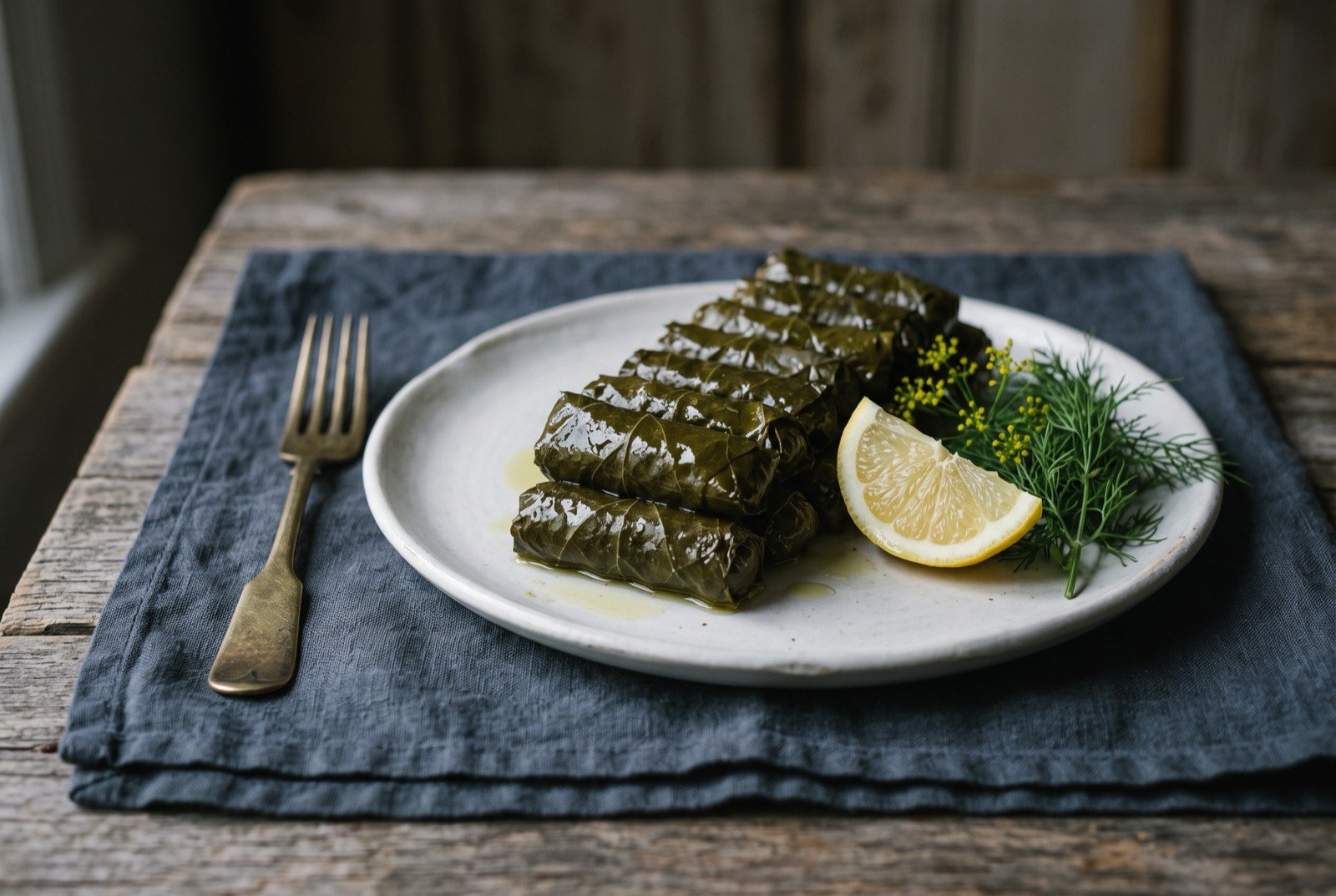
An illustration of the dish, not a photograph of it cooked.
- Time
- 1 hour 30
- Researched
- 11 sources cited
- Reviewed
- Not yet reviewed from inside the tradition
- Cooked
- Not yet cooked and reported
Its own name half-admits this. The meatless version is called gialantzi, itself a Turkish loanword meaning "fake" or "liar," because it fakes a meat dolma.
As tradition built it
Makes about 40. About 1.5 hours.
Ingredients
An outline, not yet a recipe: the tradition's method with its ingredients named but not weighed. Quantities are being added from sources inside the tradition, lead dishes first.
- 60 to 70 tender vine leaves, about 250 g
- 2.5 teacups Carolina rice
- onion, dill, mint, lemon juice
- to taste olive oil, salt
Method
- Blanch the vine leaves briefly if fresh, or rinse well if preserved in brine.
- Sauté the onion in olive oil until soft, add the rice and stir to coat.
- Off the heat, stir in dill, mint, salt and a squeeze of lemon.
- Lay a leaf vein-side up, place a small spoonful of the rice mixture near the stem, fold the sides in and roll tightly.
- Pack the rolls tightly in a pan, seam-side down, in a single dense layer.
- Cover with water and a weighted plate to hold them submerged, simmer about 45 minutes.
- Finish with more lemon juice and olive oil.
Notes
A Cretan variant uses plenty of oil, fresh spring onion and mint with the rice, without meat, in the same gialantzi tradition.
What a modern chef changes
The leaf treated as a wrapper to be worked, not just filled
Rung 1
Method
- If using fresh vine leaves, blanch them in stages, briefly, so they stay pliable rather than splitting; a leaf that tears at the fold is the single most common home failure.
- Toast the rice briefly in the sautéed onion before adding liquid, the same principle as a pilaf, for a firmer, more separate grain inside the roll rather than a mushy one.
- Weight the pan properly during cooking, an inverted plate that just fits inside the pan, so the rolls cannot unravel as the rice expands.