Central Europe · Volume 20, Lard, Bryndza and a Court Cuisine That Passed Overhead
Kapustnica
Slovakia
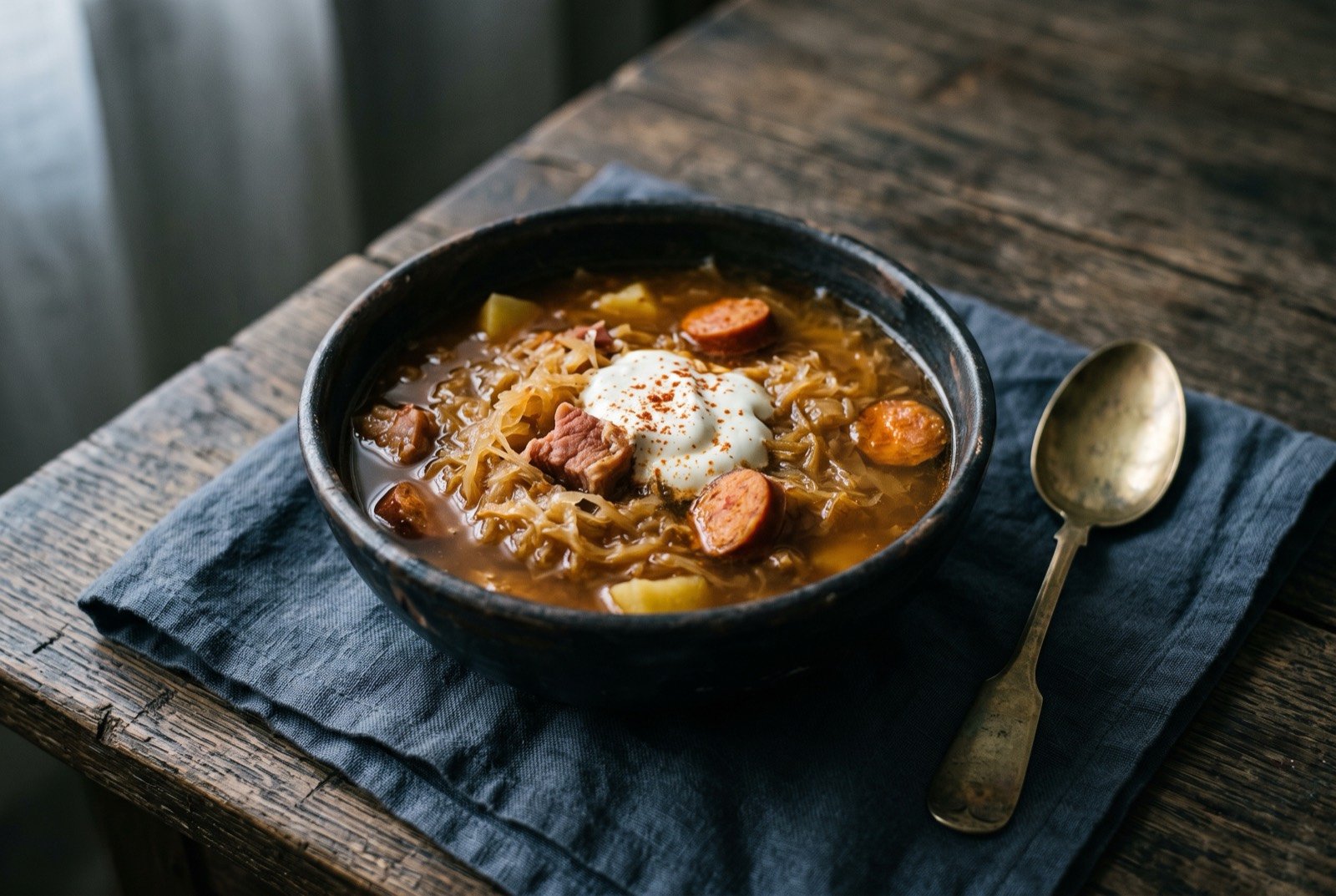
An illustration of the dish, not a photograph of it cooked.
- Time
- 1 hour 30
- Researched
- 27 sources cited
- Reviewed
- Not yet reviewed from inside the tradition
- Cooked
- Not yet cooked and reported
Slovakia. A sauerkraut and smoked meat soup, historically the standard Christmas Eve dish, traditionally without meat and with dried mushrooms in its most austere form. Real regional variation exists: western Slovakia adds cream and dried plums, eastern Slovakia sometimes adds tomato paste and rice.
As tradition built it
Serves 6. About 1.5 hours.
Ingredients
- 500 g sauerkraut
- 500 g pork neck
- 250 g smoked meat (e.g. ribs)
- 2 home-made smoked sausages (klobása)
- 1 onion, for the meat
- 1 onion, for the sauerkraut
- 2 small potatoes, diced
- 2 cloves garlic
- 2 tsp sweet paprika
- 1 tsp caraway, ground
- a few berries, 2 leaves, 1 tbsp allspice, bay leaves, lard
Method
- Sauté one onion in lard, toast the caraway, bay and allspice briefly, add the diced pork neck and garlic, dust with paprika, season, and braise covered 5 to 10 minutes.
- Add water and the smoked meat, and simmer roughly 1 hour.
- Add the diced potato, topping up water to a final yield of 3 to 4 litres.
- Separately, sauté the second onion in lard, add the sauerkraut, season, and poach the whole sausages in it until tender, then slice.
- Combine both pots once the potatoes are soft, simmer together briefly, and serve with sour cream and bread.
What a modern chef changes
The smoked components built from scratch with the full salt-then-smoke discipline, and the broth clarified
Rung 6
Method
- Cure and cold-smoke the pork neck and sausages in house, salting fully to the centre, checkable by an even colour right through the cut, for 3 to 6 weeks before smoking, exactly per rung 6's discipline, rather than relying on a bought smoked product of unknown cure time.
- Build a separate, clarified stock from the pork bones first, and use that as the soup's base liquid rather than plain water, giving a cleaner, deeper savoury foundation before the sauerkraut and paprika are added.
- Reserve a portion of the sauerkraut uncooked, stirred through at the very end, protecting a genuinely fresh, crisp, sharply fermented note against the softer, rounder flavour the fully cooked cabbage develops over the long simmer.