Central Europe · Volume 20, Lard, Bryndza and a Court Cuisine That Passed Overhead
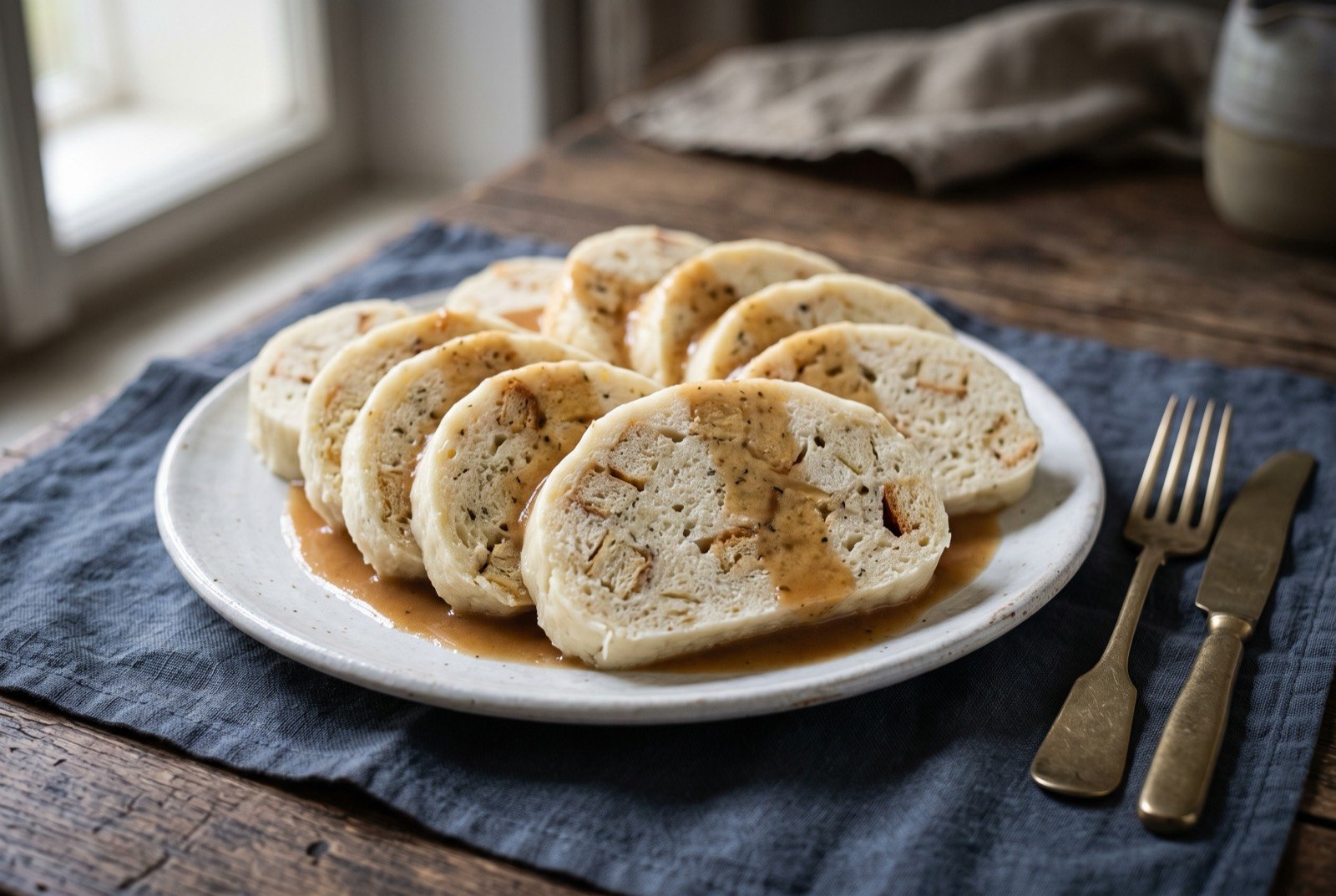
Houskový knedlík
Bohemia and Moravia
Illustration
- Time
- 1 hour 30
- Researched
- 27 sources cited
Bohemia and Moravia. Two structurally different techniques sharing one name and one job: standing in for rice or noodles at almost every main course on this side of the volume.
As tradition built it
Serves 6 to 8 as a side. About 1.5 hours including proving.
Ingredients
- 500 g coarse-milled flour (hrubá mouka, not fine)
- 1 egg plus 1 yolk
- 7 g fast-action yeast
- 250 to 300 ml milk or water, warmed
- 150 g stale bread roll, diced
- to taste salt
Method
- Make a soft, slightly sticky dough from the flour, egg and yolk, yeast, warm milk or water and salt. Fold in the diced bread roll. Stop kneading the moment the dough turns smooth.
- Rest, covered, roughly 60 minutes until doubled.
- Knock back with a folding motion, similar to folding pizza dough, to work the gluten and expel air, then shape into two thick logs.
- Rest a further 15 minutes.
- Steam over, not touching, simmering water, covered, for 25 minutes.
- Slice with plain sewing thread, not a knife, drawn under and pulled sharply, to avoid compressing the crumb.
What a modern chef changes
The gluten discipline stated as a rule, not a feel, and a UK-adapted flour blend
Rung 1
Method
- Weigh the dough's hydration precisely rather than judging "soft and sticky" by feel, and stop mixing the bread dumpling dough the instant it reaches that measured hydration, timed rather than eyeballed. This makes rung 1's mechanism repeatable in a kitchen without decades of a Czech grandmother's practice behind it.
- Build a coarse-flour substitute from UK ingredients, blending standard strong white flour with a small proportion of fine semolina, since hrubá mouka has no direct UK retail equivalent and this blend approximates its coarser gluten structure more closely than plain flour alone.