Central Europe · Volume 20, Lard, Bryndza and a Court Cuisine That Passed Overhead
Bryndzové halušky
Slovakia's Tatra highlands
Illustration
- Time
- 30 minutes
- Researched
- 27 sources cited
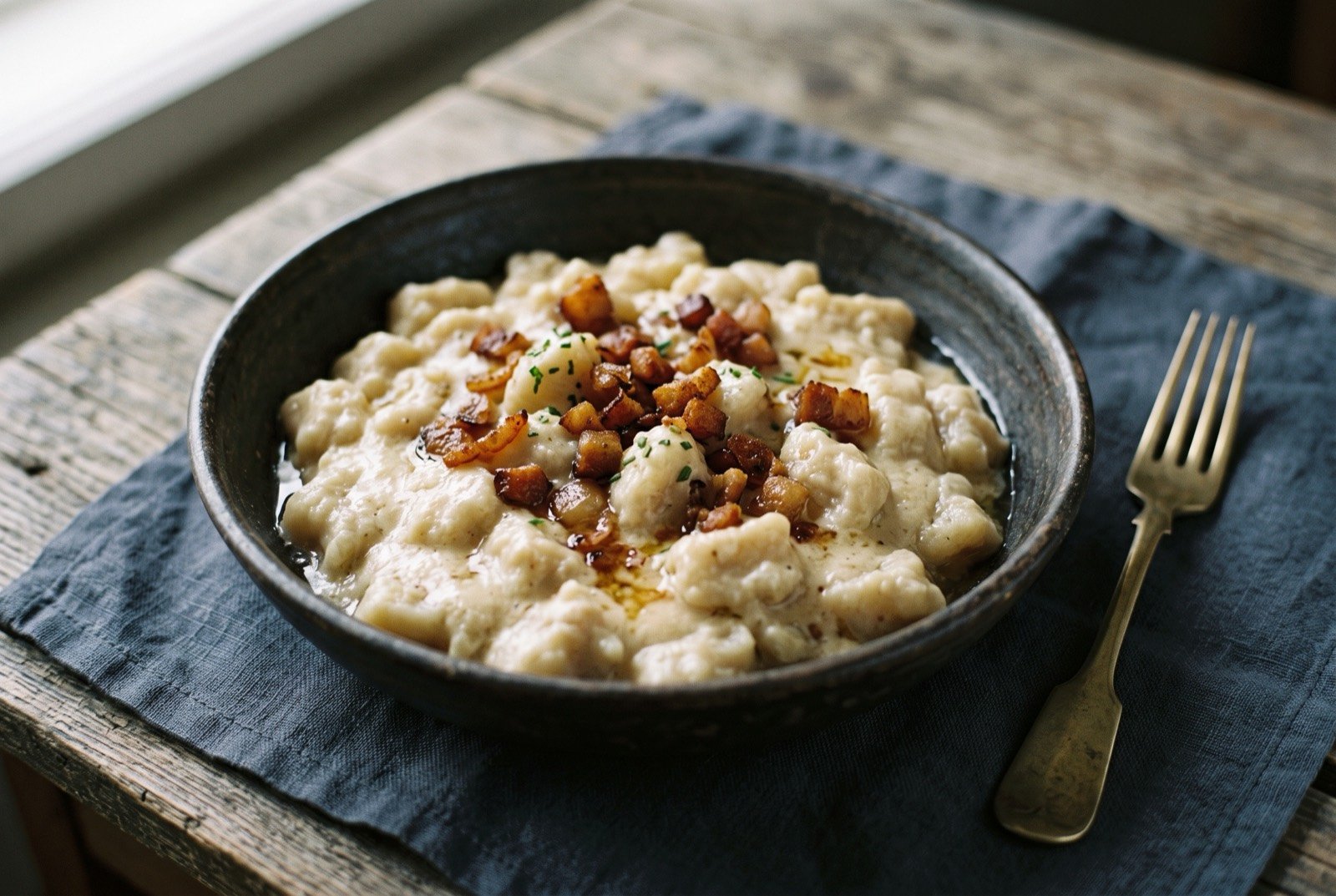
Slovakia's Tatra highlands. The signature dish of the whole Wallachian-descended pastoral world this volume's Slovak half is built around: potato dumplings folded through hot bryndza.
As tradition built it
Serves 4. About 30 minutes.
Ingredients
- 500 g potatoes, finely grated
- 200 g flour (semi-coarse)
- 250 g bryndza
- 100 g white bacon, diced
- a little milk or reserved cooking water
Method
- Grate the potatoes on the finest grater. Salt.
- Work in the flour gradually to a moderately thick batter.
- Render the bacon slowly in a dry pan until crisp, reserving the fat and cracklings.
- Press the dough through a halušky board or purpose-made press directly into a large pot of boiling salted water. Cook 3 to 5 minutes, until floating.
- Mash the bryndza and let it down with a little milk or reserved cooking water into a loose cream.
- Drain the halušky (do not rinse) and fold immediately through the hot bryndza cream, using a splash of the starchy cooking water to help it coat.
- Finish with the rendered bacon and cracklings on top.
What a modern chef changes
The bryndza's own fermentation given room to develop, and the dumpling shape controlled by tool rather than hand
Rungs 5 and 1
Method
- Make a house bryndza from scratch, sheep curd cultured and ripened over a genuine 2 to 3 weeks under controlled cool temperature, rather than relying entirely on an imported product, directly applying rung 5's argument that this fermentation is understood, controllable technique rather than folk mystery.
- Use a spätzle press rather than the traditional board and knife, which UK sourcing (below) confirms is the honest, closest substitute available domestically: this produces a more consistent dumpling size than an unpractised hand, without pretending to be the authentic Slovak tool.
- Fold the bryndza through off the heat, at a controlled 60°C rather than fully boiling hot, protecting the cheese's living bacterial culture and its more delicate aromatic compounds from the flattening effect of high heat.