North America · Volume 38, The Curd, the Cure and the Sugar Bush
Montreal smoked meat
Montreal, Quebec, Canada
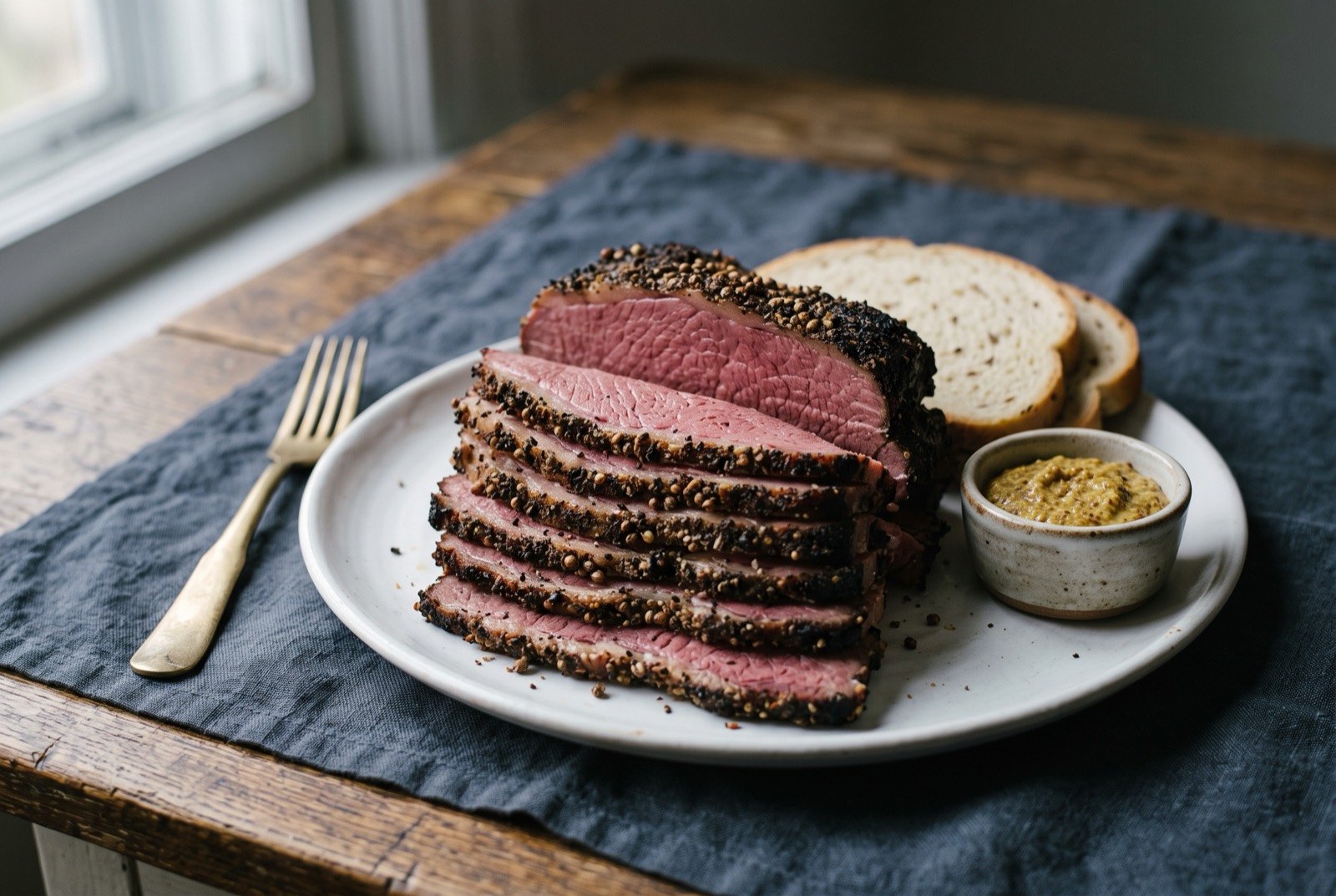
Illustration
- Researched
- Researched from 80 sources in the brief
As tradition built it
Montreal smoked meat
10 days curing, then 8 to 9 hours smoking and about 3 hours steaming.
Ingredients
The method as the tradition gives it, ingredients named but not yet weighed. Quantities follow as we verify them, lead dishes first.
- whole beef brisket
- proprietary spice blend: cracked black pepper, coriander, mustard seed and garlic
Method
- Dry-rub the whole beef brisket with a proprietary spice blend built around cracked black pepper, coriander, mustard seed and garlic and cure for ten days, refrigerated, the salt and spice working into the meat throughout.
- Smoke overnight, roughly eight to nine hours, at Schwartz's own stated practice.
- Steam for around three hours the following day until fully tender.
- Hand-slice to order rather than machine-cut, since the meat is too fragile and unevenly fatted by this point to survive a slicing machine intact.
Notes
This differs from New York pastrami in real, if only partly documented, ways: the cut is brisket rather than pastrami's traditional fattier navel, the cure leans more heavily on pepper and coriander, and the hand-slicing itself is a deliberate practice rather than an aesthetic choice.
What a modern chef changes
Big Green Egg smoke, sous vide steam, the cure and slicing left untouched
Method
- Hold the ten-day dry cure exactly as tradition sets it; this stage already is correct technique and does not need shortening.
- Replace the overnight open-smoker stage with a Big Green Egg run low and steady across the same roughly eight to nine hours, for tighter, more repeatable temperature control than an open commercial smoker gives a home cook.
- Finish the steaming stage sous vide instead, holding the brisket at a single, precise, low temperature for the same three hours rather than a variable steam heat.
- Rest briefly before hand-slicing exactly as the tradition insists, since no elevation here should touch the one step that is already doing the job correctly.