The Indian subcontinent · Volume 20, The Merchant’s Thali, the Konkan Tide and a Kitchen from Persia
Dhokla
Gujarat
Illustration
- Time
- 12 hours
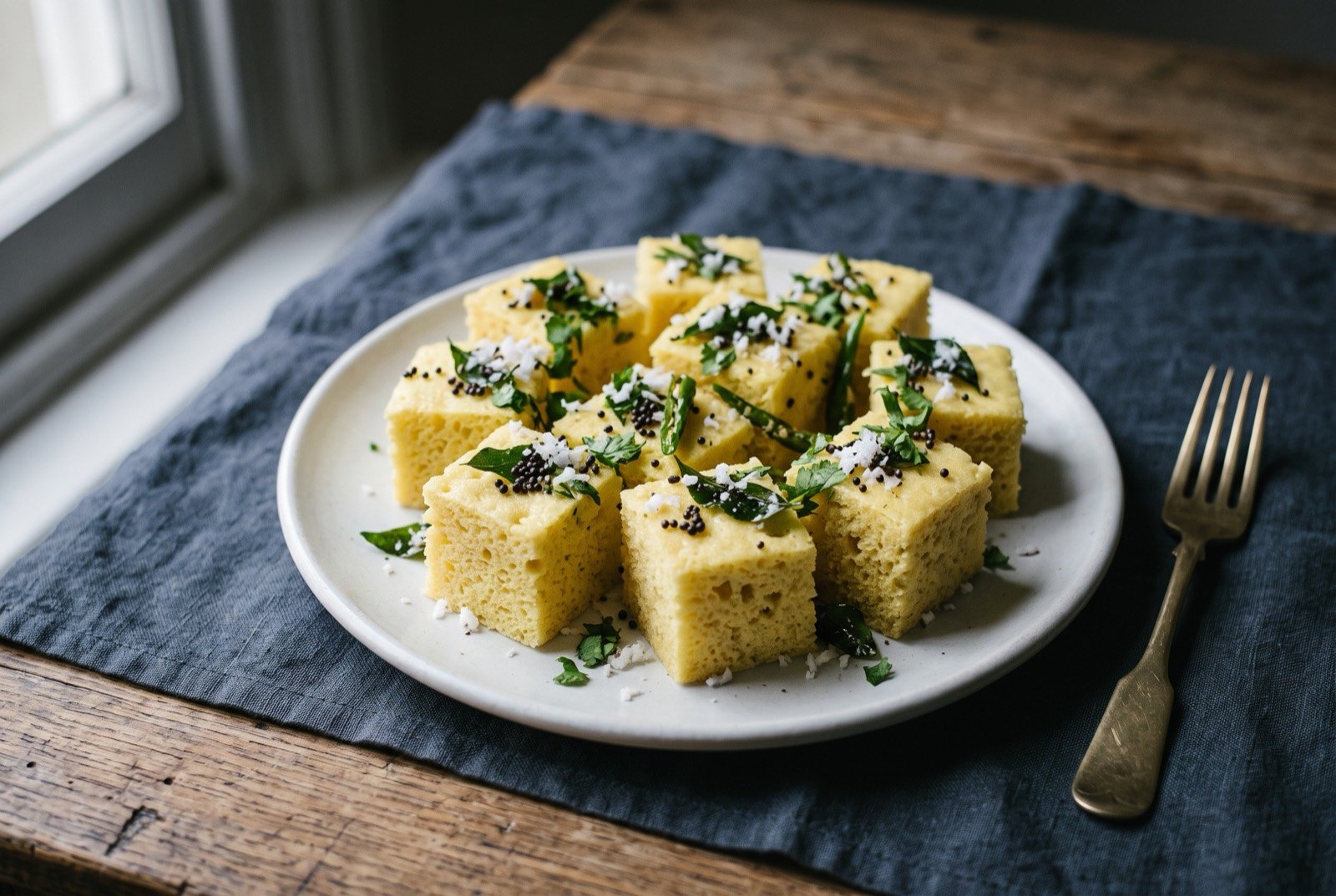
Dried rice and split chana dal, soaked overnight, ground to a smooth paste and fermented, steamed until set, cut into pieces and finished with a mustard seed, curry leaf and green chilli tempering. This chapter treats traditional dhokla and the now-far-more-common khaman dhokla, besan alone, no fermentation, leavened instead with Eno fruit salt, as genuinely separate dishes rather than one dish under two names, exactly as Gujarati usage itself distinguishes them.
As tradition built it
Serves 4 to 6. About 12 hours, mostly soaking and fermenting.
Ingredients
- 200g rice, soaked
- 100g split chana dal, soaked
- 200ml water, for grinding
- 1 tsp salt
To finish
- 2 tbsp oil
- 1 tsp mustard seed
- 8 to 10 curry leaves
- 2 green chillies, slit
- to serve fresh coriander and grated coconut, to serve
Method
- Soak the rice and chana dal separately, overnight.
- Drain and grind together to a smooth, thick paste with the measured water. Stir in the salt.
- Cover and leave to ferment in a warm place, at least 4 hours, traditionally 6 to 8 or overnight, until visibly risen and faintly sour to smell.
- Pour into a greased steaming tin and steam 15 minutes, until a skewer comes out clean.
- Cool slightly, cut into pieces.
- Heat the oil, temper the mustard seed, curry leaf and green chilli until fragrant, and pour over the dhokla. Finish with coriander and coconut.
Notes
No source consulted gave a fully precise, verified traditional ratio; the rice-to-lentil proportion here, roughly 2:1, follows general convention rather than one named authoritative source, and should be adjusted by feel.
What a modern chef changes
Fermentation judged by nose and rise, not the clock
Rung 1
Method
- Ferment in a proving drawer or low oven (around 28°C) rather than an unheated kitchen, for a genuinely consistent rise regardless of the season, and stop by the batter's own signs, visibly doubled, distinctly sour, rather than a fixed hour count.
- Steam in a combi-steam oven at a precise, gentle temperature rather than a rolling-boil stovetop steamer, for an even set with no toughened edge.
- Temper in ghee rather than oil for the finish, a small, deliberate departure from the everyday version, for a rounder, more savoury tempering that still reads as unmistakably dhokla.