The Indian subcontinent · Volume 16, The Ember Pit, the Merchant’s Table and a Desert That Wastes Nothing
Kadhi
Rajasthan-Gujarat desert belt
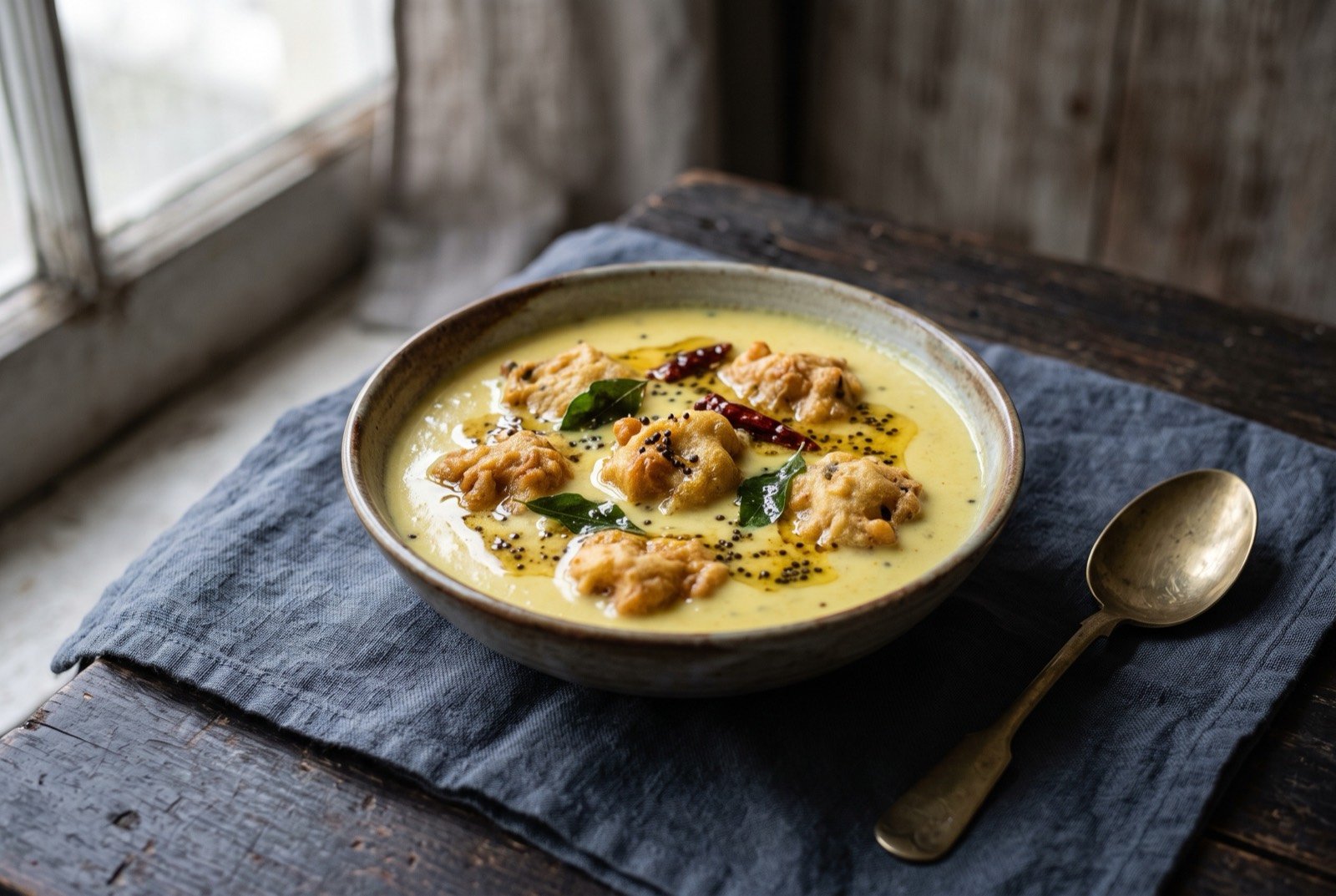
An illustration of the dish, not a photograph of it cooked.
- Time
- 30 minutes
- Reviewed
- Not yet reviewed from inside the tradition
- Cooked
- Not yet cooked and reported
A besan-and-yoghurt gravy that the Indian food historian K.T. Achaya, cited via a Hindi-language piece drawing on his own A Historical Dictionary of Indian Food, places at roughly two thousand years old, invented in the Rajasthan-Gujarat desert belt as a way of using boiled, spiced yoghurt to compensate for the absence of fresh vegetables in extreme heat. That figure has not been independently checked against Achaya's text directly, and kadhi's origin is also claimed for Gujarat elsewhere, so this chapter treats the dating as credibly attributed rather than settled; the underlying logic, dairy standing in for vegetables that the climate will not reliably provide, is consistent with everything else this chapter has said about the region's pantry.
As tradition built it
Serves 4. About 30 minutes.
Ingredients
- 2 cups (about 500 g) yoghurt
- 3 tbsp besan
- 1 cup water, to thin
- 2 tbsp ghee
- ½ tsp mustard seeds
- ½ tsp cumin seeds
- 2 a couple of dried red chillies
- a few curry leaves, if available
- 1 pinch a pinch of asafoetida (hing)
- ½ tsp turmeric
- 1 tsp salt
- as available pakora (fried gram-flour fritters), optional, to finish
Method
- Whisk the yoghurt with the besan until completely smooth, then thin with the water.
- Heat the ghee and temper with mustard seeds, cumin seeds, dried red chillies, curry leaves if available, and asafoetida.
- Pour in the yoghurt-besan mixture along with turmeric and salt.
- Bring to a very gentle simmer, stirring regularly to stop it splitting, and cook for 20 to 25 minutes until it has thickened to a pourable, coating consistency.
- Some households finish with pakora dropped into the finished kadhi; others keep it plain, served over rice or with khichdi.
What a modern chef changes
A split-proof simmer, and a curry-leaf oil finished at the table
Rung 3
Method
- Hold a precisely controlled low simmer. Using a water bath or induction hob set well below boiling, since the risk of splitting is entirely a heat-control problem the reader's more precise equipment can simply remove.
- Fry the pakora in two stages, if using. An initial lower-temperature cook to set the crumb, then a final hot flash-fry just before they go into the kadhi, for a crisper exterior that survives longer once it hits the hot liquid.
- Grind the tempering spices fresh rather than using pre-ground stock, a small, repeatable improvement this chapter keeps returning to because it is genuinely the single most under-used lever in home Indian cooking.
- Finish with a curry-leaf oil. Leaves fried briefly in ghee then blitzed and strained through the chinois, drizzled over at the table rather than only tempered into the pot.