The Indian subcontinent · Volume 16, The Ember Pit, the Merchant’s Table and a Desert That Wastes Nothing
Safed maas
Rajasthan (a popularly claimed, but unconfirmed, Kachhwaha court origin)
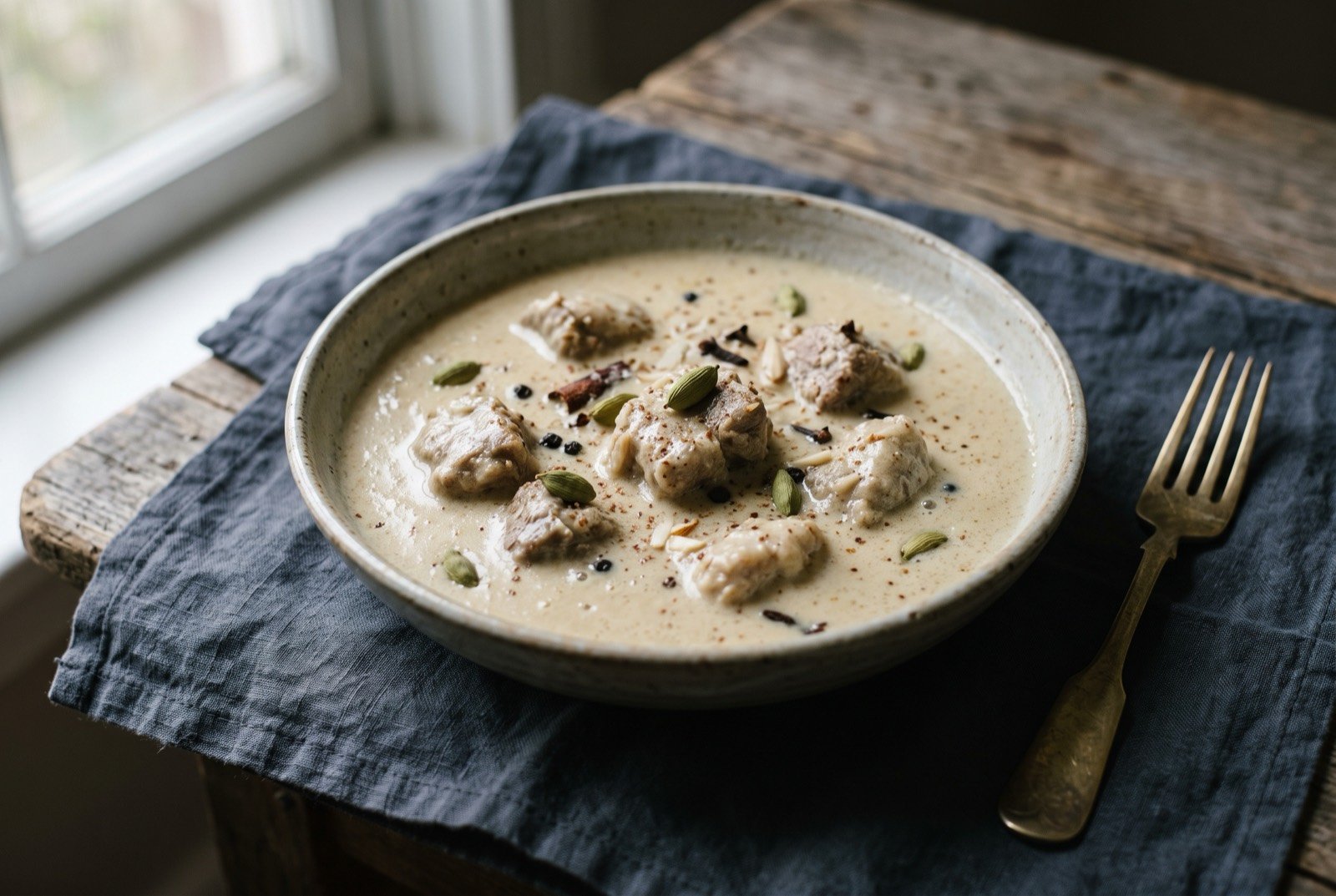
Illustration
- Time
- Hands on 1 hour 15 · Waiting 1 hour
- Researched
- Researched from 17 sources in the brief
Laal maas's cooler counterpart, and the weakest-sourced dish in this chapter. Every source this chapter's research could locate for safed maas is a recipe blog or a lifestyle magazine piece; no court, ruler, or dated event is named anywhere for it, and the widely repeated claim that it emerged from Mughal influence at the Kachhwaha court in Amber and Jaipur, plausible given how well documented that court's Mughal ties otherwise are, is not demonstrated by anything stronger than recipe-blog consensus. This chapter includes it because it is real, cooked, and a genuinely useful counterpoint to laal maas's heat, not because its history can be stated with any confidence.
As tradition built it
Serves 4. About 1 hour 15 minutes, plus 1 hour soaking.
Ingredients
For the nut paste
- 100 g cashews
- 50 g blanched almonds
For the curry
- 700 g mutton or goat, cut into chunks
- 3 tbsp ghee
- 2 onions, sliced
- 200 ml single cream
- 150 g plain yoghurt
- 1 pinch a pinch of white pepper
- 4 green cardamom
- 1 cinnamon stick
- 3 cloves
- to taste salt
Method
- Soak the cashews and almonds in warm water for an hour, then blend to a smooth paste with a little of the soaking water.
- Cut the mutton or goat into chunks and brown gently in the ghee with the sliced onions, without letting the onion colour deeply; this is a pale dish throughout.
- Add the nut paste, cream, yoghurt, white pepper, green cardamom, cinnamon stick, cloves and salt. No turmeric, no red chilli, no tomato: colour and heat are both deliberately absent.
- Simmer gently, covered, for 45 minutes to an hour until the meat is tender and the gravy has thickened around it.
What a modern chef changes
A silked, chinois-strained gravy, and an honestly labelled history
Rung 1
Method
- Toast the nuts before soaking. A step no tradition source mentions, but one that adds a roundness the raw nut paste alone does not have.
- Cook the meat sous vide. At 62°C for six hours for guaranteed tenderness, then finish it in the reduced sauce so it never risks the dryness a longer stovetop braise can produce with such a delicate gravy.
- Pass the finished sauce through a chinois. For a genuinely silken, restaurant-grade texture the traditional dish, made with a hand blender or mortar, rarely achieves.
- Present the history honestly. Given how thin the historical record for this dish actually is, present it on the page as a plausible Mughal-court counterpoint rather than a documented one, a small act of honesty this dish deserves more than a confident invented history would give it.