The Indian subcontinent · Volume 16, The Ember Pit, the Merchant’s Table and a Desert That Wastes Nothing
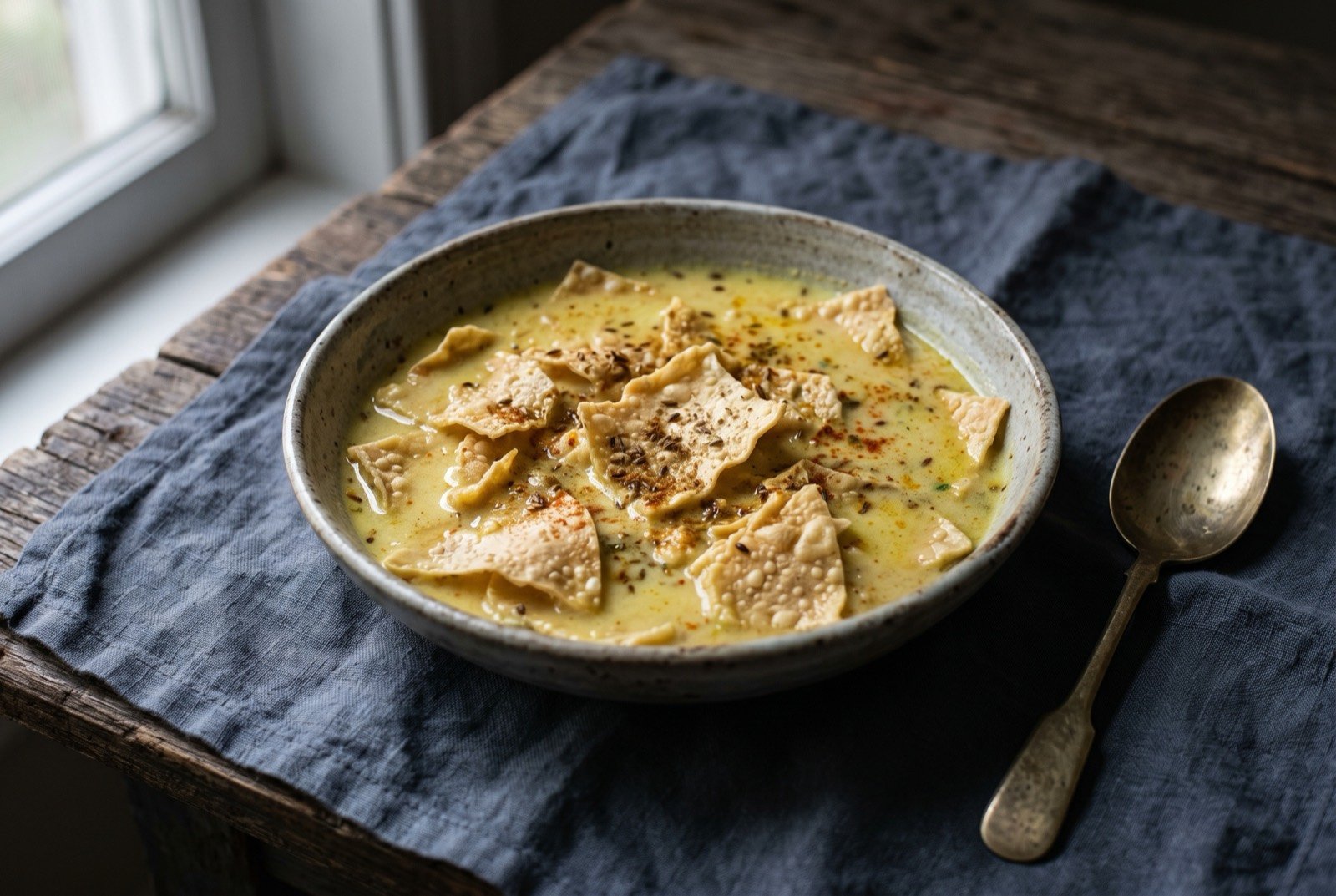
Papad ki sabzi
Marwari households, Rajasthan
Illustration
- Time
- 15 minutes
- Researched
- Researched from 17 sources in the brief
A dish that exists specifically because fresh vegetables ran out: sun-dried lentil wafer, cooked in a spiced yoghurt gravy, functioning as the vegetable itself rather than as an accompaniment to one. Multiple Hindi sources, including a piece from the mainstream outlet AajTak, describe this explicitly as a Marwari summer dish, made when the heat makes both fresh produce scarce and a heavy meal unwelcome, said within the community to keep the stomach cool.
As tradition built it
Serves 4 as a light dish. About 15 minutes.
Ingredients
- 4 to 5 plain papad (khichiya papad, the thinner, rice-based Rajasthani style, if available), broken into rough pieces
- 2 tbsp oil or ghee
- ½ tsp cumin seeds
- 1 pinch a pinch of turmeric
- a little a little fenugreek seed
- 1 cup yoghurt, whisked and thinned with water
- ½ tsp coriander powder
- to taste salt
Method
- Break the papad into rough pieces, either by hand or lightly toasted first.
- Heat the oil or ghee and temper with cumin seeds, turmeric and fenugreek seed.
- Add the whisked, thinned yoghurt along with coriander powder and salt.
- Bring to a gentle simmer, add the broken papad pieces, and cook for just 5 minutes, no longer, since the whole point is that the papad softens without dissolving entirely, keeping some bite against the gravy.
What a modern chef changes
An open-flame toast, a timed simmer, and papad made from scratch
Rung 6
Method
- Toast the papad over open flame. Over the Big Green Egg's open flame rather than dry-frying it in a pan, for a genuine smoky note that changes the finished dish's whole character while staying entirely true to the fact that this was, historically, fire-cooked food.
- Hold the gravy at a precisely controlled low simmer so the timing on the papad is exact rather than guessed, since a dish this dependent on a five-minute window benefits more than most from equipment that removes the guesswork.
- Make a portion of the papad from scratch, using the dehydrator to sun-dry a besan or rice batter genuinely thin, so a reader tastes what the shop-bought version is actually standing in for.
- Finish with a scattering of crushed, untreated papad alongside the cooked dish, the same ingredient in two states, raw crunch against cooked softness, on the same plate.