The Indian subcontinent · Volume 20, The Merchant’s Thali, the Konkan Tide and a Kitchen from Persia
Misal Pav
Maharashtra, the Deccan and Mumbai
Illustration
- Time
- 1 hour
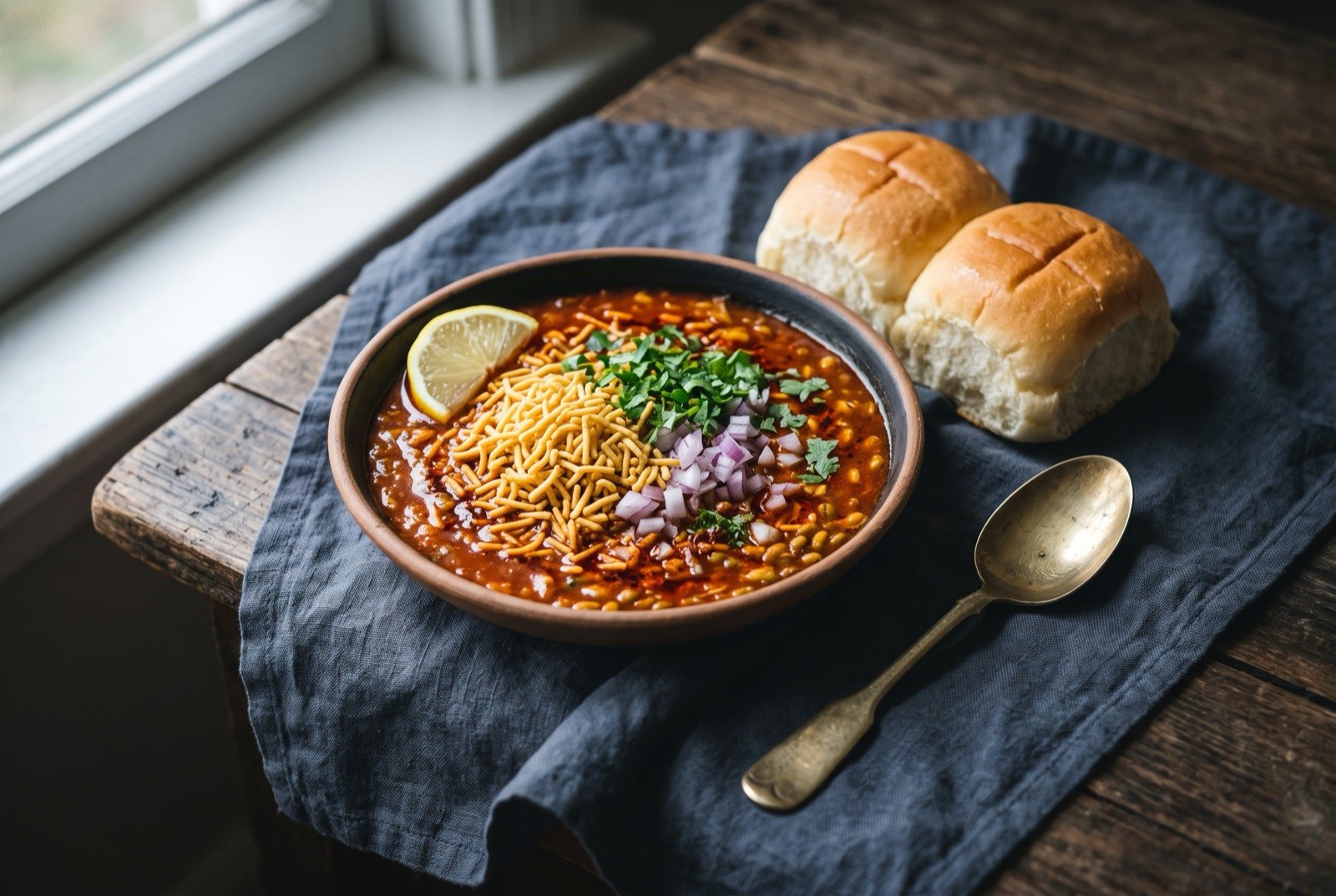
A spiced sprouted-lentil curry, commonly moth bean (matki), topped with farsan, raw onion, lemon and coriander, served with pav and often curd and papad. Regional variants are real and named: Kolhapur misal, the hottest; Pune misal, often built with poha and tending sweeter; Nashik, Khandeshi and Ahmednagar misal each their own. No source found makes a clean, sourced claim that misal pav originated specifically in Kolhapur, as opposed to elsewhere in Maharashtra; Kolhapur is named here for its intensity, not asserted as the point of invention, and this chapter declines the commonly assumed shortcut.
As tradition built it
Serves 4 (Kolhapuri style). About 1 hour, plus sprouting.
Ingredients
- 200g moth bean (matki), sprouted
- 2 tbsp oil
- 1 onion, finely chopped
- 1 tbsp ginger-garlic paste
- 2 tbsp Kolhapuri masala
- 1 tomato, chopped
- 400ml water
- to taste salt
To serve
- to serve farsan (sev), raw onion, lemon, fresh coriander
- 8 pav (soft bread rolls)
Method
- Heat the oil and sauté the onion until golden, add ginger-garlic paste and Kolhapuri masala, frying briefly.
- Add the tomato, cooking down to a thick base.
- Add the sprouted matki and water, season with salt, and simmer 20 to 25 minutes, until the beans are tender and the gravy has thickened and reddened.
- Ladle into bowls, top generously with farsan, raw onion, lemon and coriander at the table, immediately before eating, so the farsan stays crisp.
- Serve with warm pav and buttered on the griddle if liked.
What a modern chef changes
The gravy roasted properly, the crunch kept honest
Rung 4, adapted
Method
- Build the Kolhapuri masala from freshly roasted whole spice, ground to order, exactly the discipline Rung 4 sets out, rather than a jar bought months earlier.
- Toast the pav lightly in ghee before serving, a small, genuine improvement over a plain roll, without changing the dish's essential street-food character.
- Serve the farsan properly separately, added only at the table, never simmered in, the single detail that most reliably distinguishes a fresh misal from a stale one.