East Africa and the Islands · Volume 17, The Great Lakes
Kalo
Ankole, and as ubugali in Rwanda and umutsima in Burundi
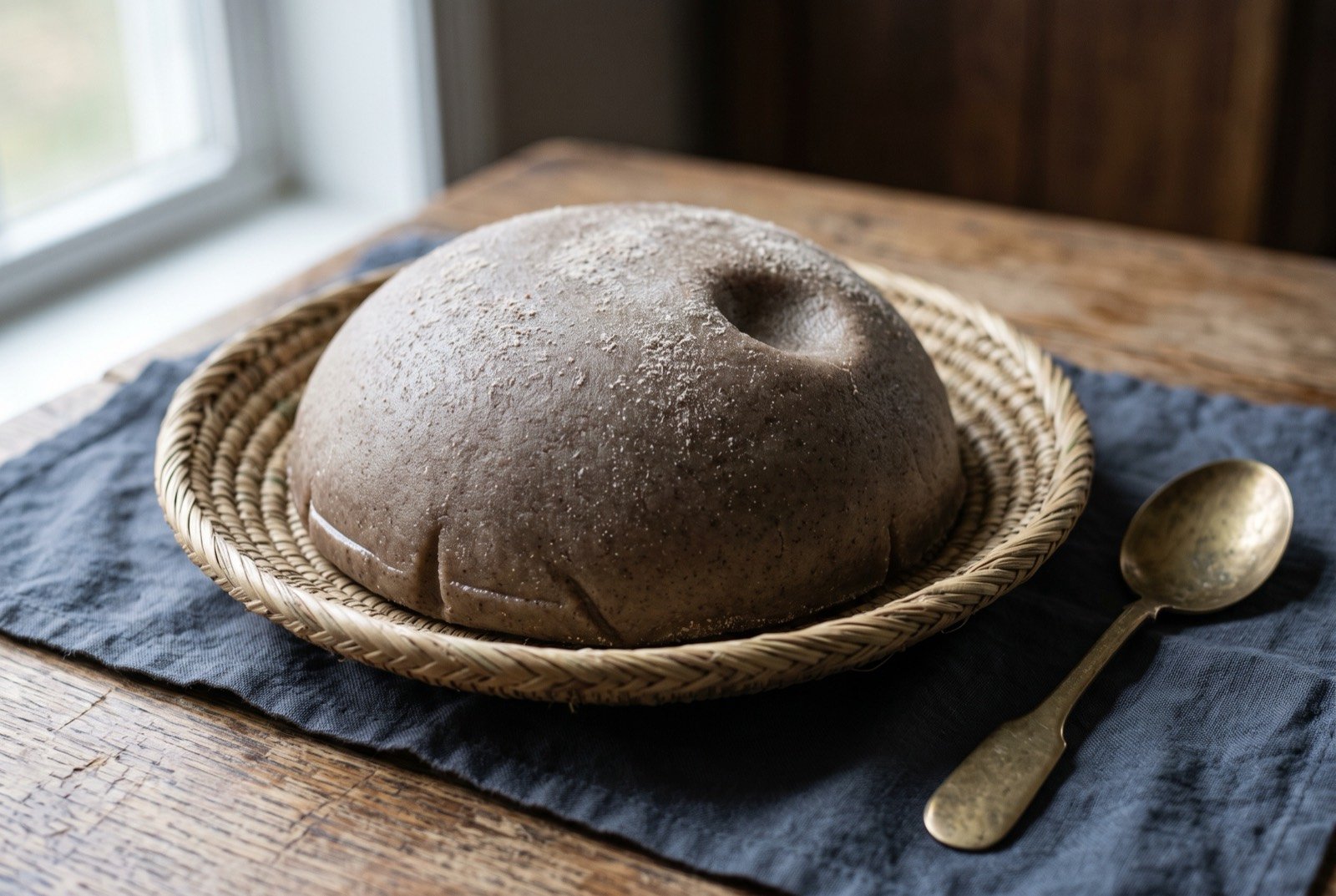
An illustration of the dish, not a photograph of it cooked.
- Time
- 45 minutes
- Reviewed
- Not yet reviewed from inside the tradition
- Cooked
- Not yet cooked and reported
The stiff porridge eaten with the hand. Kalo or kwon kal in Uganda, karo in Ankole, ubugali in Rwanda, umutsima in Burundi, posho for the maize version. The names change and the technique does not. Why it is a blend, and this is genuinely good food engineering. Finger millet is low in gluten-forming protein and its starch granules are small and slow to swell, so the paste it makes on its own is short, coarse and sandy. Cassava starch is almost pure amylopectin, swells enormously and is intensely cohesive when gelatinised. Blend the two and you get a paste that is both nutty and elastic. Elasticity is the actual functional requirement, because kalo has to be torn, dimpled with the thumb and used as a scoop without disintegrating. Millet supplies the flavour. Cassava supplies the mechanics. The proportions are contested between Ugandan sources and I have not resolved them. See the end of the chapter. The ratio below is the one given with a weighed method.
As tradition built it
Serves 4. About 45 minutes.
Ingredients
- 375 g cassava flour
- 125 g finger millet flour
- 1.5 L water. About 3 litres of boiling water per kilogram of total flour
- as needed, for dusting a little extra raw millet flour, for dusting
- to taste salt, to taste, though many households use none
Method
- Bring the water to a rolling boil in a heavy pot, with the salt if using.
- Add the mixed flour while mingling continuously with a flat wooden paddle. Not a spoon: you need a blade you can lean on.
- Mingle for about 30 minutes, depending on quantity. It will pass through a lumpy stage and a heavy dough stage.
- The doneness cue is elasticity. The kalo is ready when it turns elastic. Not when it is thick, and not when it is smooth. When it stretches.
- Never add cold water during mingling, because it makes the flour seize.
- Turn the dome out into a basket dusted with raw flour so it does not stick. Cover and rest 10 to 15 minutes before serving. That rest is what makes it tender.
Notes
After the Ankole karo method.
What a modern chef changes
A cold slake, a measured blend, and the rest taken seriously
Rungs 2 and 5
Method
- Slake the cassava flour cold, and keep the millet dry. Mix the cassava flour to a smooth slurry with 300 ml of cold water before it meets heat, then rain that into the boiling remainder, and add the millet flour dry on top of it. You will not get lumps and you will roughly halve the mingling. This is the same cold-slake principle that funge, tô, placali and obushera all arrived at independently, which is one of the more striking pieces of convergent engineering on the continent.
- Treat the ratio as a dial, and know which way it moves. More cassava gives you more stretch and less flavour. More millet gives you more flavour and a shorter, sandier paste. Start at three to one and move towards the millet until the dome will no longer hold a thumb hollow, then step back one notch. The right proportion is the most millet your technique can carry.
- Rest it under raw flour, covered, and time it. Ten to fifteen minutes. The gel finishes setting and the surface dries to a non-tacky skin, which is what lets it be handled. This is the step nobody outside the region does and it is free.
- Serve it with soured milk on the side, not water. Rung 5. Kalo is bland by design, because it is a vehicle. In Ankole the thing that goes next to it is eshabwe or ikivuguto, and a British cook's instinct to season the paste itself is the wrong instinct: the seasoning is supposed to be adjacent and adjustable.