East Africa and the Islands · Volume 17, The Great Lakes
Ibiharage
Rwanda and Burundi
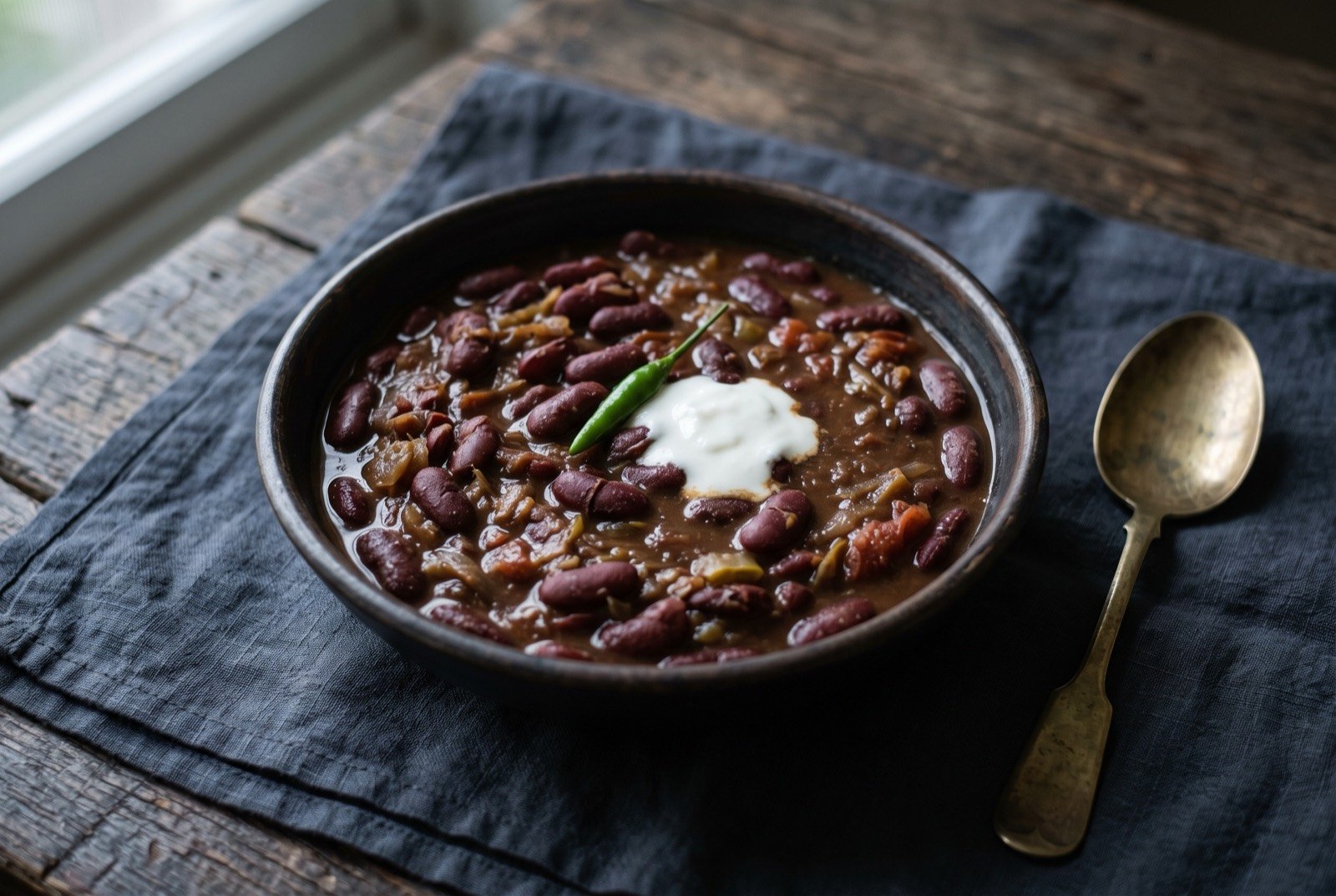
An illustration of the dish, not a photograph of it cooked.
- Time
- Hands on 2 hours · Waiting 8 hours
- Reviewed
- Not yet reviewed from inside the tradition
- Cooked
- Not yet cooked and reported
In a country with the highest per capita bean consumption on earth, recorded at 32.9 kg a head in 2021, the bean is the protein and everything else is a garnish on it. Ibiharage are red kidney beans stewed with onion and chilli, and they are eaten daily, with ubugali or matooke or rice. Ibihaza, pumpkin cooked with beans, is the other everyday hillside version and it is a very old, very simple dish and a good one. I am including this deliberately rather than reaching for something more photogenic. A volume about the Great Lakes that gives eleven dishes and does not give beans has misunderstood what people eat.
As tradition built it
Serves 6. About 2 hours, plus overnight soaking.
Ingredients
- 500 g dried red kidney beans, soaked overnight
- 2 onions, sliced
- 3 tomatoes, chopped
- 4 garlic cloves
- 1 leek, sliced
- 2 tbsp oil
- 1 green chilli, or akabanga to finish
- to taste salt
- enough to cover generously water
Method
- Drain the soaked beans, cover generously with fresh water, and boil hard for the first 10 minutes, then simmer until fully tender, 1 hour 15 to 1 hour 45. Keep the cooking liquor.
- Sweat the onion in the oil until it is genuinely soft and sweet, which takes longer than a British cook will give it. Add the garlic, leek and tomato and cook to a thick base.
- Add the beans and enough of their liquor to make a loose stew. Salt only now, not earlier.
- Simmer 20 minutes so the starch from the beans thickens the liquor. Crush a spoonful of beans against the side of the pot to help it.
- Finish with chilli, or with two drops of akabanga at the table.
Notes
For ibihaza, add 600 g of pumpkin in 4 cm chunks for the last 25 minutes and leave out the tomato. The pumpkin's sweetness against the bean's earthiness is the whole dish and tomato gets in the way of it.
What a modern chef changes
The liquor treated as stock, a split texture, and the fat and acid arranged around it
Rungs 3, 5 and 4
Method
- Reduce the bean liquor and use it as the sauce. Bean cooking liquor is a genuine stock: soluble starch, saponins and free amino acids. Strain half of it off, reduce it by two thirds, and return it. This is where the body of the dish comes from, and pouring it down the sink and then thickening with flour is the standard error.
- Split the beans two ways. Purée a quarter of them smooth with a little liquor and fold that back through the whole ones. You get a stew that coats without any thickener and without overcooking the intact beans to mush.
- Serve eshabwe on top and do not stir it in. Rung 4. A spoonful of the whipped ghee emulsion, cold, against hot beans, is the Ankole plate and it is the best thing that happens to a bowl of beans anywhere in this book. The emulsion breaks slowly under the heat and releases the butterfat gradually, which is a much better delivery than melted butter.
- A tablespoon of soured milk stirred in off the heat. Rung 5. Beans are long-cooked, sweet and slightly flat, and they need an acid that arrives as depth rather than as a spike. Lactic acid does that and does not curdle if the pan is off the heat.