East Africa and the Islands · Volume 17, The Great Lakes
Ndagala and mukeke
Bujumbura and the Lake Tanganyika shore, Burundi
Illustration
- Time
- 40 minutes
- Researched
- Researched from 213 sources in the brief
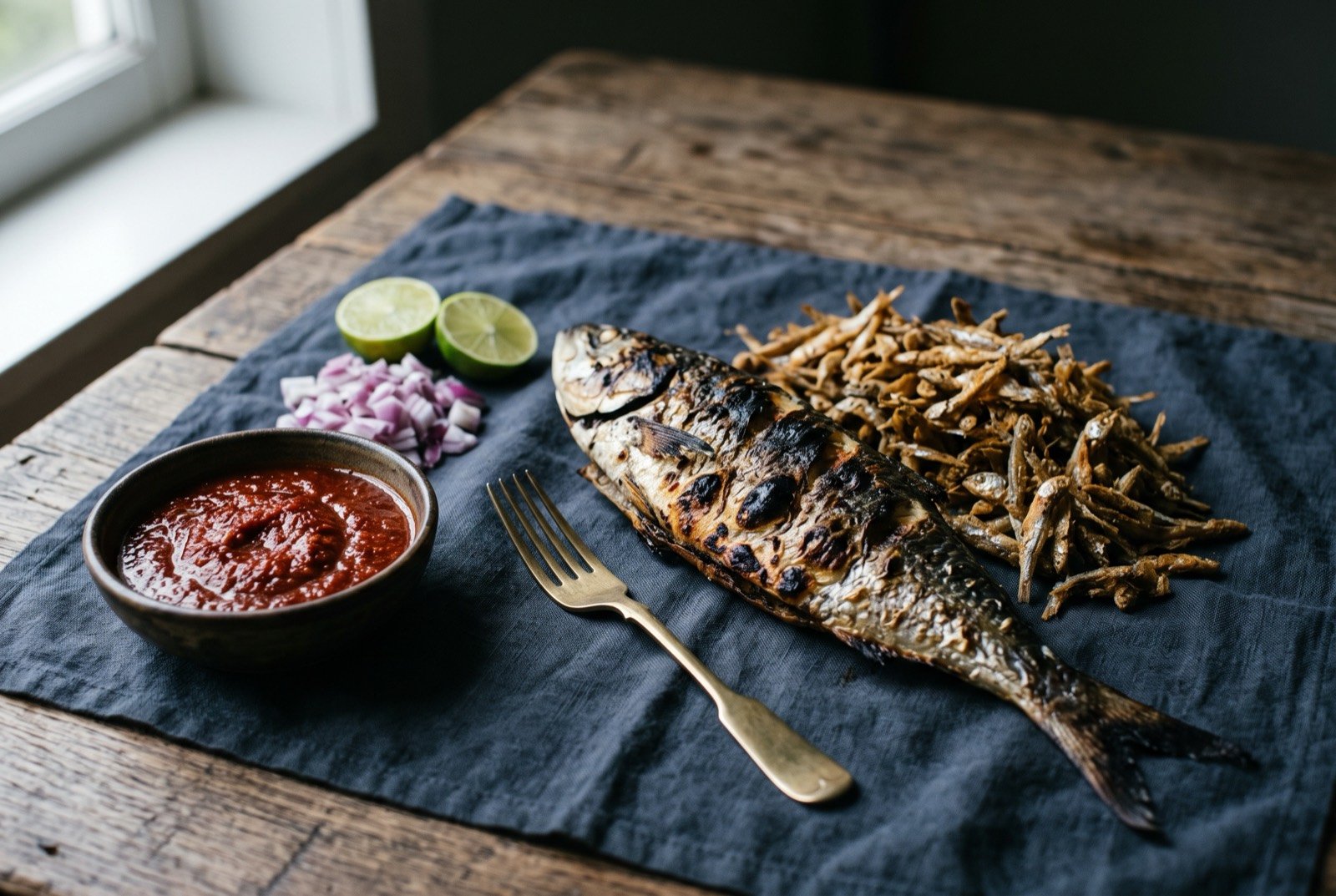
Read this before the recipe. Every source I have for the preparation of these two fish is Western travel writing. There is no Burundian-published account of Burundian cooking that I could reach, in any language, and the section at the end of this chapter says so at length. What follows is therefore a method built from the ingredient and from the neighbouring practice that is documented, not a recorded Burundian recipe, and I am labelling it that way rather than presenting a guess as a tradition. If you want the real thing, the people to ask are in Bujumbura, in Rumonge and in the Burundian diaspora in Belgium and Canada, and nobody has asked them in print. What is not in doubt is the ingredients. Ndagala, Stolothrissa tanganicae, is the Tanganyika silver cyprinid, small, sun dried and eaten whole. Mukeke is found only in Lake Tanganyika and is the luxury fish of the country, grilled over an open fire and served with a tomato and onion sauce.
As tradition built it
Serves 4. About 40 minutes.
Ingredients
- 200 g dried ndagala, or dried silver cyprinid of any lake
- 2 cm deep neutral oil for frying, 2 cm deep
- 2 whole firm-fleshed fish, about 400 g each, for the grill
- 2 onions, one sliced and one chopped raw
- 4 tomatoes
- 2 tbsp red palm oil, which is the Imbo lowland fat and correct here
- 1 chilli
- to serve salt and lime
Method
- Pick the dried ndagala over, discarding any that are yellowed or flexible rather than brittle. Rinse briefly and dry thoroughly.
- Fry them hard in hot oil, in batches, for about 90 seconds each, until they crisp and colour. Drain and salt.
- Score the whole fish, salt it, and grill it over charcoal until the skin blisters and lifts.
- For the sauce, sweat the sliced onion in the palm oil, add the tomato and chilli, and cook down to a thick, glossy base, about 20 minutes.
- Serve the grilled fish with the sauce beside it, the fried ndagala separately, and the raw chopped onion and lime on the table.
What a modern chef changes
A better dried fish, a smoked frying oil, and the palm oil handled as Volume Four insists
Rungs 3, 6 and 1
Method
- Buy the dried fish on the quality markers and not on the label. Bright silver, dry, and brittle enough to snap. Yellowing means oxidised oil. A powdery white bloom, an ammonia note, or any flex rather than snap means it has taken up moisture. Freeze it the day it arrives, always, in a bag inside a bag.
- Fry in an oil that has done some work. Rung 3 in miniature. Warm the frying oil to 70°C with a handful of dried fish and a smoked leaf for 30 minutes, then strain and fry in that. The crust on the ndagala now carries umami it did not have.
- Add the palm oil in two stages and keep it off high heat. Volume Four established the figures and they apply here: carotenoids are heat-labile, and an hour of hard boiling takes a red palm sauce from orange-red and fruity towards brown-grey and waxy. Half the oil into the tomato reduction, half stirred in off the heat at the end.
- Grill on a wilted leaf. Rung 1. Set the whole fish on a smoked banana leaf on the Big Green Egg's grate rather than directly on the bars. The leaf intercepts dripping fat before it pyrolyses on the coals, and the skin does not stick. This is the one mechanism in Rung 1 that I would use even if the aroma transfer did not exist.
Notes
Part Four