The Southern Cone · Volume 26, Coast, Valley and the Mapuche and German South
Curanto en hoyo
Chiloé
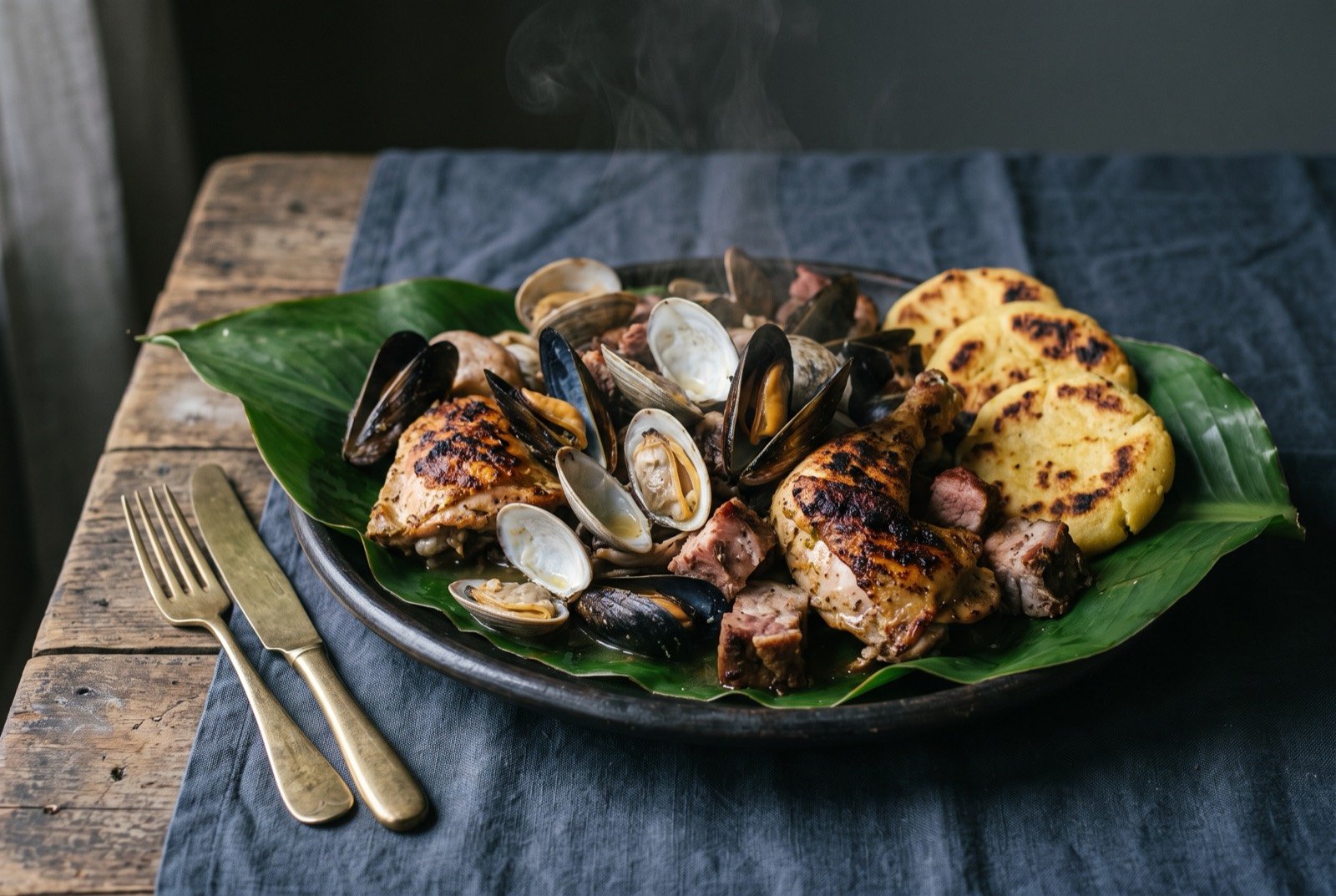
Illustration
- Time
- 2 hours
- Researched
- Researched from 30 sources in the brief
Chiloé's, and this chapter's own, anchor dish. The name is Mapudungun kurantu, stony ground, though archaeological evidence for stone-pit cooking in the region may run six to ten thousand years, potentially older than the Huilliche's own arrival on the island or their adoption of the language that now names it.
As tradition built it
Cook 1.5 to 2 hours.
Ingredients
- for 10: about 3kg each mussels, clams and barnacles, 12 pieces chicken, 12 pork rib pieces a mix of meats and shellfish, tougher pieces nearest the heat
- 12 potatoes
- 20 milcaos
- 20 chapaleles
- 12 smoked longaniza sausages more delicate shellfish and sausages, placed on top
- enough to layer and seal each stage, a full head if using cabbage large leaves, traditionally nalca, or failing that cabbage or banana leaves
Method
- Dig a pit roughly a metre across and 50 to 60 centimetres deep.
- Heat stones separately until very hot and place them at the base as a radiating thermal plate.
- Cover with large leaves, traditionally nalca, or failing that cabbage or banana leaves, a layer that stops the food scorching directly on the stone while turning the food's own moisture into the steam that actually cooks it.
- Layer the ingredients by density and cooking time: tougher meats and shellfish nearest the heat, then potatoes, milcaos and chapaleles, then the more delicate shellfish and sausages on top.
- Seal with a final leaf layer, weighted or earth-covered, to trap the steam.
- Cook 1.5 to 2 hours.
What a modern chef changes
The Big Green Egg as the earth pit, and a fermented, ember-finished milcao
Method
- Reproduce the enclosed, indirect, moisture-trapping environment in a Big Green Egg with a ceramic deflector plate and a bed of heated lava rocks or a cast-iron surface, loading stages by cook time exactly as the earth pit does.
- Use fresh nalca substitutes, chard, banana leaf or fig leaf, to hold in the same steam. This is a real elevation of the actual mechanism, not a French substitution laid on top of it.
- Ferment the milcao dough briefly before cooking, following the one documented restaurant precedent for this, Boragó's own version, and finish it al rescoldo, in embers, rather than only steamed, for a genuinely different, more concentrated result.
- Serve with a kefir butter in the same spirit, a modern dairy technique applied to an old dish rather than replacing it.