The Southern Cone · Volume 26, Coast, Valley and the Mapuche and German South
Charquicán
Southern Chile, Mapuche origin
Illustration
- Time
- 1 hour
- Researched
- Researched from 30 sources in the brief
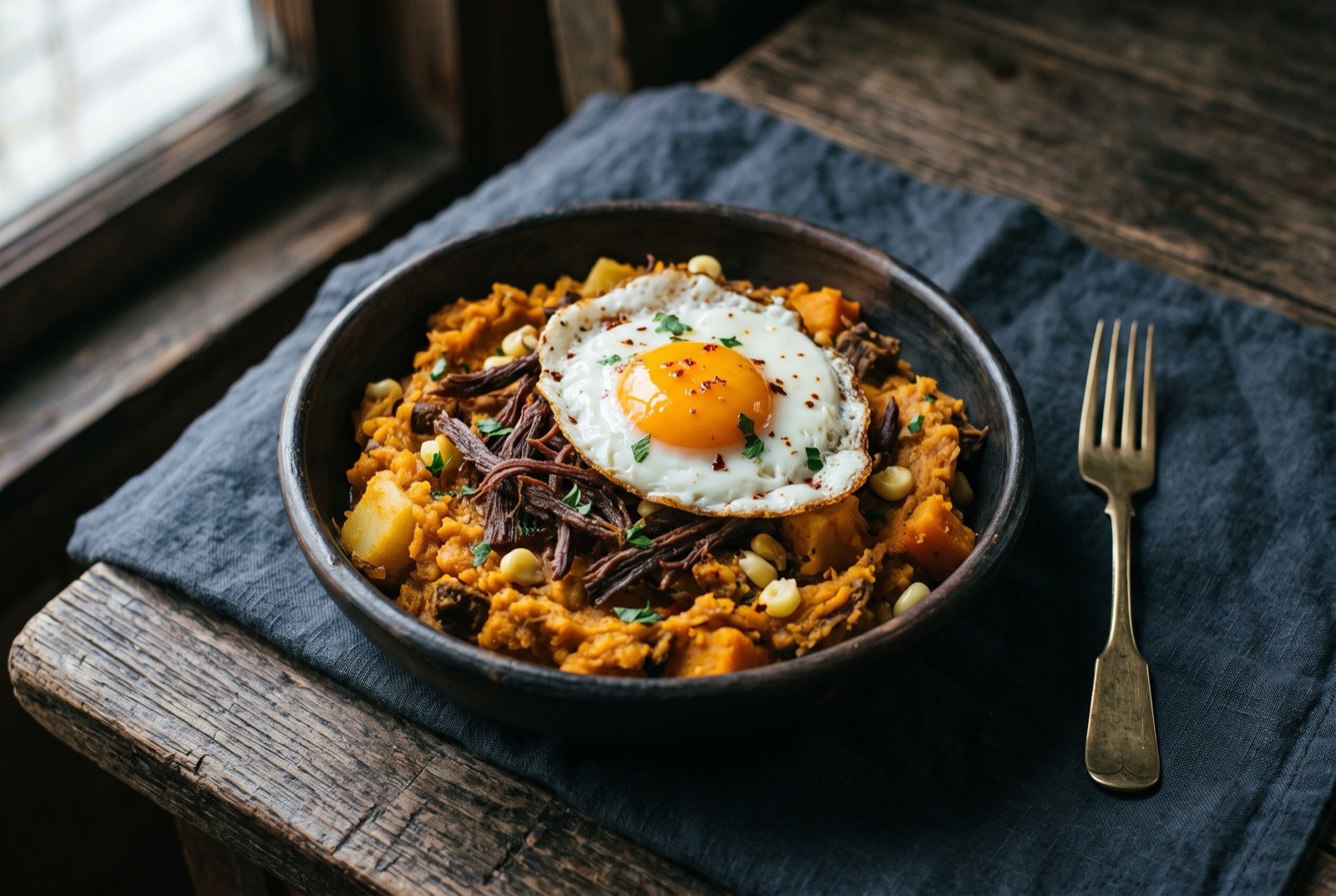
This dish is the crossover this chapter's own research specifically went looking for, and found: charquicán is southern and Mapuche in origin, not central, whatever its current reach across the whole country implies. The original form used charqui, dried meat, historically guanaco, predating cattle ranching in Chile entirely, with potato and squash among southern indigenous groups, the Spanish later adding cumin and salt.
As tradition built it
Serves 10. About 1 hour.
Ingredients
- 1kg minced beef (asiento), or an equal weight of reconstituted charqui charqui (dried meat, historically guanaco), or in the modern everyday version, minced beef
- 6, cubed potato
- 2 cups, cut green beans
- 400g, cubed squash
- 2 cups corn
- 1 to 2, diced carrot
- 1/2 tsp cumin, salt to taste cumin and salt
- 1 per serving a fried egg, to finish, often
Method
- Cook the charqui, or in the modern everyday version minced beef, with potato, green beans, squash, corn and carrot, seasoned with cumin and salt.
- Mash together and finish, often, with a fried egg on top. The modern version is genuinely pan-Chilean today, but its documented origin belongs with the south.
What a modern chef changes
Real dehydrated charqui, and a soft sous vide egg
Method
- Make real charqui at home rather than substituting minced beef throughout: salt thin-sliced beef and dry it in a dehydrator at a low, controlled temperature until properly leathery, then shred it back in for the dish's actual traditional texture.
- Finish with a soft, sous vide egg rather than a fried one, the yolk still fully liquid, cutting through the mash rather than sitting dry on top of it.
- Give the finished squash a brief pass of Big Green Egg smoke before it goes into the mash, nodding at merkén's own smoked character without asking the dish to carry a separate condiment on top.