North America · Volume 37, The Market, the Truck and the Tide
Cioppino
San Francisco, California, United States
Illustration
- Researched
- Researched from 92 sources in the brief
As tradition built it
Cioppino
Documented structural convention, not a single primary historic recipe
Ingredients
The method as the tradition gives it, with the ingredients named. Quantities follow as we verify them, lead dishes first.
For the base
- onion
- fennel
- 8 cloves, finely chopped garlic
- 350ml (1½ cups), tinned and crushed tomato
- 700ml (3 cups) fish stock
- a generous glass dry white wine
For the shellfish and fish
- 2 x 900g crabs, halved Dungeness crab, in season
- 16, cleaned clams
- 16, cleaned mussels
- 340g, deveined prawns
- 450g, cut into 5cm chunks firm white fish
- to serve hot, crusty sourdough, for serving
Method
- Build a sofrito of onion, fennel and garlic.
- Simmer with fish stock and a generous glass of dry white wine to make the tomato, garlic and white wine base.
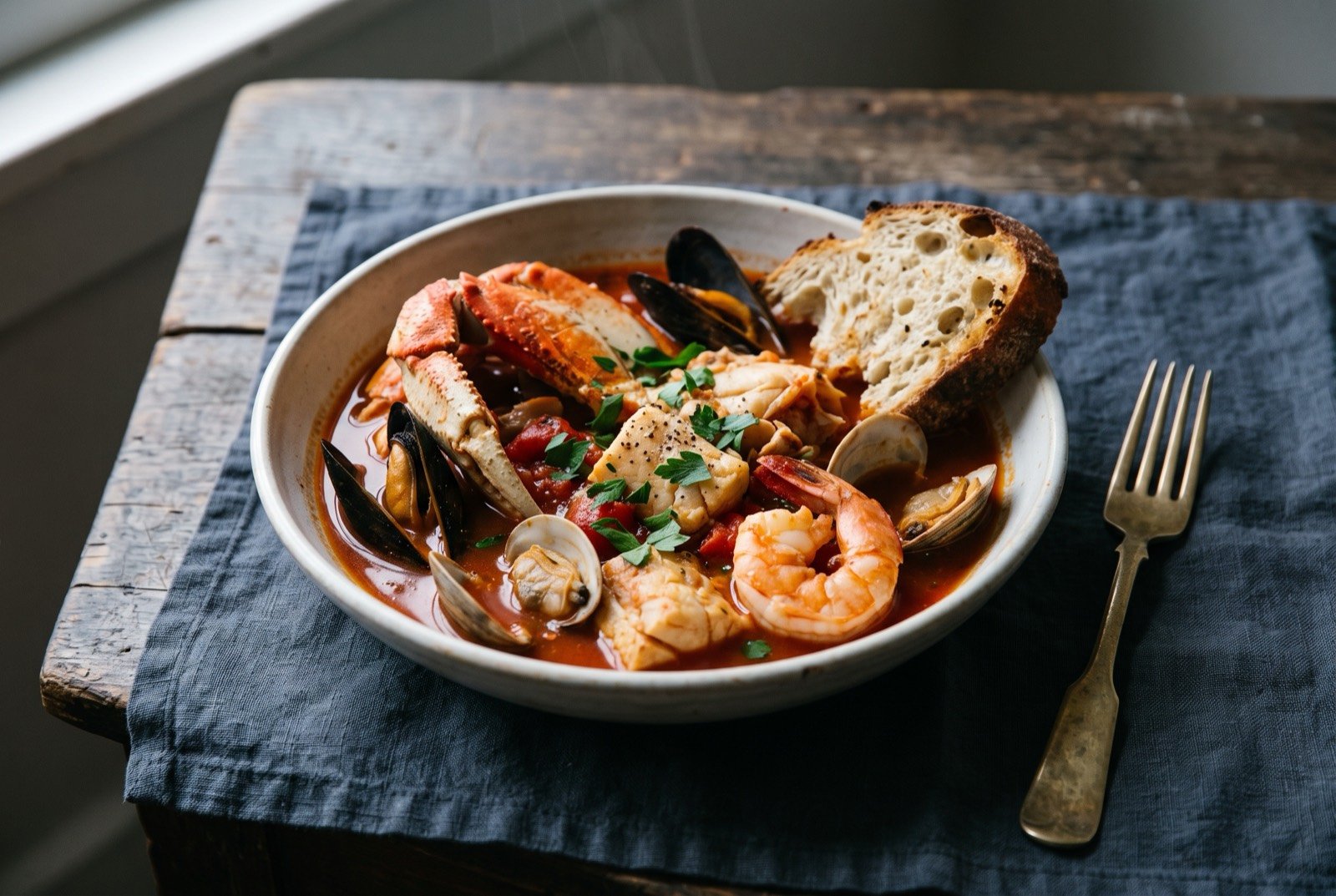
- Add whatever the day's catch and the fisherman's own family actually had, Dungeness crab in season, clams, mussels, prawns and a firm white fish, simmered only until each element is just cooked.
- Serve with hot, crusty sourdough for mopping the bowl.
Notes
Built by Italian immigrant fishermen, mostly Ligurian, around San Francisco's old Meiggs Wharf and North Beach between roughly 1850 and 1880.
This chapter did not find a single primary, quantity-precise historic recipe from either of the dish's competing etymological camps, the "chip in" story and the ciuppin Ligurian-dialect theory, both widely repeated and neither settled.
Garlic, tomato, fish stock, crab, clams, mussels, prawns and fish quantities in this pass are drawn from Sotto Mare, a North Beach San Francisco restaurant specialising in cioppino, as published by Saveur; onion and fennel quantities remain unstated because Sotto Mare's own recipe omits them, and no other in-tradition source with exact amounts could be found.
What a modern chef changes
A separately built base, separately timed shellfish
Ingredients
- fennel, for dehydrating and grinding
Method
- Build the tomato and wine base separately and reduce it hard in a wide pan before the shellfish ever goes near it, concentrating its sweetness rather than diluting a long simmer with liquid released from the seafood itself.
- Cook each shellfish and the firm fish separately and briefly, added to the finished, hot base only moments before serving, since crab, clams, mussels, prawns and fish all have genuinely different cooking windows.
- Dehydrate a portion of fennel and grind it in a spice grinder into a fine finishing dust, restoring the fresh anise top note a long simmer softens.