North America · Volume 37, The Market, the Truck and the Tide
Mission burrito
Mission District, San Francisco, California, United States
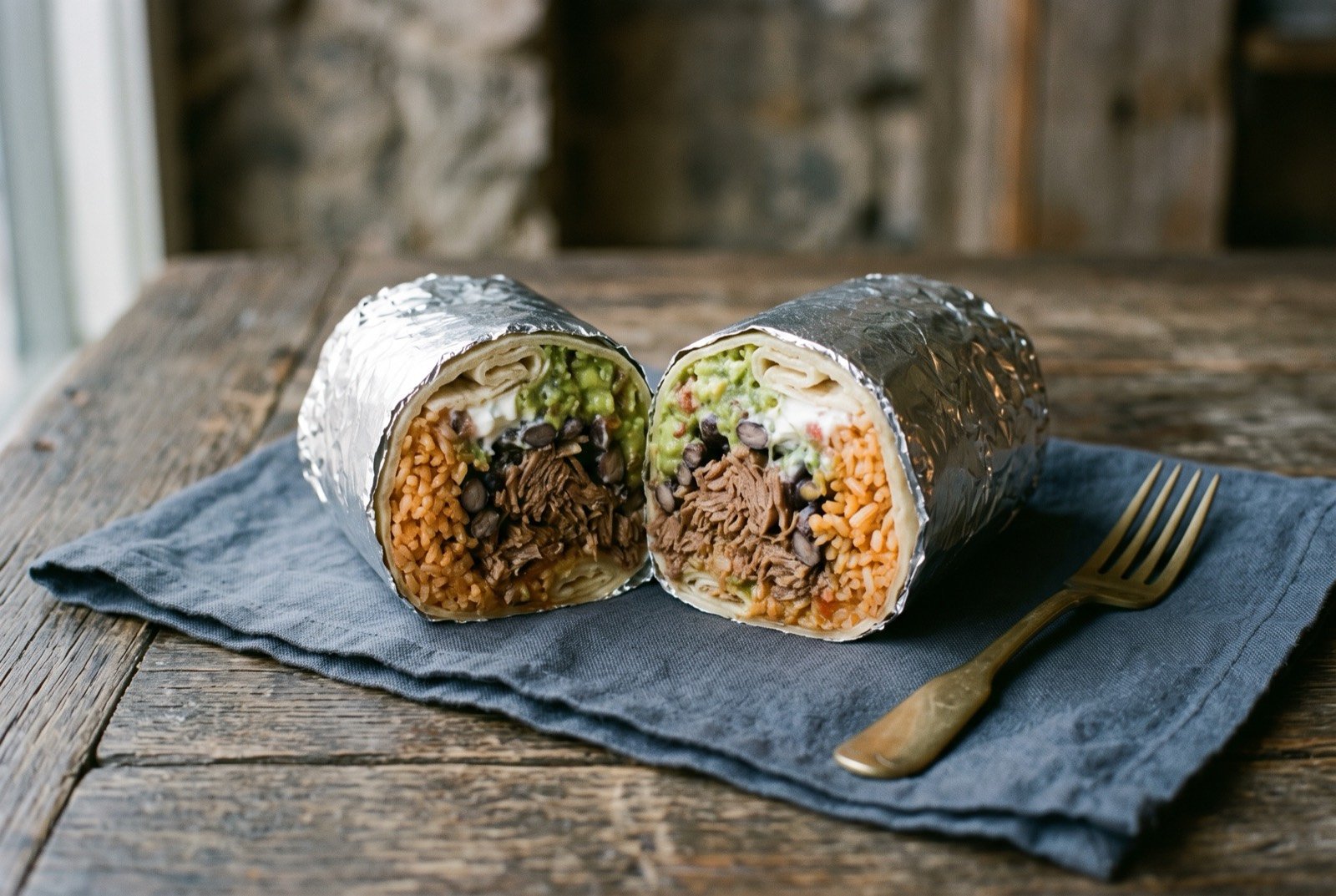
An illustration of the dish, not a photograph of it cooked.
- Time
- Not statedNo source states a time and the atlas has too few comparable dishes to estimate one.
- Reviewed
- Not yet reviewed from inside the tradition
- Cooked
- Not yet cooked and reported
As tradition built it
Mission burrito
Documented structural convention, not either restaurant's own written recipe
Ingredients
An outline, not yet a recipe: the tradition's method with its ingredients named but not weighed. Quantities are being added from sources inside the tradition, lead dishes first.
- 3 6-inch flour tortillas, offset (El Faro's original 1961 version), or one large flour tortilla, steamed
- rice
- beans
- meat
- cheese
- pico de gallo
- sour cream
- guacamole
Method
- Steam a large wheat flour tortilla rather than griddling it, giving it the pliability to hold the volume without tearing.
- Layer rice and beans as the base, meat and cheese next.
- Nest the wet ingredients, pico de gallo, sour cream and guacamole, into the centre rather than spread edge to edge so the tortilla holds its structure.
- Wrap tightly in foil.
Notes
El Faro, opened by Febronio Ontiveros in the fall of 1961, dates its first burrito to 26 September that year; La Cumbre, opened as a meat market by Raul and Micaela Duran in 1967, dates the birth of the style to 29 September 1969. Neither claim is independently, contemporaneously documented, and the San Francisco Chronicle's own reporting treats the rivalry as genuinely open.
What a modern chef changes
Steamed tortilla under controlled moisture, sous vide filling
Rung 5: Steaming a flour tortilla for structural pliability
Ingredients
Method
- Steam the tortilla under genuine, controlled moisture, a dedicated steamer basket over simmering water for thirty seconds, rather than a damp towel and a microwave.
- Cook the meat filling sous vide to a precise internal temperature before a final hard sear.
- Dehydrate a portion of the pico de gallo's tomato and onion and grind it into a seasoning dust folded through the fresh remainder.