North America · Volume 37, The Market, the Truck and the Tide
San Francisco sourdough bread
San Francisco, California, United States
Illustration
- Researched
- Researched from 92 sources in the brief
As tradition built it
San Francisco sourdough bread
Standard, non-contested baker's convention, not a single named bakery's proprietary formula
Ingredients
- 1:1:1 starter to fresh flour to water, by weight, for routine daily maintenance
- 1:2:2 starter to fresh flour to water, by weight, or higher, before a bake
- 70 to 75% hydration, by weight against the flour
- around 2% salt, by weight against the flour
Method
- Feed the starter at a rhythm set by temperature rather than a fixed clock: every 12 to 24 hours at 69 to 74°F room temperature, every 8 to 12 hours above 75°F, as little as once a week if refrigerated, keeping to a ratio of starter to fresh flour to water of 1:1:1 by weight for routine daily maintenance, built up to 1:2:2 or higher before a bake.
- Build the dough to roughly 70 to 75 percent hydration by weight against the flour, around 2 percent salt.
- Give it a long, cool bulk ferment of several hours followed by an overnight cold retard in the fridge.
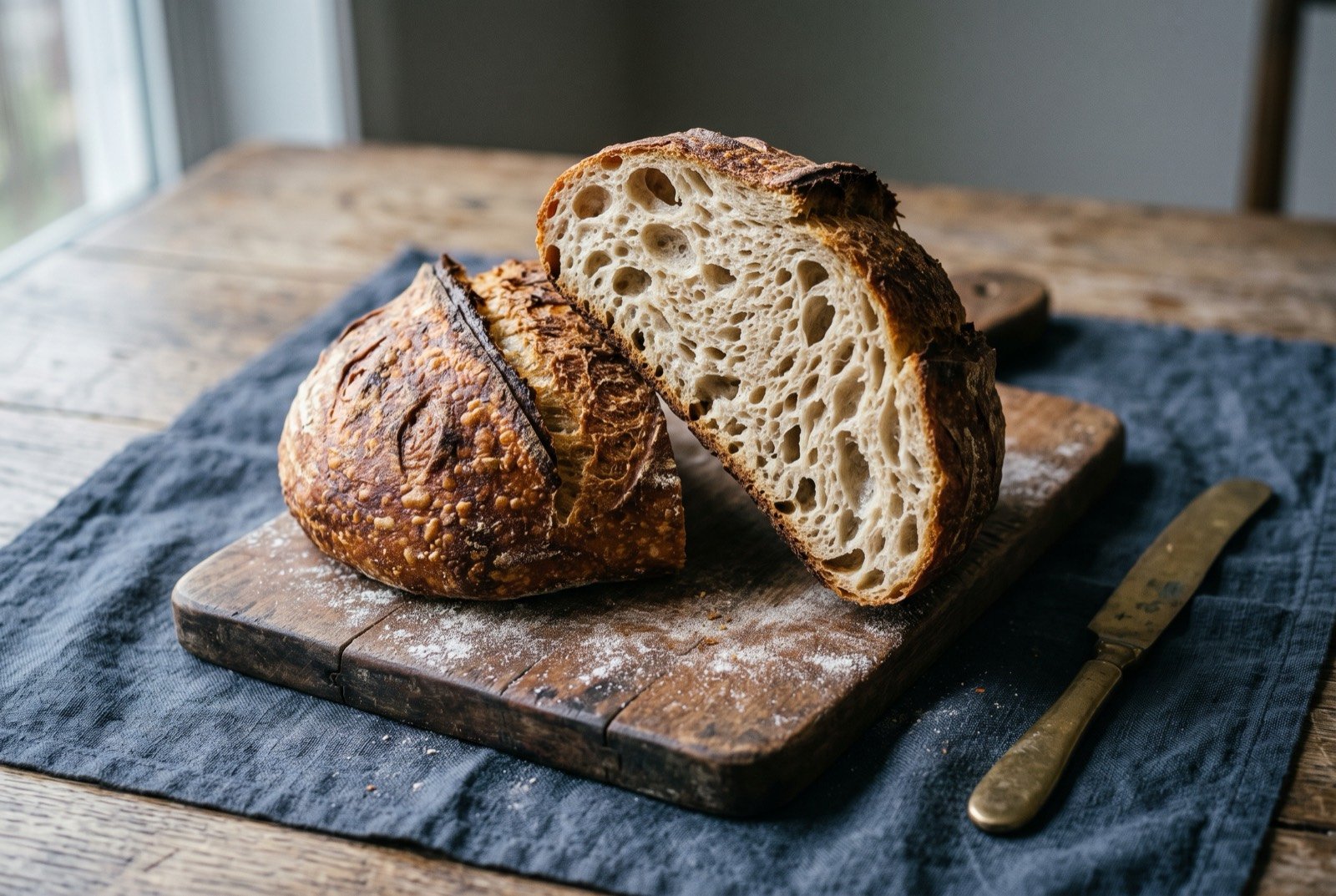
- Bake hot and steamed for the first part of the bake to get an open crumb and a properly blistered, crackling crust.
Notes
No historic feeding schedule or dough recipe specific to a named San Francisco starter could be found, so the loaf is given at standard baker's convention.
The bacterium behind the bread's characteristic sourness, Lactobacillus sanfranciscensis, is genuinely dominant in traditionally maintained San Francisco starters, but the popular belief that the city's fog and microclimate uniquely produce it does not survive checking: the same bacterium turns up in bakeries in France, Italy and China.
What a modern chef changes
Controlled proving and deck-oven heat at home
Rung 1: Reading a starter by smell and rise, not the clock
Ingredients
- discarded starter, for dehydrating and grinding
Method
- Hold the bulk ferment in a sous vide-controlled water bath set to a fixed, gentle proving temperature, so the same dough behaves identically from one bake to the next.
- Bake on a Big Green Egg run indirect with a baking stone and a tray of water for steam, closer to a proper bakery deck oven than a domestic oven can usually manage.
- Dehydrate and grind a portion of discarded starter into a starter powder, folded through a future dough for concentrated tang without the extra hydration a liquid discard would add.