Mesoamerica · Volume 09, The Isthmus, the Interior and the Congo Coast
Guacho de mariscos
Azuero coast and Caribbean Panama
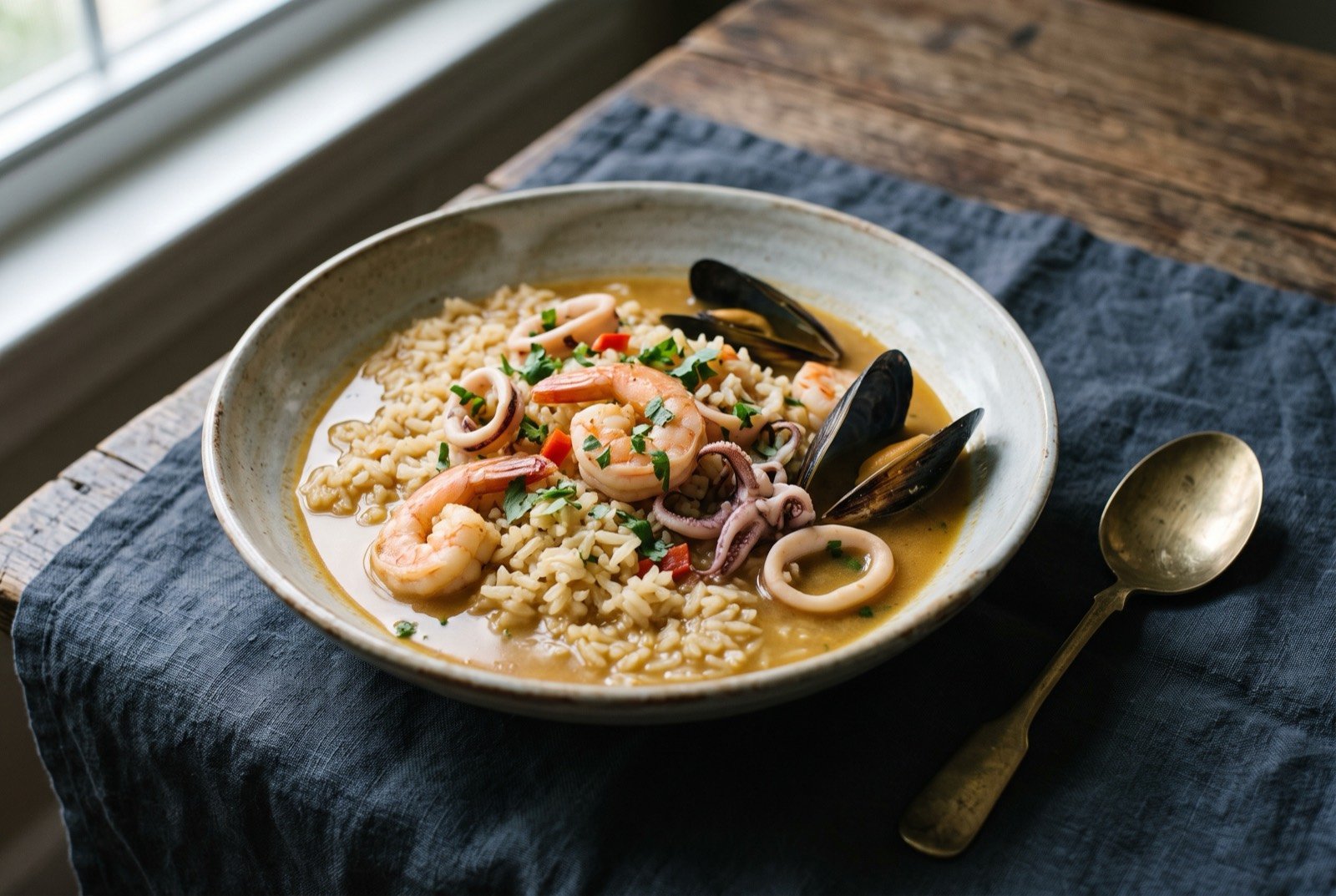
An illustration of the dish, not a photograph of it cooked.
- Time
- 25 minutes
- Reviewed
- Not yet reviewed from inside the tradition
- Cooked
- Not yet cooked and reported
A soupy rice with a criolla base of oil, onion, pepper, garlic, tomato paste and cilantro, guacho is described by the national newspaper La Prensa as coming in two most traditional forms, guacho de mariscos, seafood, and guacho de rabito de puerco, pork tail, the pork-tail version specifically attributed to Afro-Antillean heritage with a named example in Río Abajo's Vereda Afroantillana. A tourism source separately calls guacho de mariscos “king of the coastal tables in the Azuero Peninsula.” Both claims stand, and this chapter treats guacho as the volume's clearest single proof that Panama's two food worlds are not actually sealed off from each other.
As tradition built it
Guacho de mariscos
Serves 3. About 25 minutes. Especially popular in Colón and other Caribbean-influenced regions.
Ingredients
- 1 cup rice
- enough to cover fish broth
- 1 lb fillets, ½ lb each of the rest snapper or grouper fillets, shrimp, squid, clams or mussels
- 1 onion
- 4 cloves garlic
- ½ cup cilantro
- to taste achiote
- 1 cup coconut milk
Method
- Boil rice in fish broth until very soft, well past the point a plain rice dish would stop.
- Sear seafood, snapper or grouper fillets, shrimp, squid, clams or mussels, with onion, garlic, cilantro and achiote.
- Add coconut milk and bring to a simmer.
- Fold the pre-cooked, very soft rice into the seafood and coconut base, finishing to a loose, soupy consistency rather than a dry pilaf.
What a modern chef changes
A properly built coconut base, seafood cooked apart
Rung 03
Method
- Emulsify a fresh coconut milk in a high power blender and strain it through a chinois before it ever meets the pot, building the base described in Rung 3 rather than reaching for a tinned shortcut that can split under heat.
- Cook the seafood separately and briefly, added back to the finished rice only at the very end, so shrimp and squid stay properly cooked rather than turning to rubber in a pot simmered as long as the rice needs.
- Reduce a portion of the fish broth on its own to a concentrated glaze, stirred through at the finish for a depth the diluted cooking broth alone cannot give.