Mesoamerica · Volume 09, The Isthmus, the Interior and the Congo Coast
Sancocho de gallina
Pacific and interior Panama
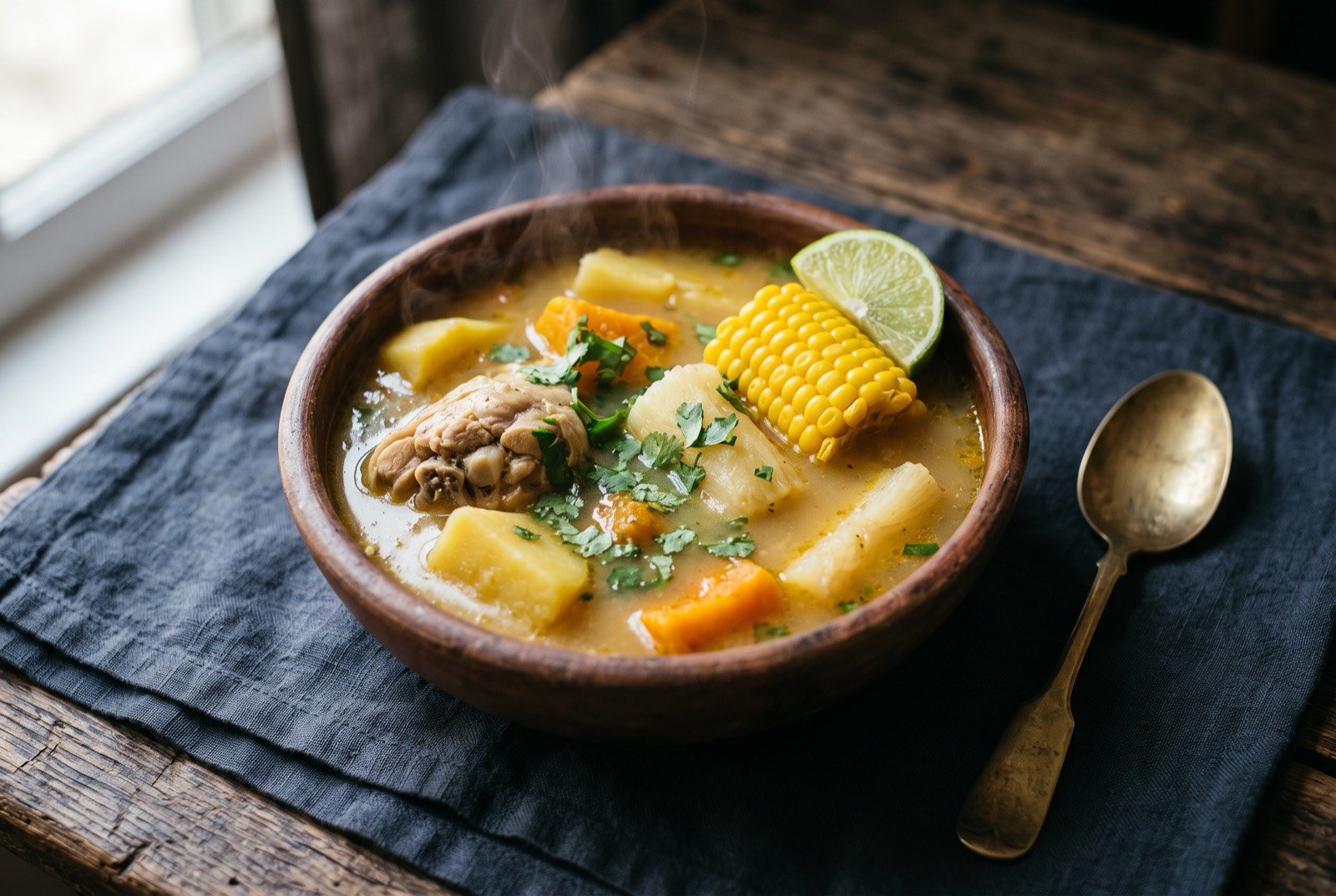
Illustration
- Time
- 1 hour 30
- Researched
- Researched from 56 sources in the brief
As tradition built it
Sancocho de gallina
Serves 6 to 8. About 1.5 hours.
Ingredients
- 1 whole free-range or yard chicken, jointed
- ½ lb beef ribs, chopped
- 1 onion, chopped
- ¼ cup culantro, chopped, divided
- ½ lb yuca
- ½ lb potato
- 2 plantains
- 1 yam (ñame)
- 1 lb squash
- 2 carrots
- 4 corn cobs
- 1 pepper
- 1 celery stalk
- 3 garlic cloves
- ½ tsp paprika
- 1 tbsp oil
- to taste salt
Method
- Skin the chicken and season with salt, some of the garlic, half the culantro and the onion. Sweat, covered, over gentle heat for about 20 minutes, no added liquid, so the meat and aromatics build their own base.
- Add the beef ribs and enough water to cover generously. Bring to a simmer and cook 30 minutes.
- Add the yuca, potato, plantain, yam, squash, carrots and corn, cubed or sliced as appropriate, and cook until the vegetables are tender, the yam going in partway rather than at the very start.
- Separately, sauté the pepper, paprika, celery and remaining garlic in the oil for 2 minutes, then stir this fresh sofrito and the rest of the culantro into the pot and cook a further 10 minutes.
- If a thicker broth is wanted, stir in a little extra grated yam at the end.
Notes
Quantities are from a Panama-based recipe source, moderate confidence; the fullest named method, from a Penonomé home cook, gives technique but no exact weights, so this chapter presents the two side by side rather than inventing a single false authority.
What a modern chef changes
Smoked from the start, after Maito's own opening course
Rung 01
Method
- Cold-smoke the jointed chicken over a Big Green Egg run low with a fruit or oak wood before it goes anywhere near liquid, echoing the firewood character López Guardia credits with sancocho's best flavour, and directly in the spirit of Mario Castrellón's own sancocho ahumado, the smoked opening course of his Chombasia tasting menu at Maito.
- Build the broth as Rung 1 describes, base first, fresh sofrito stirred in at the very end, keeping the two-stage aromatic logic intact rather than dumping everything in together.
- Pass the finished broth through a chinois for a clean, restaurant-grade clarity before returning the smoked meat and vegetables to it, the one step a home pot rarely bothers with and a tasting-menu bowl never skips.