The Sinosphere · Volume 28, The Pulled Noodle, the Vinegar Jar and the Corridor That Carried Islam East
Lanzhou lamian (兰州牛肉拉面)
Lanzhou, Gansu
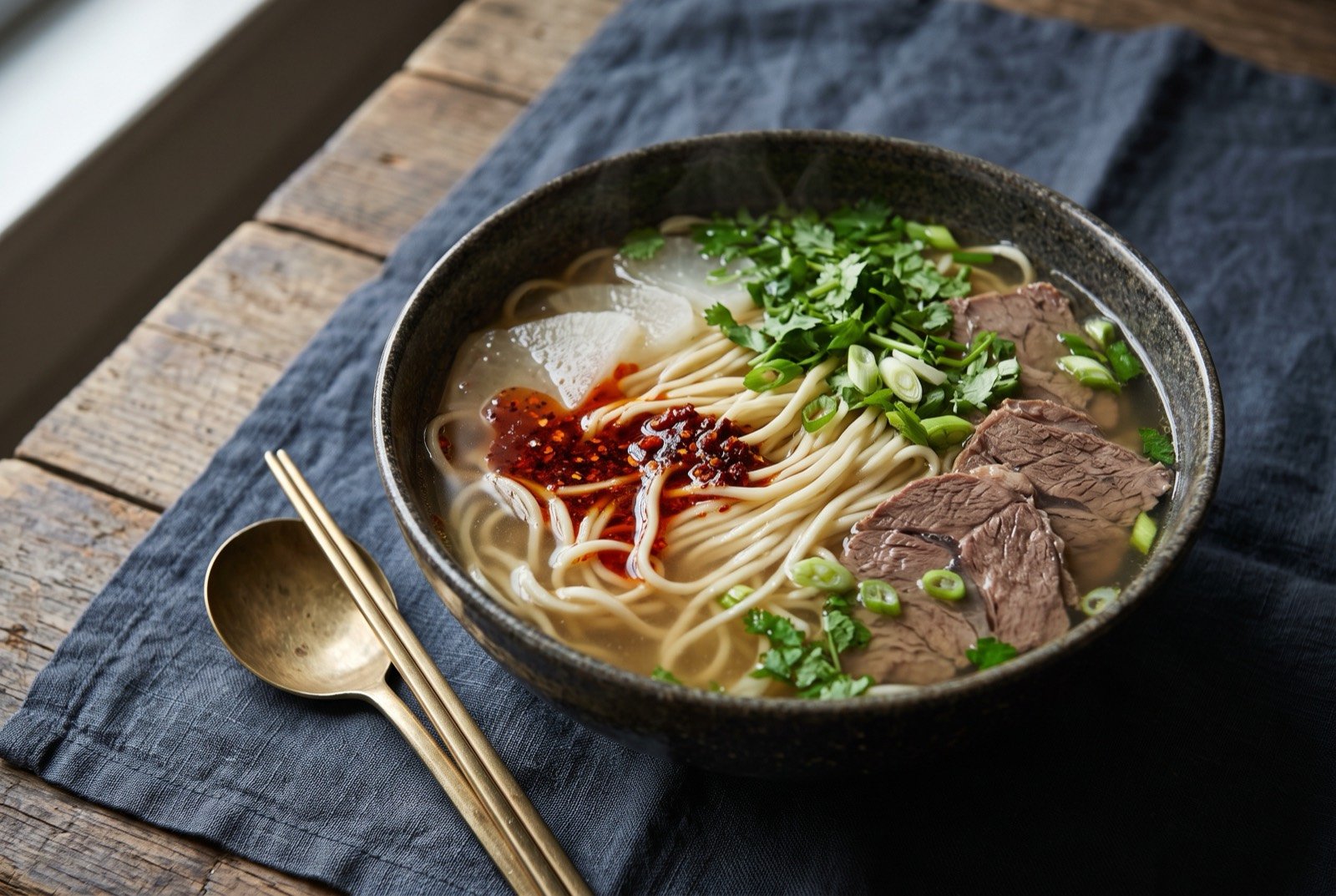
An illustration of the dish, not a photograph of it cooked.
- Time
- 1 hour
- Researched
- No outside sources linked
- Reviewed
- Not yet reviewed from inside the tradition
- Cooked
- Not yet cooked and reported
Overwhelmingly a Hui dish: the beef or yak base, never pork, and the qingzhen framework are not seriously disputed as to origin or ownership. The bowl is built on a five-part standard, codified into enforceable municipal regulation in Lanzhou from March 2025: one clear (broth), two white (radish), three red (chilli oil), four green (coriander and garlic sprout), five yellow (the noodle's own warm colour from the alkaline pulling water).
As tradition built it
Serves 4 to 6. Dough rests up to an hour; broth simmers 5 to 8 hours.
Ingredients
An outline, not yet a recipe: the tradition's method with its ingredients named but not weighed. Quantities are being added from sources inside the tradition, lead dishes first.
For the dough
- 1 kg high-protein flour
- about 520 g ice water
- 9 g salt
- 6 g alkaline water
For the broth
- at least 800g (meat and bone) beef or yak meat and bone, soaked 4 hours
- dried ginger, Sichuan pepper, fennel seed, cardamom pod, cassia, sand ginger, nutmeg
- 1, sliced white radish, sliced
- to taste salt and ginger, to season
To finish
- to taste chilli oil
- for garnish fresh coriander and garlic sprouts
Method
- Mix the flour, ice water, salt and alkaline water into a dough. Knead to the smooth, glossy "three-light" state, dough smooth, hands clean, board clean, then rest 10 minutes to an hour.
- Soak the beef or yak meat and bone 4 hours, then blanch and skim thoroughly to keep the stock clear.
- Simmer gently 5 to 8 hours with the spice package of dried ginger, Sichuan pepper, fennel seed, cardamom pod, cassia, sand ginger and nutmeg, adding the white radish partway through, and season with salt and ginger.
- Portion the rested dough and pull to order into whichever of the named widths the diner wants, then drop straight into boiling water.
- Assemble following the five-part formula: clear broth, translucent radish, chilli oil floated separately on top rather than stirred in so it does not cloud the broth, fresh coriander and garlic sprouts, and the noodle's own warm yellow sheen.
What a modern chef changes
Chinois-clarified broth, sous vide beef, and freshly ground spice
Rungs 1, 2 and 6
Method
- Build the broth for chinois-grade clarity. After a gentle simmer, strain twice through the chinois to reach genuine consommé transparency, the "one clear" pillar taken to its logical modern conclusion.
- Cook the topping beef separately. Sous vide it at a precise low temperature for full tenderness without the toughening a long open simmer risks, then slice thin and warm briefly in the finished broth rather than simmering it inside from raw.
- Toast and grind the spice package fresh in the dedicated spice grinder immediately before use rather than adding it as pre-ground powder, the same logic that separates good chilli oil from mediocre. Rung 6.
- Where genuine penghui cannot be sourced, a measured dose of food-grade lye water stands in directly, the closest off-the-shelf equivalent, chosen deliberately over a generic bicarbonate substitute to keep the noodle's characteristic springiness intact. Rung 2.