Central Africa · Volume 07, The Hinge of the Continent
Nkui
Bamileke, West
Illustration
- Time
- 1 hour
- Researched
- Researched from 90 sources in the brief
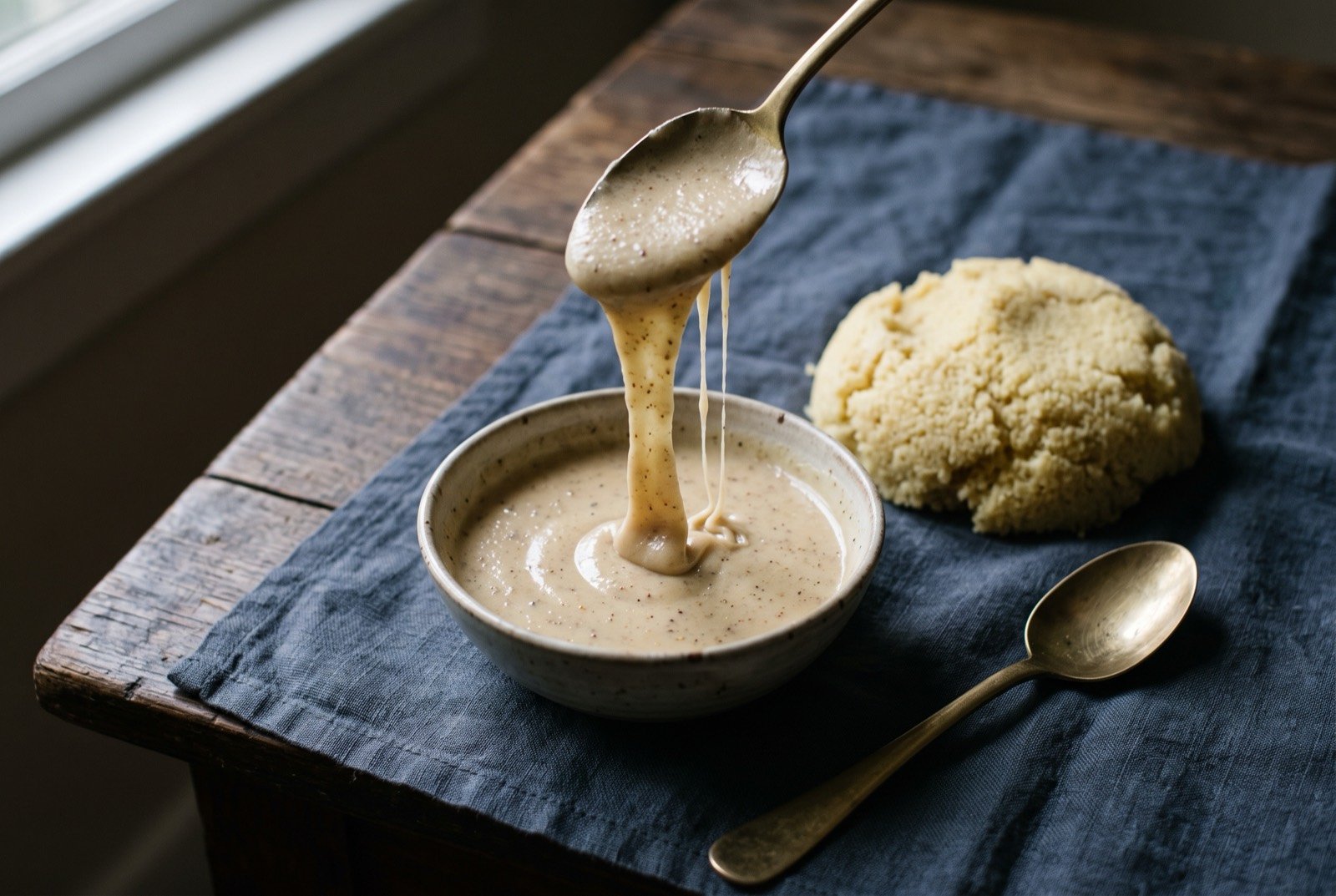
The strangest dish in this volume and the least documented. The base is the bark of Triumfetta pentandra, worked until it gives up its slime, then beaten over very low heat with twelve condiments until homogeneous, and eaten with maize couscous by hand, because the sauce is so sticky that no utensil can catch it. It is medicinal food with a defined dose. Nkui is eaten by women after childbirth for up to 30 days, and served to the parents at the "born house" ceremony.
As tradition built it
Serves 4. About 1 hour.
Ingredients
The method as the tradition gives it, with the ingredients named. Quantities follow as we verify them, lead dishes first.
- 10 stems nkui bark (Triumfetta pentandra)
- to cover hot water for the soak
- twelve condiments: garlic tree bark, pebe, wild pepper, dried fruits, roots, lye vinegar, rock salt and others by household
- to serve maize couscous, to serve
Method
- Soak the bark in hot water about 15 minutes to start the mucilage releasing.
- Rub the macerated rinds together with water, working the slime out of the bast fibres.
- Beat vigorously by hand over very low heat until homogeneous.
- Add the condiments. The harder ones are lightly flamed or roasted first to increase the aroma. Serve with maize couscous.
Notes
After FabAfriq. The source gives no weights, and this chapter is not going to invent them.
Why it works. Triumfetta bast carries long-chain acidic polysaccharide mucilage, the hydrocolloid family that gives okra and jute mallow their draw. Mechanical shear aligns and hydrates the polymer chains, building viscosity the way whipping builds a foam.
What a modern chef changes
Shear applied properly, heat kept low, and no acid until the end
Rungs 2 and 5
Method
- This is a shear problem, so use the right action. A whisk, or a stand mixer with a whisk on low, does what the hand does. A blender shears the polymer too hard and short-chains it, and you get a thinner sauce that will not recover.
- Keep the heat genuinely low. Prolonged high heat depolymerises these hydrocolloids exactly as it does in an okra sauce. Stop when it is homogeneous.
- The lye vinegar goes in last, because adding a sour agent early is the fastest way to lose the viscosity you spent twenty minutes building. And do not hold it: like every draw sauce in this atlas, nkui is best the minute it is beaten and worse every minute after.