Central Africa · Volume 07, The Hinge of the Continent
Okok
Beti, the forest interior
Illustration
- Time
- 1 hour
- Researched
- Researched from 90 sources in the brief
- Reviewed
- Awaiting a reader from inside the tradition
- Cooked
- Awaiting a cook report
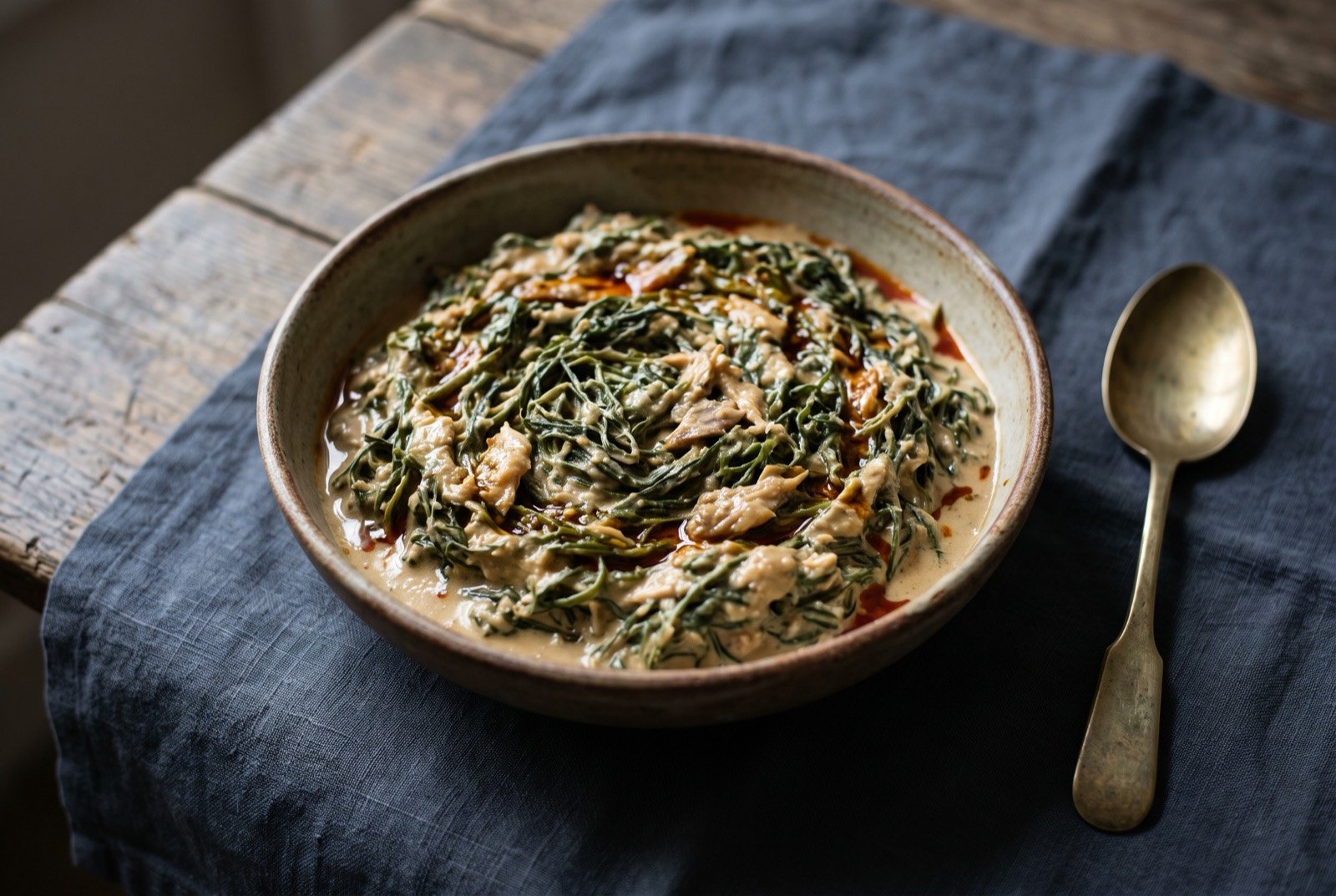
This is the volume's argument in a single pot, and it is why these two dishes sit next to each other rather than merged into one entry. The Manyu cook Gnetum africanum with palm oil and no nut at all and call it eru. The Beti cook the identical leaf with groundnut paste and call it okok. One species, two thickening logics, one internal border drawn by nothing more than which grammar arrived first. West African grammar says thicken with the ground nut; Central African grammar says thicken with the fruit of the palm and the seeds of the forest. In Cameroon, and essentially only in Cameroon, you can put the two side by side on one table and taste the seam.
As tradition built it
Serves 4. About 1 hour.
Ingredients
- 115 g dried eru (okok), shredded hair-fine
- 200 g roasted groundnut paste, or 500 g raw peanuts roasted and pounded fine
- 200 g smoked fish or smoked meat
- 60 g dried crayfish
- 300 ml warm water, plus more
- 2 tbsp crude red palm oil
- to taste salt, chilli
Method
- Soak and shred the okok. Simmer it in a little water until it begins to soften, 30 to 40 minutes. Tough vine leaf does not hurry.
- Boil the 300 ml of water and split it in half. Add the smoked protein and the groundnut paste to one half, stirring hard to prevent lumps.
- Work the reserved water in gradually over about 10 minutes at medium heat, until the oil surfaces. That surfacing is the doneness cue for every Beti groundnut preparation.
- Fold in the softened okok and the crayfish. Season.
- Finish with the palm oil, off the heat.
Notes
Built on the Beti groundnut method, which is the same liaison used for nnam owondo.
Serve with bobolo, plantain or cassava.
What a modern chef changes
The two grammars made explicit, the groundnut liaison built from boiled nuts, and the seam served as a pair
Rungs 4, 6 and 1
Method
- Boil the nuts rather than roasting them, and see what changes. Rung 4 as an experiment rather than an instruction. Roasted paste gives the darker, toastier reading; boiled and blended, as in ndole, gives a paler, creamier one. Neither is wrong and the difference is entirely about whether you want Maillard in the sauce.
- Cook the okok separately and marry it late. The leaf needs 30 to 40 minutes and the liaison needs 10, so cooked together one of them is wrong. Run them in parallel.
- Serve it beside a small bowl of eru. The only plating advice in this chapter, and an argument rather than a flourish: same leaf, one bowl thickened with nut and one with palm, tasted alternately. You will be able to point at the seam of the continent with a spoon. Finish both with the same toasted crayfish oil, so the thickener is the only variable between them.