West Africa · Volume 03, The Gulf of Guinea
Egusi
Pan-Nigerian
Illustration
- Time
- 1 hour 15
- Researched
- 11 sources cited
- Reviewed
- Awaiting a reader from inside the tradition
- Cooked
- Awaiting a cook report
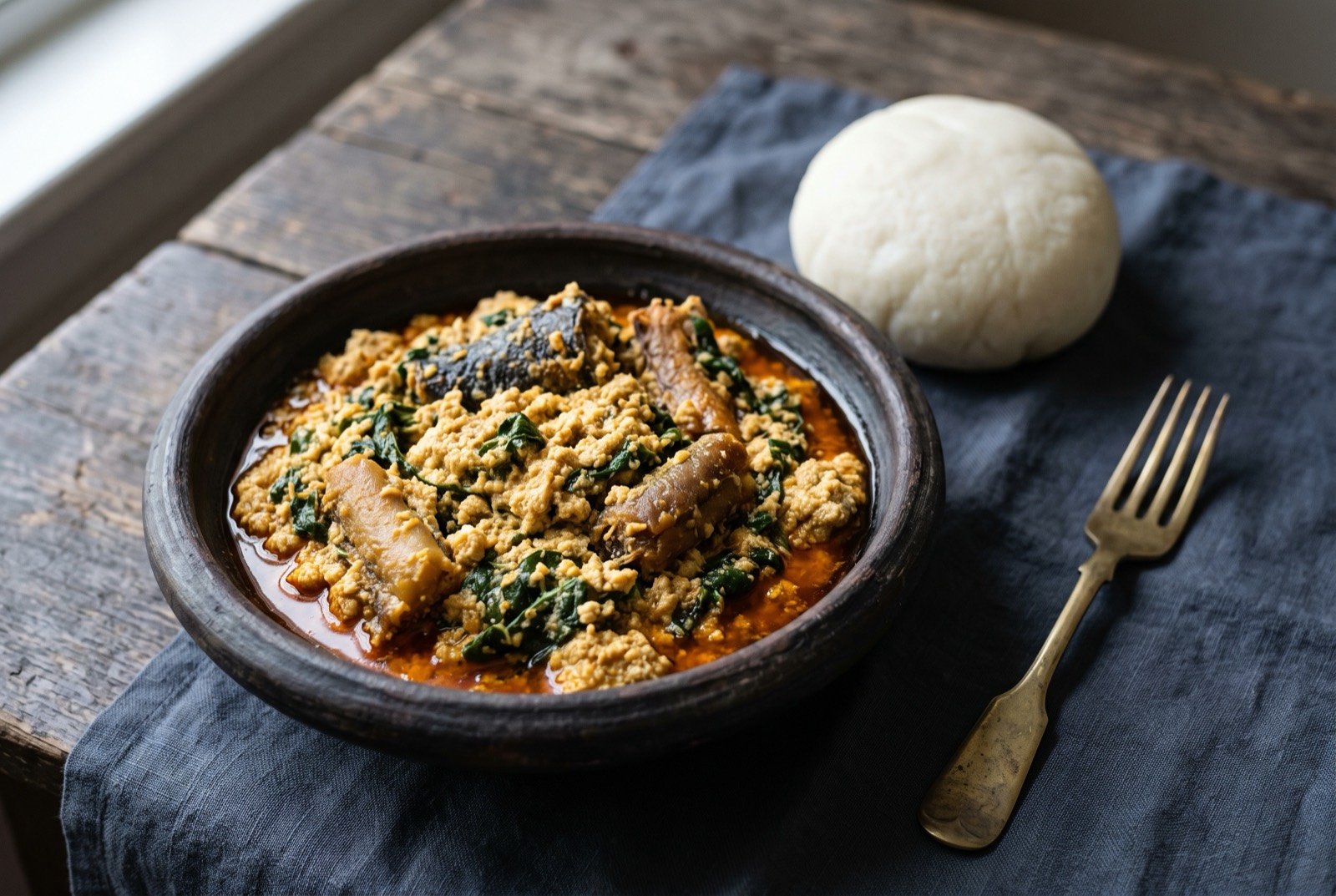
Two methods share one name and they are genuinely different dishes. Caked or boiled egusi is stirred dry into stock and cooked until it sets into distinct lumps suspended in a thinner liquor: it is a textural dish, and you eat the curds. Fried egusi is stir-fried in palm oil until every grain turns yellow, then cooked out until the oil separates: it is a sauce, homogeneous, nuttier, darker and richer. Ghanaian kontomire stew uses a third variant, dropping the agushi in tablespoon dollops and only partly breaking them up, so the curds stay visible. That lumpiness is the point, and smoothing it out is the commonest British error.
In the fried method, insufficient oil means burnt egusi, which means a dry soup with a scorched taste. Every grain must be coated in fat before frying begins, and the stirring is not negotiable. If your egusi has ever tasted acrid, this was why, and it was not the pepper.
As tradition built it
Fried egusi soup
Serves 6 · 1 hour 15, plus meat
Ingredients
- 500g egusi, ground fresh from whole seed
- 250ml red palm oil (more than you think)
- 800g assorted meat, cooked, stock reserved
- 100g stockfish, soaked, with its liquor
- 60g smoked fish, boned
- 3 tbsp ground crayfish
- 1 tbsp ogiri okpei or iru
- 150ml obe ata base, or 3 blended scotch bonnets
- 200g bitterleaf, washed until acceptably mild, or ugu
Method
- Melt the palm oil in a dry pot over low heat. Do not let it smoke.
- Add the ground egusi immediately and stir constantly for 10 minutes over low-medium heat, until every grain has turned yellow and the mass smells toasted.
- Add the pepper base and the ogiri, and continue frying. At about 30 minutes total the seed's own oil will surface. That is your signal.
- Add the stock and the stockfish liquor a ladleful at a time, stirring each addition in fully before the next. You are building an emulsion, not diluting a paste.
- Add crayfish, meats and smoked fish. Simmer 10 minutes.
- Bitterleaf in, seven minutes. Softer greens in, two minutes maximum. Rest five minutes off the heat before serving with pounded yam or eba.
What a modern chef changes
Egusi sauce, roast turbot, burnt scotch bonnet oil
Rungs 02, 06, 10, 11 · Serves 4
Method
- Cold-infuse the liquor overnight. 20g dried shiitake, 10g kombu, 15g dried crayfish and one bruised uda pod in 700ml cold water, refrigerated, 12 hours. Strain. You now have a clean glutamate-and-guanylate base with no muddiness and no boiled-out volatiles.
- Toast 200g of egusi in a dry pan until it smells of roasted nuts and has taken a shade of colour. Cool.
- Blend on full power for four full minutes, adding the warm infusion slowly, then 60ml of red palm oil in a thin stream at the end. Keep going past the point where you think it is done. The protein and phospholipids in the seed need that time to emulsify, and the sauce will visibly change: it goes from grainy beige to glossy, pale gold and bouncy.
- Pass through a chinois, pushing hard. Season with salt and a squeeze of lime. Hold warm, never boiling, or it will break.
- Burnt scotch bonnet oil. Grill 4 scotch bonnets and 2 shallots until blackened and completely soft. Chan's warning applies exactly: blackened but firm gives you bitterness with no sweetness behind it. Blend with 150ml groundnut oil, stand an hour, then strain through muslin.
- The fish. A turbot tronçon or a thick piece of brill, salted 20 minutes, roasted at 200°C for 12 to 14 minutes, basted with palm oil and its own juices. Sauce pooled beneath. Chilli oil dotted around the edge. A few blanched ugu or spinach leaves, dressed in lime. Nothing else.
Notes
Ikoyi serve turbot with what they call egusi miso, and squash with egusi butter. The move is to stop treating egusi as a soup thickener and start treating it as what it structurally is: a high-protein, high-fat seed capable of forming a silken emulsion with no dairy in it at all.