Southern Africa · Volume 19, Nshima and the Relish
Chibwabwa
Zambia, and mkhwani in Malawi
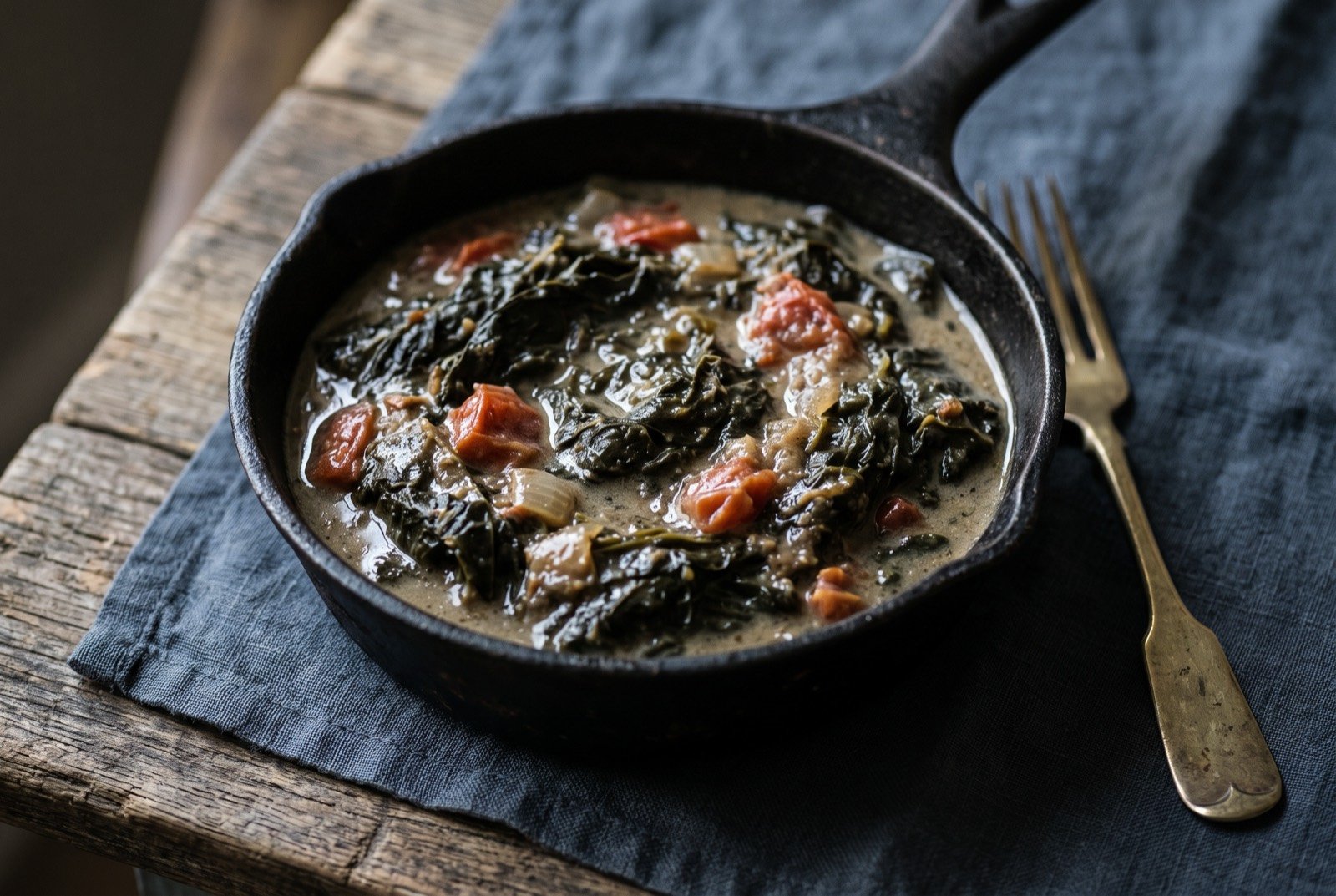
An illustration of the dish, not a photograph of it cooked.
- Time
- 1 hour 45
- Reviewed
- Not yet reviewed from inside the tradition
- Cooked
- Not yet cooked and reported
Pumpkin leaf is the most important cultivated green in all four countries and the one where preparation is most specific. The leaves are stripped of their coarse veins and of the bristly skin of the petiole before cooking, which is why the business is slow. Fresh takes 15 to 20 minutes. Dried takes an hour, and the dried version is not a compromise: mufushwa has its own flavour, deeper and more savoury than fresh, and it is what keeps the relish going through the dry season.
As tradition built it
Serves 4. About 1 hour 45, most of it unattended.
Ingredients
- 60 g dried pumpkin leaf
- 720 ml water
- ¼ tsp bicarbonate of soda
- 130 g raw groundnuts, pounded and sieved
- 1 tomato, chopped
- 1 onion, chopped
- to taste salt
Method
- Soak the dried leaves in warm water 30 minutes. Wash and rinse thoroughly: dried leaf carries grit.
- Into the pot with the water and the soda. Cook about an hour, until genuinely tender.
- Add the pounded groundnuts. Stir, drop the heat, and stir continuously so the groundnut does not catch.
- When it returns to the boil, add tomato, onion and salt, and simmer 10 minutes.
Notes
After Zambian Kitchen, working from dried leaf.
What a modern chef changes
Rehydration liquor kept, soda moved, and a British leaf of the right genus
Rungs 2, 5 and 4
Method
- Keep the soaking water and use it as part of the cooking liquid. Thirty minutes of warm soaking pulls real soluble flavour out of a dried leaf and most cooks pour it away. Strain it through muslin to catch the grit.
- Grow or forage the correct leaf. The best British option is your own squash or courgette leaves, picked young in August and September: same genus, Cucurbita, which the fresh ugu sold by West African grocers is not. Telfairia occidentalis is a different genus with a different texture and a much milder flavour. Ugu is not wrong, but it is a translation, and you should know you are making one.
- Add the soda in the last ten minutes, not the first hour. Rung 5. An hour of alkaline cooking is an hour of thiamine destruction for a softening effect you only need at the end.
- Let kapenta do both jobs. Rung 4: the strained steep as the water, and the hard fried half scattered over at the pass. A base and a top from one 100 g bag.