Southern Africa · Volume 19, Nshima and the Relish
Nhopi
Shona Zimbabwe
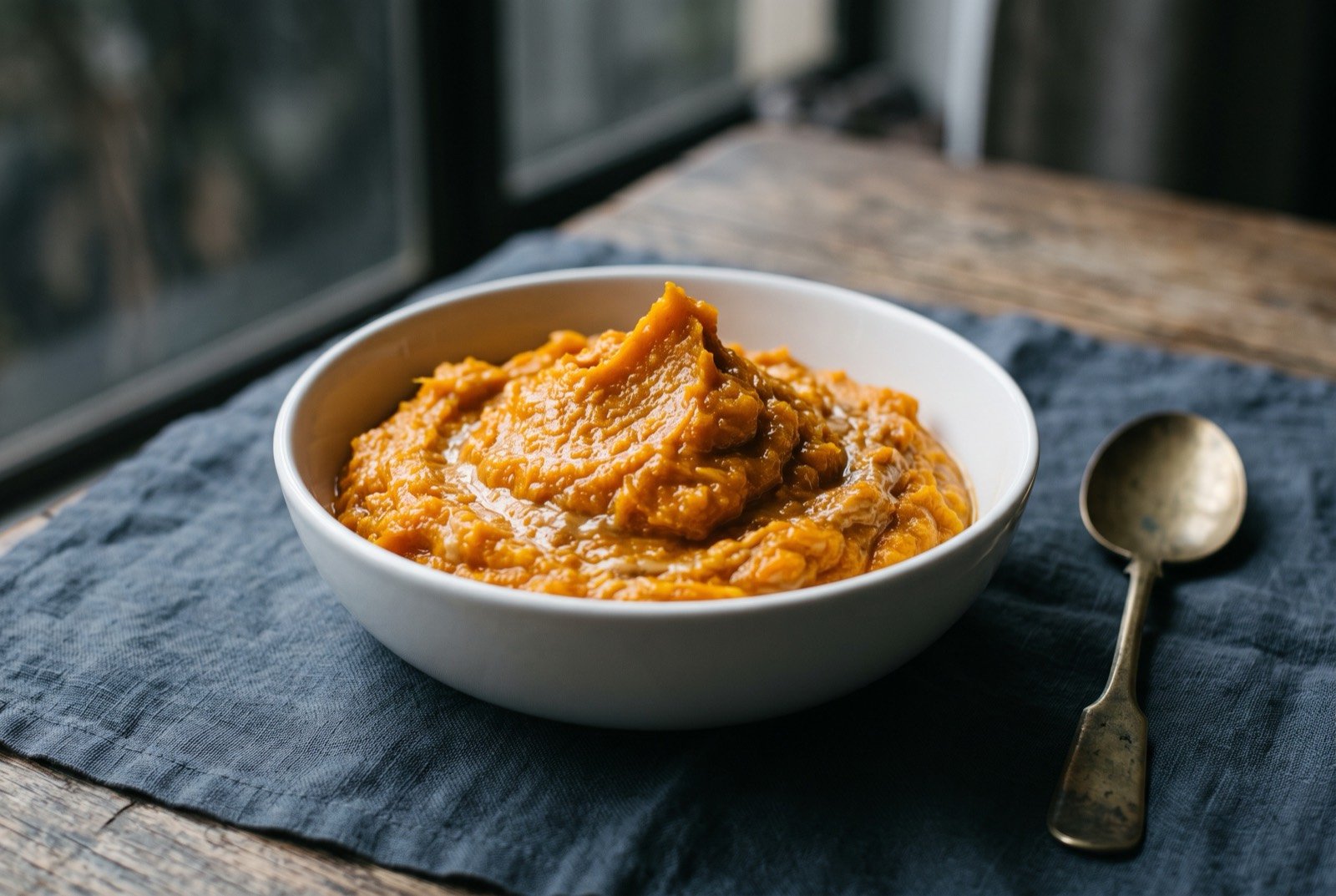
An illustration of the dish, not a photograph of it cooked.
- Time
- 40 minutes
- Reviewed
- Not yet reviewed from inside the tradition
- Cooked
- Not yet cooked and reported
Mashed pumpkin worked with peanut butter, cooked in the sadza pot as a secondary use of the same vessel. Sweet, orange, thick, eaten either alone or alongside sadza. It is the best argument in the chapter that the pot vocabulary and the dish vocabulary are the same thing: the Manyika record lists nhopi, samp, cowpeas, nyimo, yams, cassava and Livingstone potato as the secondary uses of the sadza pot, which tells you the mukate was a general purpose starch vessel and not a single dish machine. A note on quantities. The source records the composition and the vessel, not weights or times. Below are working quantities, stated as mine.
As tradition built it
Serves 4. About 40 minutes.
Ingredients
- 1 kg pumpkin or firm winter squash, peeled and cut into chunks
- 3 tbsp dovi
- to taste salt
Method
- Put the pumpkin in the pot with a splash of water, cover, and cook over low heat until completely soft, 20 to 30 minutes, adding water only if it threatens to catch.
- Mash to a coarse purée against the side of the pot.
- Work in the dovi and a little salt and cook a further 5 minutes, stirring, until glossy and thick enough to hold its shape on a spoon.
What a modern chef changes
Roast rather than boil, and treat it as a purée with structure
Rungs 3, 1 and 6
Method
- Roast the squash instead of stewing it. Halved, cut side down, at 200°C for 40 minutes, or over charcoal with the lid down. You are concentrating rather than diluting, and the Maillard and caramelisation products from dry heat are the whole flavour difference between a good nhopi and a bland orange mash. The tradition boils because the pot is already on and the fuel is expensive, not because boiling is better.
- Rice or whisk it, do not blend it to a foam. A blender aerates the purée and makes it read as baby food. Rung 1's principle for a different starch: mechanical action determines structure.
- Split the dovi. Two thirds cooked out until the oil separates, folded through the hot purée; the last third stirred in at the end. Rung 3.
- Season it against its own sweetness. Salt, a scrape of baobab powder for acid, and a very small amount of piri-piri bloomed in the separated peanut oil. Rung 6 borrowed westward: the chilli goes into the fat, so the heat is broad rather than spiky.