Southern Africa · Volume 19, Nshima and the Relish
Chikanda
Bemba, north eastern Zambia
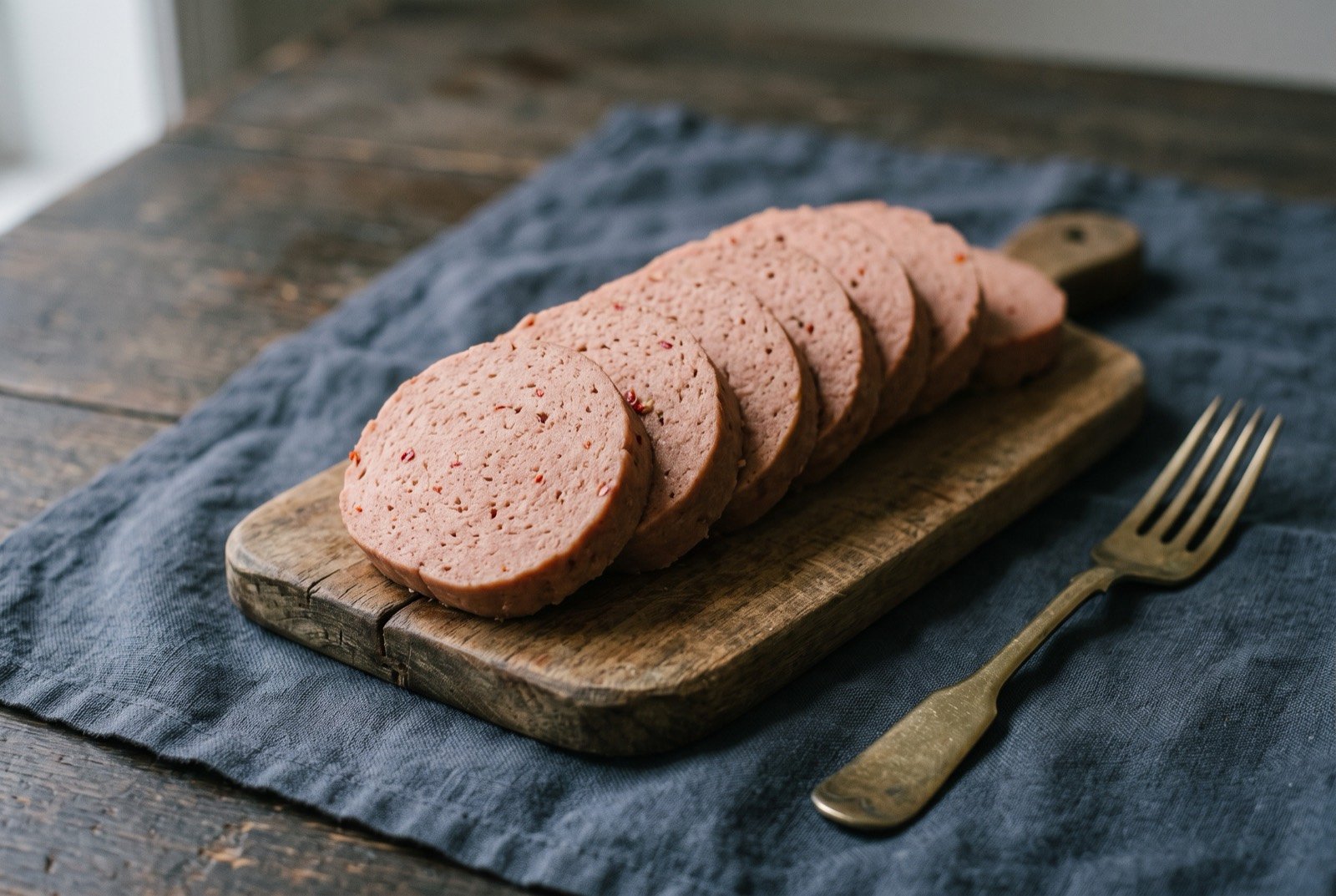
An illustration of the dish, not a photograph of it cooked.
- Time
- About 40 minutes to 1 hour 30No source states a time. Comparable dishes in this atlas take this long.
- Reviewed
- Not yet reviewed from inside the tradition
- Cooked
- Not yet cooked and reported
Dried terrestrial orchid tubers are pounded to a meal, then boiled into a slurry with groundnut meal, salt, bicarbonate of soda and chilli powder. The mixture thickens as the soda goes in, rises like a dough as it simmers, and sets to a firm cake that is sliced and eaten as a snack, a side or a main. It is sold on the street, in supermarkets and in high end Lusaka restaurants. Functionally it is a traditional African terrine set with a plant hydrocolloid, with groundnut supplying the fat and protein that make the texture read as meat rather than jelly. The uncomfortable part, which this chapter will not skip. The tubers are harvested exclusively from the wild, and collecting one kills a perennial, long lived plant. DNA barcoding of market material in Lusaka and Kitwe identified 16 orchid species across 6 genera, chiefly Disa, Habenaria and Satyrium, against the two species originally reported. An estimated 2 to 4 million tubers move annually from Tanzania into Zambia despite CITES, with Soweto market in Lusaka the trade hub and June and July the peak. Availability in Britain is zero and it should stay that way.
As tradition built it
Ingredients
- 250 g dried orchid tubers, pounded to a meal
- 500 g groundnut meal
- ¾ tsp bicarbonate of soda
- to taste chilli powder, salt
Method
- Boil the orchid meal into a slurry with water.
- Work in the groundnut meal, salt and chilli powder.
- Add the bicarbonate. The mixture thickens sharply and then rises as it simmers.
- Turn out, cool, and slice.
Notes
Recorded as documented. The sources give the components and the sequence and no quantities, and none are invented here.
What a modern chef changes
An honest facsimile, labelled as one
Rungs 5 and 3
Method
- Understand what is doing the setting, with the caveat attached. The mechanism generally given is that orchid tubers are packed with glucomannan, the polysaccharide that makes salep and konjac behave as they do, and that under alkaline conditions it cross links into a thermally irreversible gel, which would make the bicarbonate a setting agent rather than a leavener. No primary chemistry confirming that could be found, and this chapter treats it as plausible and unconfirmed.
- If you want the texture, use konjac and say what you have made. Start at 10 g konjac flour to 400 ml water and 150 g groundnut, whisked cold, brought slowly to a simmer, a quarter teaspoon of bicarbonate whisked in at the end, poured into a lined terrine and chilled. It is not chikanda. It has the right behaviour and none of the provenance, and blurring that would make the recipe sound better and the book worse.
- Toast the groundnut here, do not use it raw. The one Zambian dish where a deeper roasted character earns its place, because there is no leaf and no tomato to carry flavour. Rung 3, used in the Zimbabwean direction on purpose.
- Season it like a terrine, at the pass. Chilli, salt and a squeeze of lime on the slice, not only in the mix.