Mainland Brazil · Volume 42, The Court and the Clay Pot
Cozido carioca
Rio de Janeiro
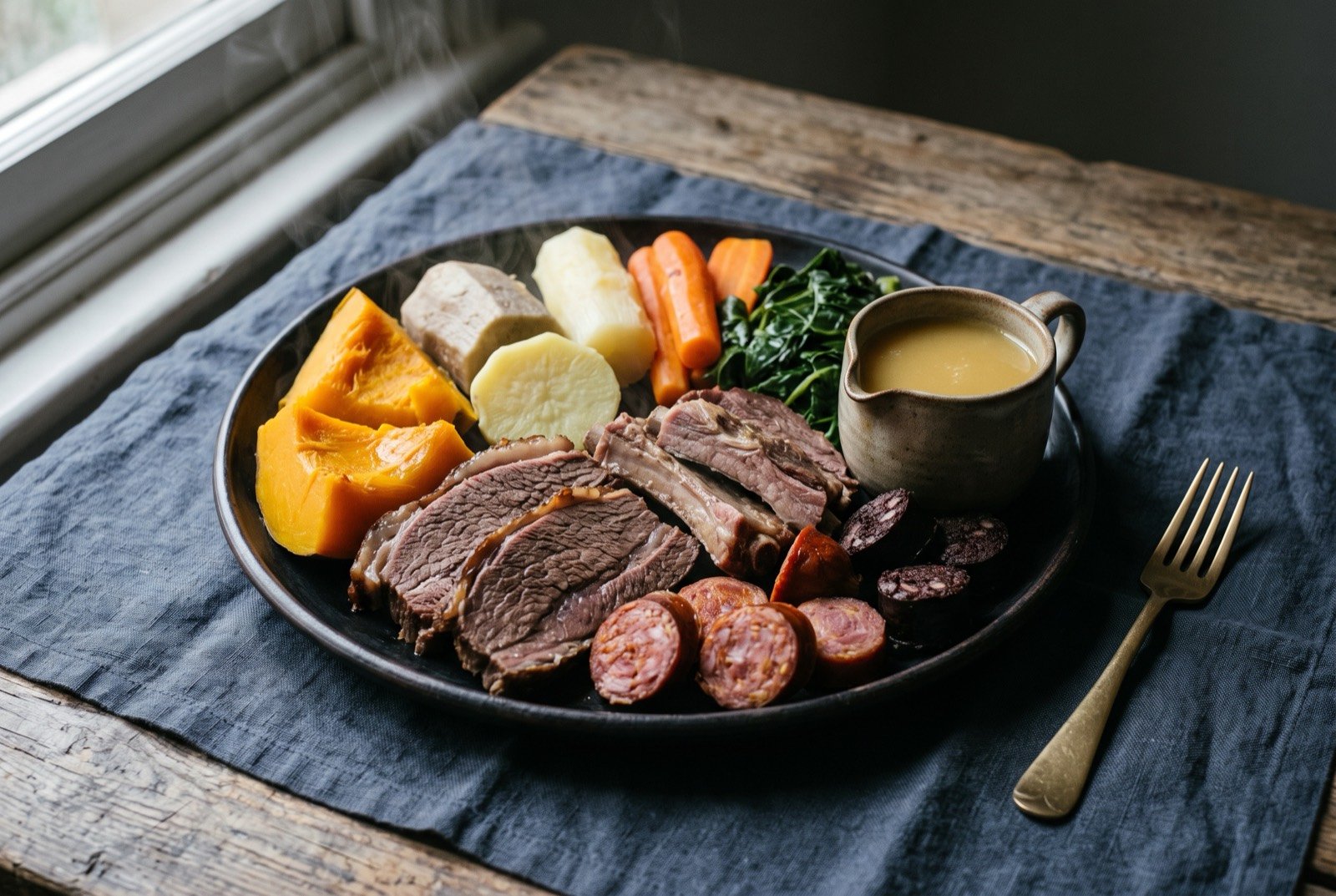
An illustration of the dish, not a photograph of it cooked.
- Time
- 3 hours
- Researched
- 6 sources cited
- Reviewed
- Not yet reviewed from inside the tradition
- Cooked
- Not yet cooked and reported
Rio's own version of the Iberian boiled dinner, brought over as a Portuguese settler staple and finished, in the carioca kitchen, with pirão beaten from the cooking liquor itself. The vegetables go in by how long each takes to cook, so nothing collapses before the slowest one is done.
As tradition built it
Serves 6 to 8. Roughly 2½ to 3 hours.
Ingredients
- 500 g dried salted beef, soaked and desalted
- 500 g beef brisket
- 300 g calabresa sausage
- 300 g paio
- 200 g smoked bacon
- 1 kg mixed root vegetables, potato, carrot, yam and cassava
- 1 small squash
- 1 bundle collard greens
- 200g green beans
- 3 jiló
- 2, or about 400g sweet potato
Method
- Brown the meats first, then add them to a large pot of water and simmer roughly 2 hours until tender.
- Add the vegetables in sequence by how long each takes to cook, cassava and yam first, squash and sweet potato next, cabbage and beans last, so nothing collapses before the slowest vegetable is done, a further 30 to 40 minutes.
- Traditionally finish with pirão, some of the cooking liquor beaten hot with cassava flour until glossy and thick, served alongside.
What a modern chef changes
Each element cooked and glazed on its own terms
Rung 2
Method
- Cook each protein separately to its own correct doneness rather than in one shared pot, Rung 2, exactly as with feijoada above: the brisket long and slow until it shreds, the sausages seared over coals, the dried beef simmered on its own until tender but distinct.
- Glaze the root vegetables individually in a little of their own cooking liquor reduced with butter, rather than boiling everything together, so each vegetable keeps its own colour and edge rather than turning uniformly soft.
- Pass the pirão through a chinois after beating in the cassava flour for a genuinely silkier result than the traditional hand-beaten version gives.